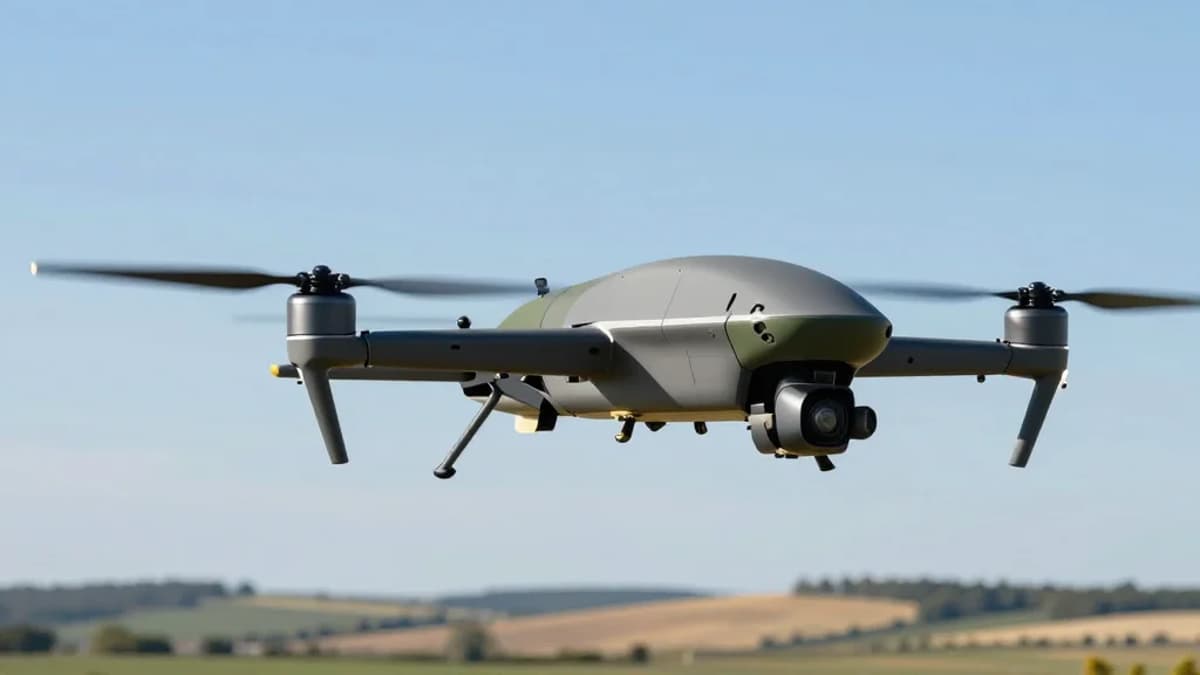
Kraus Hamdani Aerospace Is Redefining What’s Possible for Endurance Flights at the Pendleton Range
•January 13, 2026
0

Why It Matters
The flight proves electric UAS can sustain long‑range, distributed missions, reducing logistical risk for Army operations and accelerating adoption of autonomous aerial platforms.
Key Takeaways
- •KHA flew 18 km point‑to‑point electric UAS mission.
- •Launch and recovery occurred at separate Pendleton sites.
- •Air Data Relay extended connectivity beyond line‑of‑sight.
- •Demonstration supports US Army 1MDTF Pacific operations.
- •Pendleton Range offers turnkey, 14,000 sq mi test airspace.
Pulse Analysis
Electric endurance UAVs are moving from laboratory concepts to operational tools, and KHA’s recent cross‑country flight underscores that shift. By launching the K1000ULE at one runway and recovering it 18 km away, the company proved that electric propulsion can sustain point‑to‑point missions without sacrificing payload or flight time. The integrated mesh‑network relay kept the aircraft under continuous command, eliminating the traditional electronic line‑of‑sight limitation that has constrained long‑range unmanned operations. This capability aligns with the Army’s push for lighter, faster‑deployable assets in contested environments.
The Pendleton UAS Range (PUR) played a pivotal role by offering a vast, FAA‑approved airspace and a suite of plug‑and‑play facilities that cut bureaucratic friction. Its 14,000‑square‑mile corridor, high‑speed fiber, and on‑site support infrastructure enable rapid iteration, allowing innovators like KHA to test advanced concepts under realistic conditions. The range’s customer‑first model not only accelerates development cycles but also creates a replicable template for other regions seeking to foster UAV innovation without the delays typical of traditional test sites.
Beyond the immediate military benefit, the successful demonstration signals a broader market trend toward electric, AI‑driven UAVs for distributed missions. As the Army’s 1MDTF prepares for Indo‑Pacific deployments, the ability to reposition assets across dispersed islands without ground‑based line‑of‑sight will reshape logistics, surveillance, and rapid response strategies. Commercial operators stand to gain as the same technology can be adapted for infrastructure inspection, emergency response, and long‑duration cargo delivery, driving demand for high‑endurance electric platforms and the supporting communications mesh that keeps them connected.
Kraus Hamdani Aerospace is redefining what’s possible for endurance flights at the Pendleton Range
0
Comments
Want to join the conversation?
Loading comments...