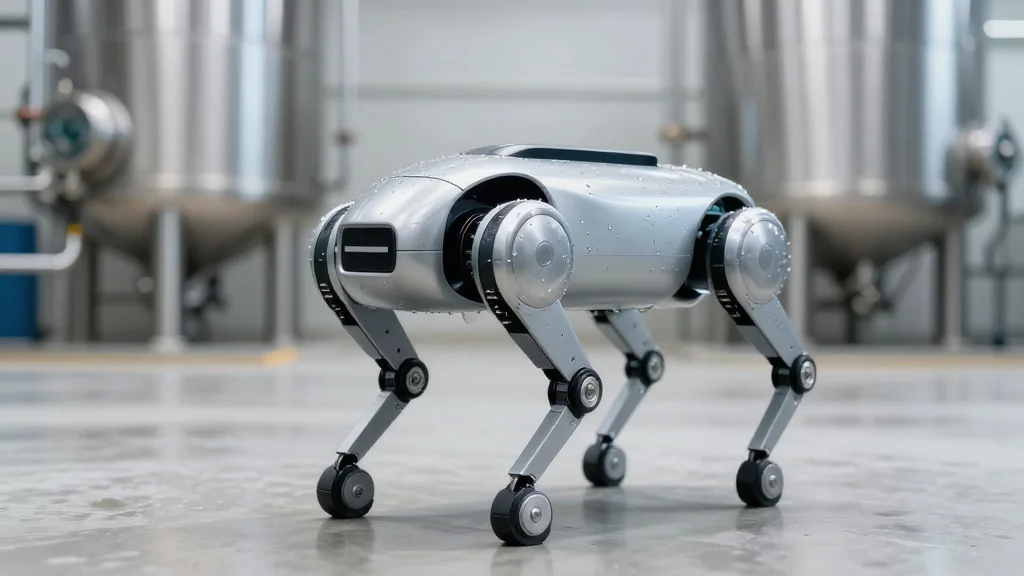
K‑Water to Automate 61% of Plant Inspections with Quadruped AI Robots

Why It Matters
Automating more than half of condition inspections at large‑scale water‑treatment plants marks a watershed moment for public‑sector robotics, demonstrating that AI‑driven quadruped platforms can deliver tangible safety and cost benefits in high‑risk environments. By reducing reliance on human inspectors in hazardous zones, K‑Water not only protects its workforce but also creates a data‑rich ecosystem that can feed predictive‑maintenance models, potentially extending asset lifespans and improving water quality. The initiative also signals South Korea’s ambition to export autonomous‑facility technology. If K‑Water can successfully commercialize its robot operating system abroad, it could spur a new export category for Korean robotics firms, intensifying competition with established players in the U.S., Europe and Japan. The project’s emphasis on an independent control system may inspire other utilities to prioritize vendor‑agnostic solutions, reshaping procurement strategies across the sector.
Key Takeaways
- •K‑Water allocates $17.3 million (26 billion won) for quadruped robot deployment.
- •Robots are projected to handle 61% of condition‑inspection tasks by 2030.
- •44 robots will operate across 44 metropolitan water‑treatment plants.
- •Annual cost savings estimated at $1.5 million (2.25 billion won).
- •Pilot sites launch this year with full rollout to 40 additional plants by 2030.
Pulse Analysis
K‑Water’s quadruped robot program illustrates how public utilities are moving from experimental pilots to large‑scale, budget‑backed automation. The $17.3 million spend is modest compared with private‑sector robotics deals, yet the projected 61% automation rate is aggressive, reflecting confidence in the reliability of legged platforms for rugged infrastructure. The decision to develop an in‑house control system mitigates the risk of vendor lock‑in—a lesson learned from earlier smart‑grid projects where proprietary software hampered scalability.
From a market perspective, K‑Water’s approach could catalyze a new niche: autonomous water‑facility management platforms. International buyers—particularly in regions with aging water infrastructure—may view a turnkey robot‑operating system as a faster path to modernization than building bespoke solutions. Korean robotics firms, already strong in legged locomotion, stand to gain export orders if K‑Water successfully packages its technology.
However, the rollout faces challenges. Integrating AI‑driven inspection data with legacy SCADA systems will require robust cybersecurity safeguards, especially as the agency plans to avoid dependence on external vendors. Moreover, the projected $1.5 million annual savings, while meaningful, must be weighed against ongoing maintenance, software licensing and potential downtime. If K‑Water can demonstrate a clear ROI and safety record, it will set a precedent that could accelerate public‑sector robotics adoption worldwide, prompting other utilities to allocate similar budgets and pursue autonomous operations.
K‑Water to Automate 61% of Plant Inspections with Quadruped AI Robots
Comments
Want to join the conversation?
Loading comments...