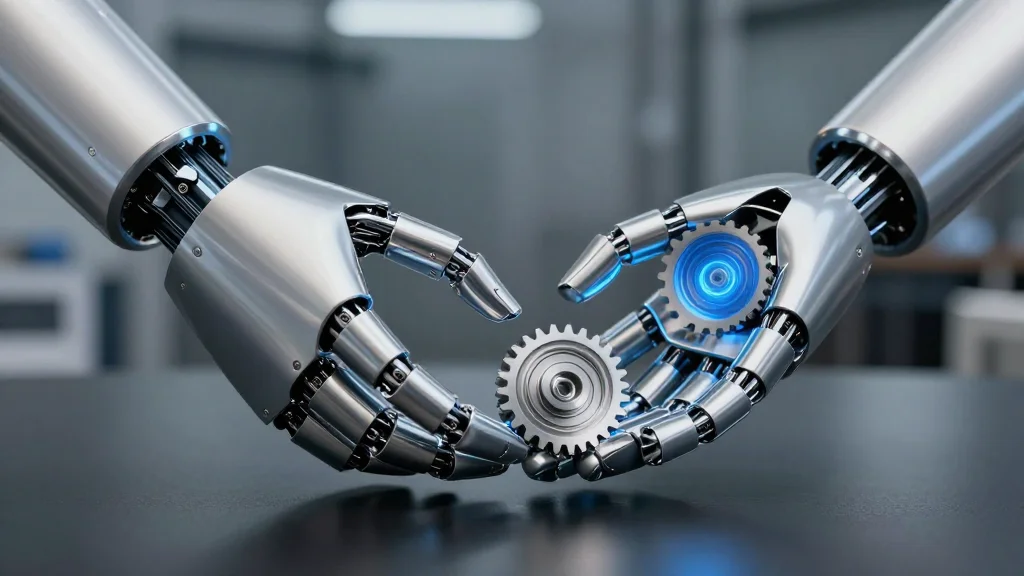
Leaderdrive Profits Surge 61% as Chinese Humanoid Robot Demand Booms

Companies Mentioned

Bloomberg
Why It Matters
Leaderdrive’s earnings highlight how a single product category—humanoid robots—can reshape supply‑chain dynamics in the broader robotics ecosystem. The rapid adoption of service robots in China is creating a cascade effect, driving up demand for precision components and prompting suppliers to upscale production, invest in R&D, and secure strategic partnerships. This trend not only boosts the financial health of component makers but also accelerates the deployment of robots in everyday settings, from retail to healthcare, potentially redefining labor productivity in the region. Furthermore, the profit surge signals to investors that the Chinese robotics market is moving beyond experimental pilots to commercial scale. As component suppliers like Leaderdrive demonstrate robust margins, capital is likely to flow into the sector, fostering innovation, encouraging consolidation, and raising competitive stakes for global players seeking a foothold in China’s burgeoning robot economy.
Key Takeaways
- •First‑quarter net income rose 61% to 33 million yuan ($4.8 million).
- •Full‑year profit more than doubled to 124.4 million yuan (≈$18 million), highest since 2022.
- •Demand for Chinese humanoid robots drove a ~70% increase in sales of Leaderdrive’s drive modules.
- •China aims to produce 10,000 service‑type humanoid robots by 2025, fueling component demand.
- •Leaderdrive plans to invest in magnetic gear technology to support next‑gen robot designs.
Pulse Analysis
Leaderdrive’s earnings are a microcosm of the broader shift toward service‑oriented robotics in China. The country’s policy push, combined with falling hardware costs, has turned humanoid robots from a novelty into a commercial necessity for sectors facing labor shortages. Component suppliers that can scale quickly and maintain high reliability—like Leaderdrive—are becoming strategic assets, akin to semiconductor fabs in the AI boom. This creates a two‑tiered market: large, well‑capitalized firms secure long‑term OEM contracts, while smaller players risk marginalization unless they specialize or merge.
From a financial perspective, the profit jump suggests that Leaderdrive is moving up the value chain, capturing higher margins on specialized drive systems rather than competing on price alone. If the projected 30% CAGR for Chinese humanoid robots holds, the company could see earnings multiply, making it an attractive candidate for a secondary listing or a strategic partnership with a global robotics conglomerate seeking a foothold in China’s supply chain.
However, the upside is not without risk. International competitors are eyeing China’s robot market, and any shift in trade policy or a slowdown in government subsidies could compress margins. Moreover, the rapid pace of technology—especially advances in magnetic and direct‑drive actuators—means Leaderdrive must continuously invest in R&D to avoid obsolescence. The upcoming mid‑year report will be a litmus test for whether the company can sustain its growth trajectory while navigating intensifying competition and potential regulatory headwinds.
Leaderdrive Profits Surge 61% as Chinese Humanoid Robot Demand Booms
Comments
Want to join the conversation?
Loading comments...