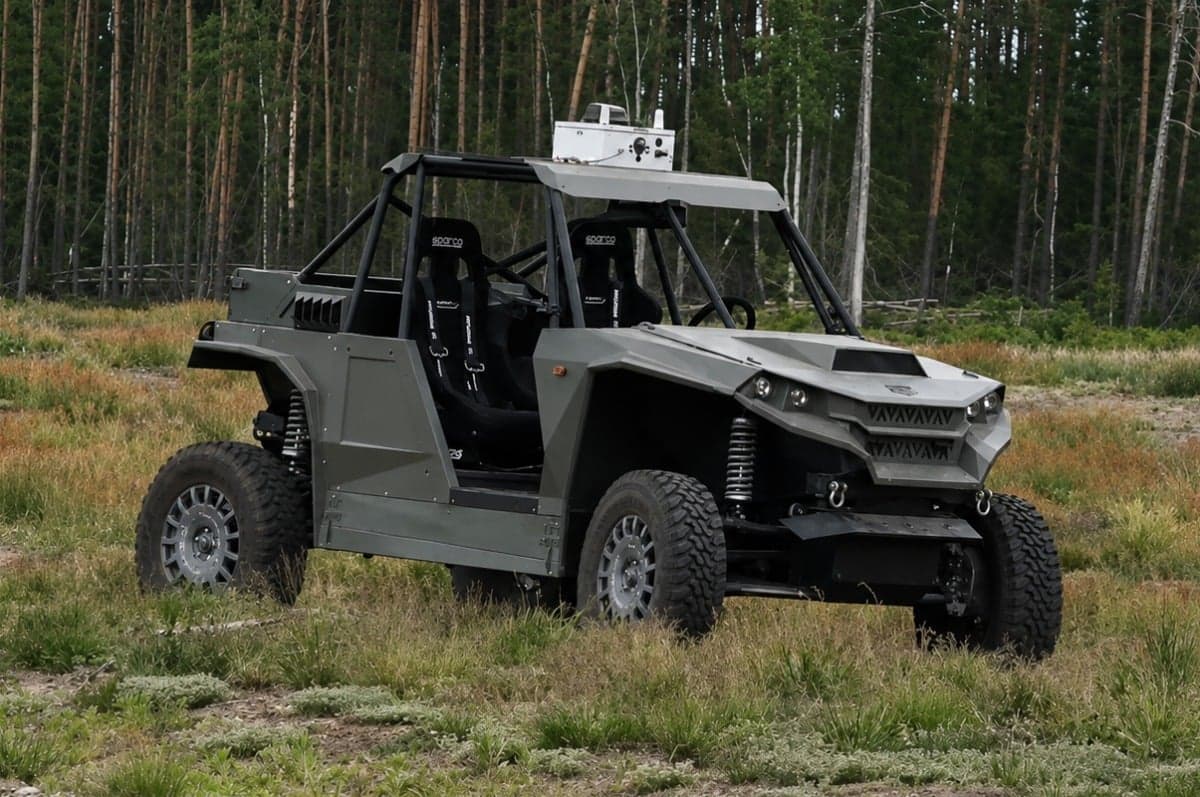
Lithuanian Firm Shows Army Tech that Turns Any Car Into Robot
Why It Matters
The solution lowers the financial barrier for armed forces to adopt UGVs, accelerating modernization while preserving existing fleet investments. It also offers NATO allies a rapid, cost‑effective path to expand unmanned capabilities in contested environments.
Key Takeaways
- •Ostara's kit retrofits any vehicle into an unmanned ground platform
- •Krampus hybrid UGV provides 100 km silent electric range, 400 km total
- •Retrofit cost is a fraction of buying a new UGV
- •System fits existing logistics, spare parts, and training pipelines
- •Demoed at Lithuania’s Vanguard 2026 exercise for armed forces
Pulse Analysis
The unmanned ground vehicle market has long been hampered by high acquisition costs and the logistical burden of introducing entirely new platforms. Ostara’s remote‑control retrofit kit sidesteps these challenges by allowing militaries to convert legacy vehicles into UGVs with a modest hardware add‑on. This approach not only reduces capital outlay but also leverages existing maintenance infrastructure, spare‑part inventories, and operator expertise, making the transition to unmanned operations smoother and faster for budget‑constrained forces.
At the heart of Ostara’s offering is the Krampus hybrid UGV, a purpose‑built ATV that blends a 2.3‑liter diesel generator with two 30‑kilowatt electric motors. The 34 kWh lithium‑iron‑phosphate battery enables quiet, zero‑signature movement for up to 100 km, ideal for reconnaissance or special‑forces insertion. Once the battery depletes, the diesel generator extends the vehicle’s range to roughly 400 km, providing operational flexibility across diverse terrains. The dual‑mode propulsion also reduces thermal and acoustic signatures, a critical advantage in modern high‑intensity conflicts.
The demonstration at Lithuania’s Vanguard 2026 exercise signals broader strategic relevance for NATO and EU partners. By offering a scalable, cost‑effective path to unmanned capabilities, Ostara positions itself to meet the growing demand for adaptable battlefield tools without overhauling existing fleets. As European defense budgets tighten, the retrofit model could become a template for other nations seeking to modernize quickly, potentially reshaping procurement strategies across the continent.
Lithuanian firm shows army tech that turns any car into robot
Comments
Want to join the conversation?
Loading comments...