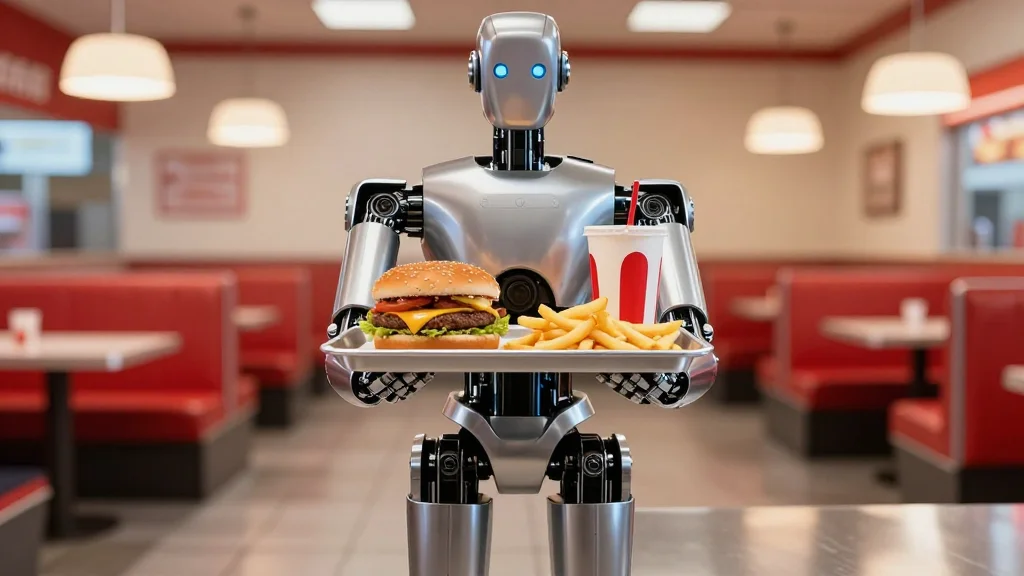
McDonald’s Pilots Humanoid Service Robots in Shanghai Restaurant

Why It Matters
The deployment of humanoid robots in a high‑visibility McDonald’s outlet signals that large consumer brands are moving beyond experimental prototypes toward commercial-scale automation. For the robotics sector, it validates the market for service‑oriented humanoids, a segment traditionally dominated by industrial arms and warehouse bots. For labor markets, the pilot intensifies the debate over how AI will reshape low‑skill employment, especially in economies where service jobs are a major source of income. If the trial proves successful, it could trigger a cascade of similar pilots across the fast‑food industry, prompting manufacturers like Keenon Robotics to scale production and prompting competitors to develop rival platforms. Conversely, strong pushback from workers or negative consumer sentiment could slow adoption, reinforcing the need for balanced automation strategies that protect employment while delivering efficiency gains.
Key Takeaways
- •McDonald’s launched a pilot with humanoid robots at a Shanghai restaurant, supplied by Keenon Robotics.
- •Robots are dressed in the chain’s red‑and‑yellow uniform and handle greeting, ordering and meal delivery.
- •Keenon posted, “Our Humanoid series are leading the squad and hitting the streets,” highlighting the rollout.
- •Employee concerns about job security echo broader worries about AI replacing human labor.
- •The trial follows Amazon’s deployment of over 1 million warehouse robots, with 75% of orders now robot‑assisted.
Pulse Analysis
McDonald’s foray into humanoid service robots reflects a strategic shift from back‑of‑house automation to customer‑facing robotics. Historically, fast‑food chains have relied on conveyor belts, self‑service kiosks and kitchen automation to cut labor costs. The introduction of robots that interact directly with diners represents a higher‑stakes gamble: the technology must not only function reliably but also be accepted by consumers who value speed and personal service. Early social‑media buzz suggests curiosity, but sustained adoption will hinge on measurable improvements in throughput and labor cost savings.
From a competitive standpoint, McDonald’s move could force rivals such as KFC, Burger King and local Chinese chains to accelerate their own robot pilots. The Chinese market, with its rapid adoption of mobile payments and AI‑driven retail, offers a fertile testing ground. However, regulatory scrutiny around workplace displacement and data privacy could introduce hurdles not present in purely industrial settings. Companies will need to balance the promise of reduced turnover and consistent service quality against potential backlash from labor unions and public opinion.
Looking ahead, the success of this pilot could catalyze a new product category for robotics firms: affordable, high‑volume humanoid servers designed for the mass‑market. This would shift the industry’s focus from bespoke, high‑cost units to scalable solutions that can be deployed across thousands of outlets. For investors, the key metrics to watch will be the pilot’s impact on order accuracy, average service time, and labor cost per transaction. If those numbers show a clear upside, we may see a wave of capital flowing into service‑robot startups, reshaping the economics of quick‑service dining for the next decade.
McDonald’s Pilots Humanoid Service Robots in Shanghai Restaurant
Comments
Want to join the conversation?
Loading comments...