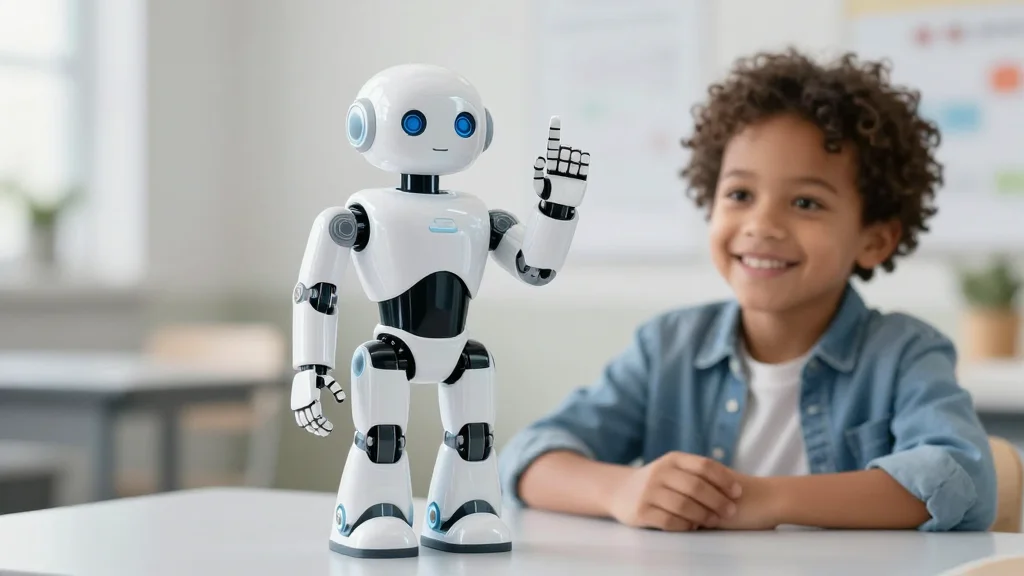
Meet Norah Kimathi, Who Trains Robots to Teach STEM Subjects in Sign Language
Why It Matters
The initiative bridges a critical accessibility gap, empowering deaf students to pursue high‑growth STEM careers and diversifying the future talent pipeline. It also showcases how AI and robotics can be leveraged for inclusive education in emerging markets.
Key Takeaways
- •Norah Kimathi develops AI‑driven robots for sign‑language STEM tutoring
- •Robots use visual gestures to convey math, physics concepts
- •Project partners with Kenyan schools, reaching 200 deaf students
- •Funding secured from UNESCO and local tech incubator
- •Initiative aims to close STEM participation gap for deaf learners
Pulse Analysis
Inclusive education is gaining momentum as emerging technologies become more affordable, and Kenya’s latest innovation exemplifies this trend. Norah Kimathi’s robot‑based platform combines computer‑vision sign‑language recognition with curriculum‑aligned content, allowing deaf learners to engage with STEM subjects in real time. By translating equations and scientific diagrams into clear, gestural language, the system removes the language barrier that traditionally sidelines deaf students in science classrooms.
The project’s impact extends beyond the classroom. With backing from UNESCO and a Nairobi‑based tech incubator, the initiative has secured enough capital to deploy the robots in ten pilot schools, serving roughly 200 students so far. Early feedback indicates higher engagement scores and improved test results, suggesting that tactile‑visual learning can boost comprehension for learners with hearing impairments. Moreover, the model offers a replicable blueprint for other low‑resource regions seeking to integrate assistive AI into their education ecosystems.
Looking ahead, scaling the technology will require partnerships with ministries of education, curriculum developers, and private sector investors. As the global demand for STEM talent intensifies, ensuring that deaf students are not left behind becomes both a social imperative and an economic opportunity. Kimathi’s work demonstrates that robotics and sign language can converge to create a more equitable learning environment, positioning Kenya as a leader in inclusive tech‑driven education in Africa.
Meet Norah Kimathi, who trains robots to teach STEM subjects in sign language
Comments
Want to join the conversation?
Loading comments...