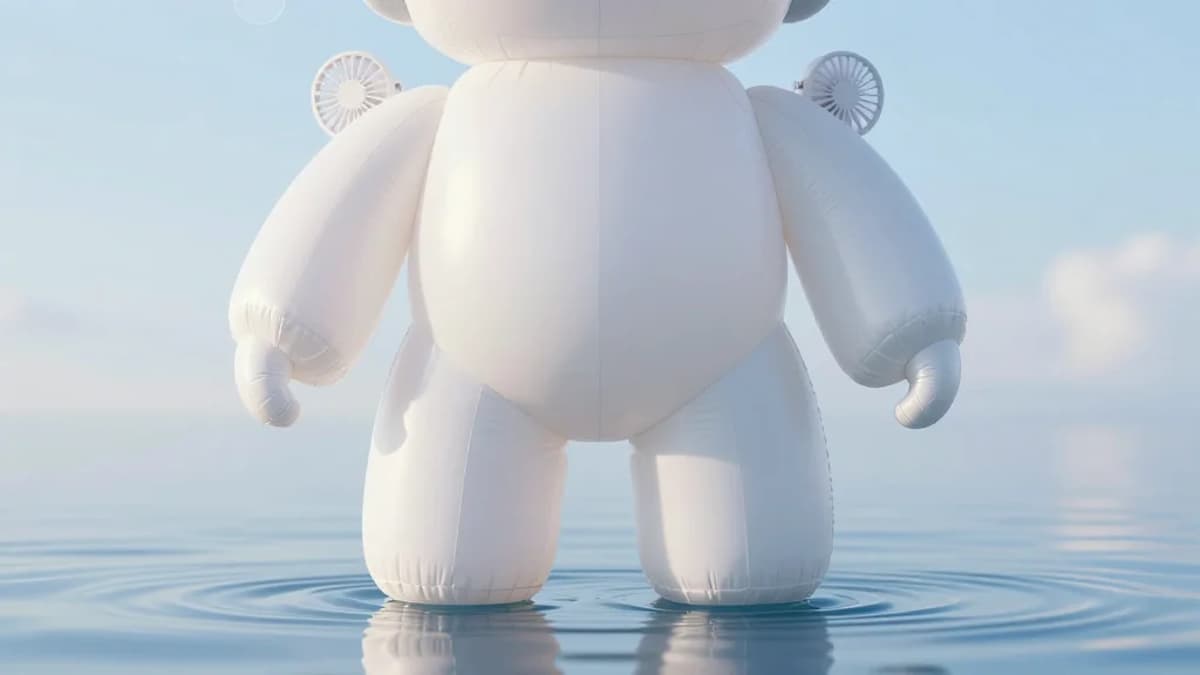
Meet the Soft Humanoid Robot that Can Grow, Shrink, Fly and Walk on Water
•January 26, 2026
0
Why It Matters
GrowHR showcases a new class of safe, reconfigurable robots that could transform rescue operations, logistics, and domestic assistance, addressing long‑standing limitations of rigid humanoids.
Key Takeaways
- •Robot stretches limbs up to three times length
- •Shrinks to 36% height, 61% width
- •Weighs 4.5 kg, can walk on water
- •Uses air‑inflated chambers mimicking bone growth
- •Potential for rescue, delivery, home assistance
Pulse Analysis
The emergence of soft, bioinspired robotics marks a pivotal shift from traditional rigid platforms toward machines that can physically adapt like living organisms. GrowHR’s design draws directly from bone development, using pressurised chambers wrapped in a durable fabric to achieve both stiffness and compliance. This hybrid approach resolves a core dilemma in humanoid robotics—balancing structural strength with impact absorption—while keeping the overall mass low enough for buoyancy and aerial lift. By integrating tension cables and carbon‑fiber guides, the robot maintains precise control even as its geometry changes, setting a new benchmark for reconfigurable actuation.
From an engineering perspective, GrowHR’s ability to expand, contract, and even traverse fluid surfaces opens avenues previously limited to specialized drones or amphibious vehicles. Its 4.5 kg weight, combined with inflatable limbs, enables it to float and walk on water, a feat unattainable for conventional metal‑frame bots. The addition of miniature fans provides short‑range flight, illustrating how modular propulsion can be layered onto a soft chassis without compromising safety. Compared with hard‑shell counterparts, the robot’s elastic skin reduces injury risk during collisions, making it suitable for close‑quarter human environments such as homes or crowded public spaces.
The practical implications are significant. In disaster zones, a robot that can shrink to slip through rubble, then expand to lift debris, offers a versatile tool for search‑and‑rescue teams. Its lightweight, water‑compatible form factor could deliver medical supplies to flood‑stricken regions, while its safe interaction model supports domestic assistance tasks like fetching items or guiding elderly users. As research progresses toward waterproof skins and higher payload capacities, GrowHR’s underlying technology is poised to influence next‑generation service robots, autonomous delivery platforms, and even space exploration where adaptive morphology is essential.
Meet the soft humanoid robot that can grow, shrink, fly and walk on water
0
Comments
Want to join the conversation?
Loading comments...