MIT Engineers Design an Aerial Microrobot that Can Fly as Fast as a Bumblebee
•December 31, 2025
0
Why It Matters
The breakthrough demonstrates that micro‑robots can combine bio‑inspired hardware with real‑time AI control, unlocking practical uses in confined, hazardous environments. It signals a shift toward agile, autonomous micro‑drones for search‑and‑rescue, inspection, and precision agriculture.
Key Takeaways
- •Speed increased 447% ; acceleration up 255% versus prior models
- •AI-driven two-step controller enables real-time aggressive maneuvers
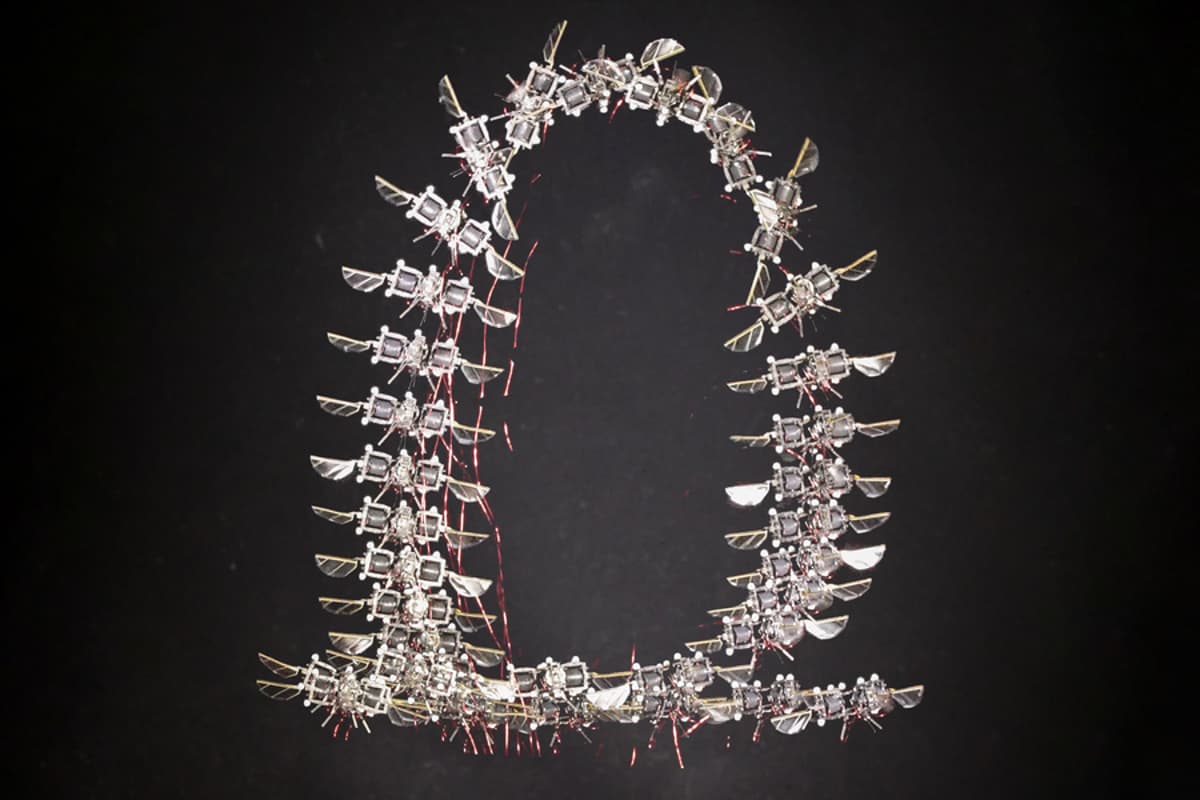
- •Robot performs ten somersaults in eleven seconds, staying within centimeters
- •Potential for search‑and‑rescue, inspection, and pollination in confined spaces
- •Future work aims for onboard sensors and onboard AI control
Pulse Analysis
The MIT team’s innovation hinges on a two‑step control architecture that marries high‑performance model‑predictive planning with a lightweight deep‑learning policy. The first stage computes optimal trajectories accounting for aerodynamic constraints, while the second stage compresses this expertise into an AI model capable of millisecond‑scale decisions. This hybrid approach resolves the classic trade‑off between computational intensity and real‑time responsiveness, a hurdle that has long limited insect‑scale flight systems.
Beyond raw performance metrics, the microrobot’s agility opens new operational scenarios. Its ability to navigate tight, cluttered spaces at bumblebee speeds makes it a candidate for post‑disaster search‑and‑rescue missions, where traditional quadcopters cannot penetrate rubble. The same technology could be adapted for precision pollination, infrastructure inspection, or covert surveillance, where size and maneuverability are paramount. By demonstrating reliable somersaults and saccadic movements, the platform shows promise for integrating onboard cameras and sensors, paving the way for autonomous outdoor deployments.
Looking ahead, the research community faces the challenge of embedding the AI controller directly onto the robot’s limited hardware. Advances in ultra‑low‑power processors and neuromorphic chips could soon enable fully onboard decision‑making, eliminating reliance on external computers. Coupled with sensor fusion for obstacle avoidance and swarm coordination, future generations of these microrobots could operate as collaborative fleets, dramatically expanding the scope of micro‑robotic applications across defense, environmental monitoring, and agriculture. The convergence of soft robotics, AI, and bio‑inspired design is poised to redefine what tiny flying machines can achieve.
MIT engineers design an aerial microrobot that can fly as fast as a bumblebee
0
Comments
Want to join the conversation?
Loading comments...