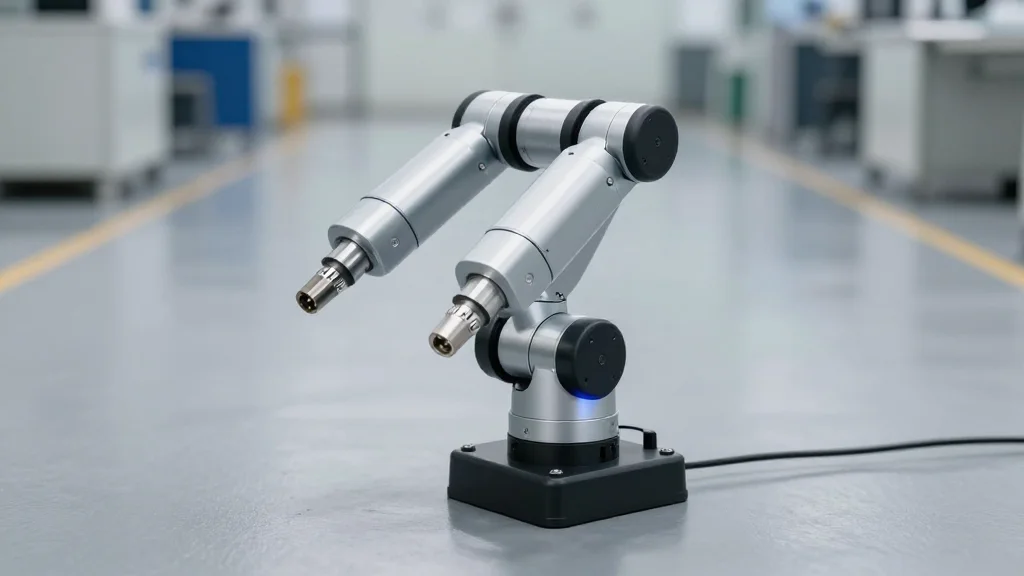
Modular Robotics – Key to Flexibility in High-Mix Manufacturing
Why It Matters
Modular robotics offers a scalable path to agility in HMLV production, protecting manufacturers from costly re‑tooling and labor shortages. Its flexible ROI makes it a strategic investment for EMS providers facing rapid product cycles.
Key Takeaways
- •Modular robots add flexibility to high‑mix, low‑volume lines
- •Integration requires full recalibration of existing equipment
- •Human resistance stems from perceived risk of changing proven setups
- •ROI spreads across assembly, handling, and testing processes
- •Physical AI lets robots adapt to lighting and environment changes
Pulse Analysis
High‑mix, low‑volume (HMLV) manufacturing has become the norm for electronics providers chasing short product life cycles and volatile demand. Traditional fixed‑line automation struggles to keep pace, leading to excess inventory and frequent re‑tooling. Modular robotics—comprising interchangeable robot arms, end‑effectors and vision systems—offers a plug‑and‑play architecture that can be reconfigured in hours rather than weeks. This flexibility reduces capital lock‑in and aligns production capacity with market dynamics, making it an attractive option for original equipment manufacturers (OEMs) and contract manufacturers alike.
The transition to modular cells, however, is not without friction. Technically, each relocation triggers a cascade of recalibration for robots, testers and conveyors, effectively resetting the line’s precision baseline. Equally critical is the human factor: operators and engineers often view changes as risk, especially when existing setups meet performance targets. Owczarek’s pragmatic advice—simplify processes before automating—helps mitigate both concerns. By stripping non‑value‑adding steps first, firms can identify the 70‑80% of tasks ripe for automation while preserving human expertise for the remaining 20%. This balanced approach accelerates ROI, as modular solutions deliver measurable gains across assembly, material handling and functional testing.
Artificial intelligence is evolving from a software‑only concept to a physical enabler within robotics. "Physical AI" equips modular robots with vision and sensor fusion capabilities, allowing them to adjust to lighting shifts, part variations, or unexpected obstacles in real time. While AI is not infallible, embracing probabilistic decision‑making turns uncertainty into a competitive advantage, especially in environments where product specifications change rapidly. As labor costs rise and skilled workforces shrink, the convergence of modular robotics and physical AI positions manufacturers to achieve higher throughput, lower defect rates, and faster time‑to‑market, reshaping the future of flexible electronics production.
Modular robotics – key to flexibility in high-mix manufacturing
Comments
Want to join the conversation?
Loading comments...