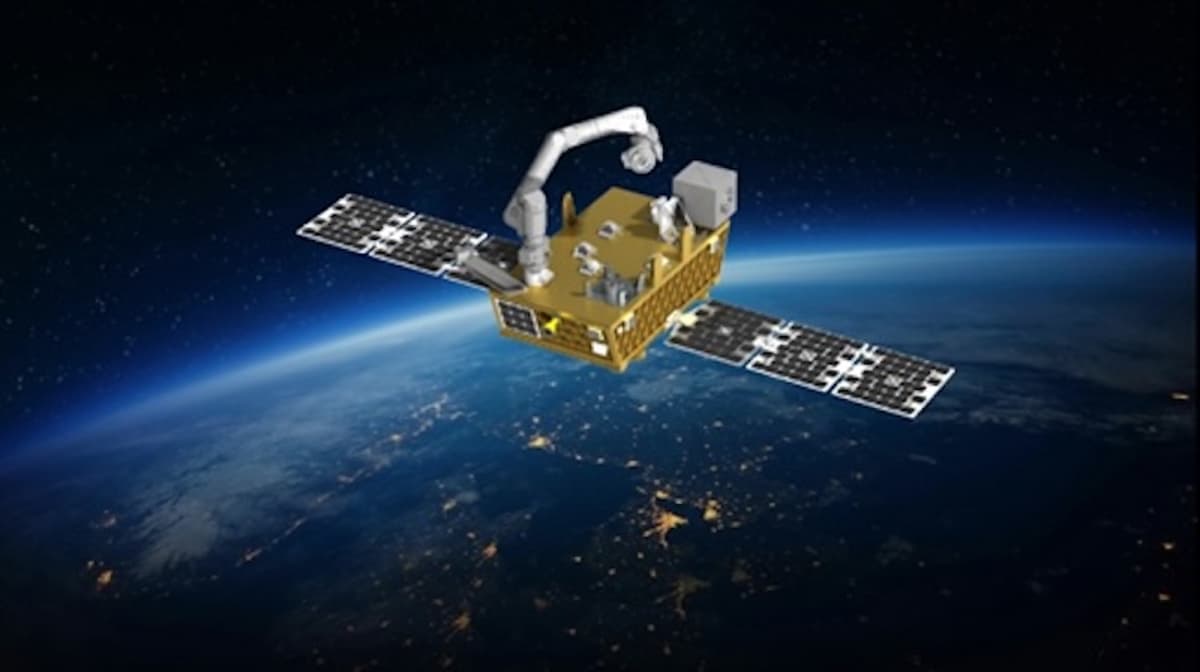
Motiv Space Systems and PickNik Robotics Collaborate on Software for NASA’s Fly Foundational Robotics Mission
•February 10, 2026
0
Companies Mentioned

NASA
Why It Matters
The software integration accelerates NASA’s ability to field autonomous robotic systems in low‑Earth orbit, reducing development risk and paving the way for commercial ISAM services. It also validates MoveIt Pro and Space ROS as viable standards for future space robotics.
Key Takeaways
- •Motiv partners with PickNik for NASA FFR software.
- •MoveIt Pro powers motion planning via Space ROS.
- •Integration supports simulation, digital twin, ground testing.
- •Enables autonomous manipulation for ISAM economy.
- •Collaboration includes runtime config and operator terminal.
Pulse Analysis
NASA’s Fly Foundational Robotics mission represents a pivotal testbed for the agency’s broader In‑space Servicing, Assembly, and Manufacturing (ISAM) strategy. By focusing on autonomous and ground‑supervised manipulation tasks in low‑Earth orbit, FFR seeks to generate the operational data needed to transition from experimental prototypes to repeatable, commercial‑grade services. The mission’s success will inform design standards, safety protocols, and cost models that underpin future satellite servicing, debris removal, and on‑orbit manufacturing initiatives.
At the heart of the effort is PickNik Robotics’ MoveIt Pro suite, now adapted to the Space ROS framework—a hardened variant of the Robot Operating System tailored for spaceflight constraints. This combination delivers high‑fidelity motion planning, behavior sequencing, and real‑time arm control while respecting limited compute resources and intermittent communications. By providing a flight‑ready runtime configuration and a ground‑based operator terminal, PickNik enables extensive digital‑twin simulations and hardware‑in‑the‑loop testing, reducing integration risk and shortening the path from concept to launch.
The collaboration signals a maturing commercial ecosystem around space robotics software. As MoveIt Pro and Space ROS gain traction, third‑party developers can leverage a common stack to accelerate mission development, fostering competition and innovation. Investors and satellite operators will watch closely, because proven autonomous manipulation lowers the cost barrier for on‑orbit servicing contracts, potentially unlocking a multi‑billion‑dollar market for reusable spacecraft components and in‑space manufacturing. The FFR partnership thus not only advances NASA’s technical roadmap but also catalyzes a new wave of private‑sector investment in space‑based robotic capabilities.
Motiv Space Systems and PickNik Robotics collaborate on software for NASA’s Fly Foundational robotics mission
0
Comments
Want to join the conversation?
Loading comments...