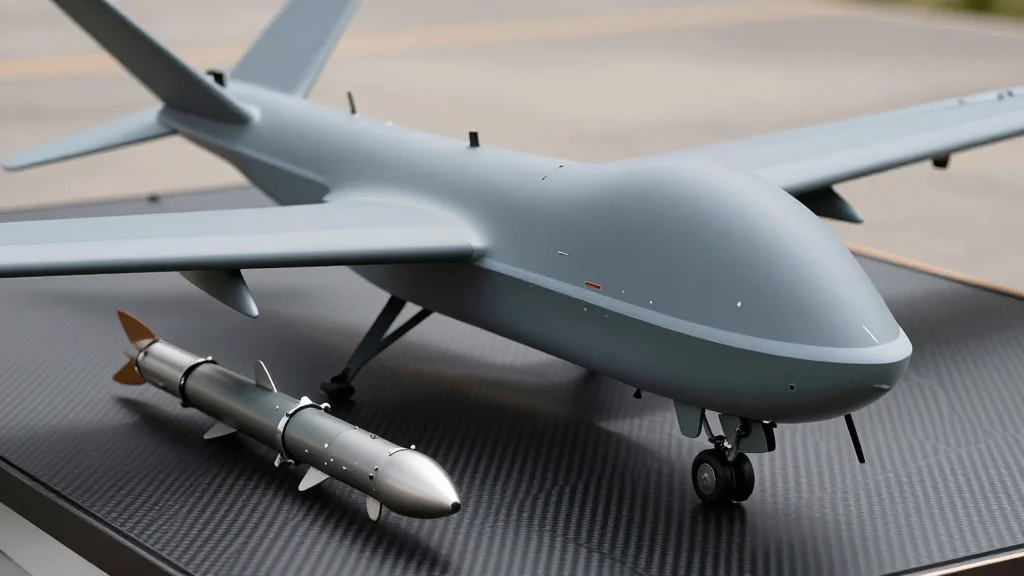
NATO Boosts Drone Funding as Ukraine Faces Faster Russian Shahed Variants

Why It Matters
The rapid upgrade of Russian Shahed drones forces a reassessment of the cost‑effectiveness of existing counter‑UAV assets, which many European militaries rely on. NATO’s new funding streams could accelerate the development of next‑generation defenses, influencing procurement strategies for allied nations and potentially reshaping the market for drone‑related technologies. Moreover, Iran’s 358 missile introduces a competitive, lower‑cost option that could alter the balance of power in regions where both state and non‑state actors seek affordable anti‑drone solutions. For Ukraine, the ability to acquire or develop faster, higher‑altitude interceptors will be critical to maintaining airspace security and protecting ground operations. The broader implication is a possible arms race in high‑speed UAVs and corresponding counter‑measures, with NATO’s investment choices setting the tempo for future engagements.
Key Takeaways
- •NATO decision‑makers are allocating new funds to drone programs after years of limited investment.
- •Russia’s upgraded Shahed drones now fly at ~460 mph and 29,000 ft, outpacing Ukraine’s 280 mph interceptor drones.
- •Iran’s 358 missile, costing about $90,000 per unit, can engage a wide range of aerial threats.
- •Propeller‑driven UAVs are losing effectiveness against faster, higher‑altitude drones.
- •Analysts urge NATO to consider cheap missiles and directed‑energy systems as longer‑term solutions.
Pulse Analysis
NATO’s recent funding shift reflects a reactive posture to the real‑time lessons emerging from Ukraine’s air war. Historically, Western procurement favored low‑cost, propeller‑driven UAVs for their simplicity and scalability. The Russian move to turbojet‑powered Shahed drones upends that calculus, exposing a performance ceiling that cannot be bridged by incremental upgrades to existing platforms. This creates a strategic inflection point: either NATO doubles down on legacy systems and risks obsolescence, or it pivots toward technologies that can neutralize high‑speed threats.
The emergence of Iran’s 358 missile adds a market disruptor that could pressure Western defense firms to lower prices or accelerate innovation. At $90,000 per unit, the missile sits well below the cost of many Western air‑defense solutions, making it attractive to nations with constrained budgets. If NATO does not adapt, it may cede a competitive edge in the burgeoning anti‑drone sector.
Looking ahead, the alliance’s procurement decisions will likely influence the next decade of unmanned combat. Investment in directed‑energy weapons, for instance, promises a scalable, low‑cost response to a spectrum of UAV threats, but development timelines remain long. In the interim, a hybrid approach—maintaining a baseline of propeller UAVs for low‑threat environments while fielding missile‑based interceptors for high‑speed drones—could provide the flexibility needed to address the evolving battlefield while buying time for more advanced solutions to mature.
NATO Boosts Drone Funding as Ukraine Faces Faster Russian Shahed Variants
Comments
Want to join the conversation?
Loading comments...