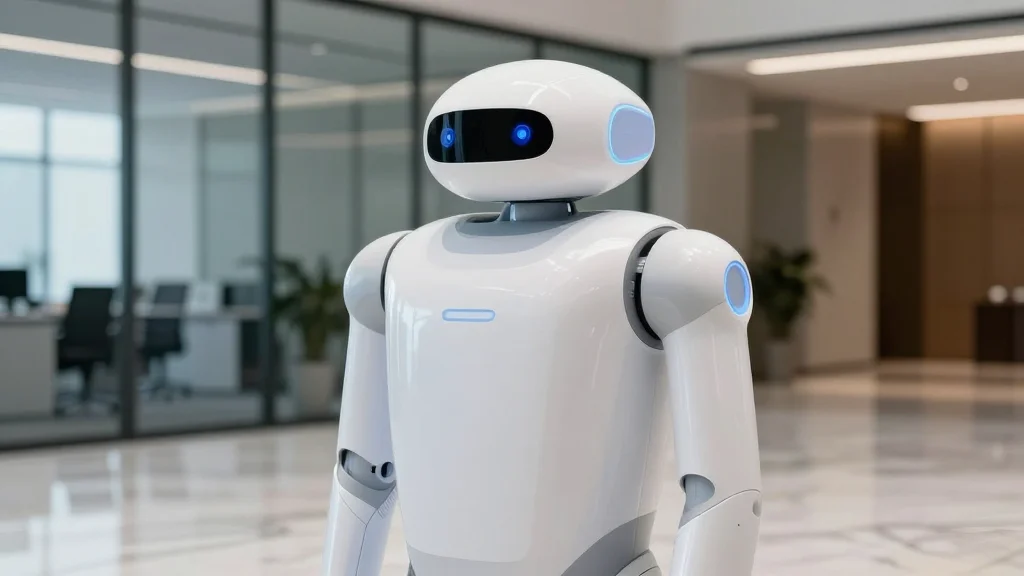
Naver Deploys 100 AI Service Robots Across 28‑Floor Headquarters in South Korea

Companies Mentioned
Why It Matters
The Seongnam deployment illustrates how large tech firms can leverage internal AI research to create tangible productivity gains. By automating routine logistics, Naver frees human workers for higher‑value tasks, a model that could reshape office operations across industries. Moreover, the successful navigation of elevators and security checkpoints demonstrates that multi‑level autonomous navigation—once a technical hurdle—is now commercially viable, lowering barriers for other enterprises. If Naver’s robots deliver measurable efficiency improvements, the rollout could accelerate corporate investment in service robotics, spurring competition among hardware manufacturers, AI platform providers, and cloud services. This could also influence standards for safety, data security, and human‑robot interaction in shared workspaces, prompting regulators and industry groups to develop new guidelines.
Key Takeaways
- •Naver installed ~100 autonomous "Rookie" service robots across its 28‑floor Seongnam headquarters.
- •Robots can navigate elevators, security gates and multiple floors without human assistance.
- •Fleet is coordinated by Naver Labs' cloud‑based ARC Brain platform for real‑time management.
- •Naver reported 2025 revenue of 12.35 trillion won ($8.2 billion) and projects 2026 revenue of 13.41 trillion won ($8.9 billion).
- •The rollout positions Naver as a leader in enterprise‑scale service robotics, potentially opening new B2B revenue streams.
Pulse Analysis
Naver’s robot fleet is more than a publicity stunt; it is a strategic lever in the company’s broader AI agenda. By embedding AI into the physical workflow of its own offices, Naver can iterate quickly, collect granular usage data, and fine‑tune algorithms in a controlled environment. This internal feedback loop shortens the time to market for any future commercial robot offerings, giving Naver a first‑mover advantage in a market still dominated by Japanese and European manufacturers.
Historically, large‑scale robot deployments have been hampered by integration challenges—especially when crossing floor boundaries. Naver’s success in automating elevator usage suggests a breakthrough in perception and decision‑making software, likely powered by advanced SLAM (simultaneous localization and mapping) and cloud‑edge hybrid processing. Competitors such as Samsung and LG will now feel pressure to showcase comparable capabilities, potentially igniting a regional arms race in service‑robot technology.
Looking ahead, the key question is whether the productivity gains justify the capital outlay. If Naver can quantify reductions in labor hours, faster document delivery, and higher employee satisfaction, the ROI will be compelling for other enterprises. Conversely, any safety incidents or integration hiccups could dampen enthusiasm. The next 12 months will reveal whether Naver’s campus becomes a blueprint for corporate AI adoption or remains an isolated experiment.
Naver Deploys 100 AI Service Robots Across 28‑Floor Headquarters in South Korea
Comments
Want to join the conversation?
Loading comments...