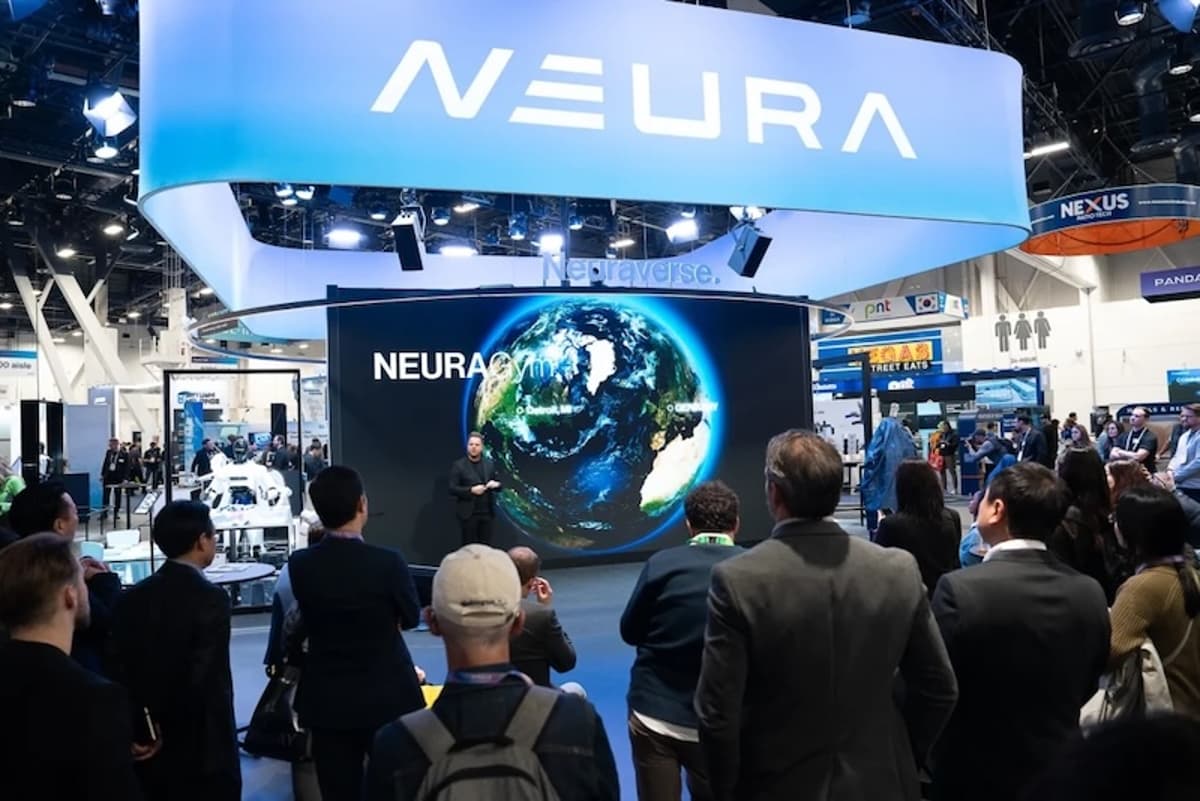
Neura Robotics Showcases New Humanoid, Quadruped, and AI Platform at CES 2026
•January 25, 2026
0
Companies Mentioned


Why It Matters
By linking disparate robots through a common software layer, Neura accelerates skill reuse and reduces hardware‑centric upgrades, reshaping how enterprises deploy autonomous systems.
Key Takeaways
- •Neura launches 4NE1 humanoid and Mini at CES
- •New quadruped robot handles uneven industrial environments
- •Neuraverse platform enables skill sharing across robots
- •Early-access partners can publish robotic applications
- •Robots powered by Neura Isaac GR00T XX engine
Pulse Analysis
Robotics manufacturers have long grappled with siloed hardware that requires bespoke software for each platform. Neura Robotics’ Neuraverse aims to break that barrier by offering a cloud‑native operating layer where data, perception models, and motion primitives flow freely between devices. This approach mirrors trends in AI where model sharing drives rapid iteration, and it could become a cornerstone for scalable robot fleets in logistics, healthcare, and manufacturing.
At CES 2026 the company showcased three distinct machines: the 4NE1 humanoid, co‑designed with Studio F.A. Porsche, its compact 4NE1 Mini for research labs, and a rugged quadruped built for uneven terrain and industrial inspection. All units run on the Neura Isaac GR00T XX processor, leveraging Isaac Lab and Isaac Sim for realistic testing before deployment. The quadruped’s 48.5‑lb payload and multi‑sensor suite illustrate how hardware is being optimized for real‑world tasks without sacrificing the ability to receive over‑the‑air updates.
The broader implication for developers is a shift toward software‑defined motion, where new capabilities are delivered via the Neuraverse rather than costly hardware revisions. Early‑access partners can publish and distribute robotic applications, creating a marketplace akin to mobile app ecosystems. As enterprises seek to scale autonomous operations, platforms that enable cross‑robot learning will likely become a competitive differentiator, positioning Neura Robotics as a potential infrastructure provider in the emerging robot‑as‑a‑service economy.
Neura Robotics showcases new humanoid, quadruped, and AI platform at CES 2026
0
Comments
Want to join the conversation?
Loading comments...