New Research Enables a Robot to Chart a Better Course
Companies Mentioned
Why It Matters
MIGHTY removes the high‑price barrier of commercial trajectory solvers, enabling faster, safer autonomous UAV operations across emergency response and commercial logistics. Its real‑time, open‑source nature accelerates innovation and broader adoption in the robotics ecosystem.
Key Takeaways
- •MIGHTY generates smooth UAV trajectories in milliseconds.
- •Open‑source system runs on onboard hardware, no costly licenses.
- •Achieves 15% faster travel and 90% of computation time versus state‑of‑the‑art.
- •Uses Hermite spline joint spatial‑temporal optimization.
- •Demonstrated 6.7 m/s speed while avoiding all obstacles.
Pulse Analysis
The aftermath of natural disasters increasingly relies on rapid aerial assessment, yet traditional UAV navigation software struggles with the split‑second decisions required in cluttered, dynamic environments. Commercial trajectory planners can deliver high performance, but their price tags—often hundreds of thousands of dollars—limit deployment to well‑funded agencies. MIGHTY flips this paradigm by offering a cost‑free, open‑source alternative that runs entirely on a drone’s onboard computer, eliminating the need for expensive ground stations or proprietary middleware. This democratization aligns with a broader industry shift toward accessible, cloud‑independent robotics solutions.
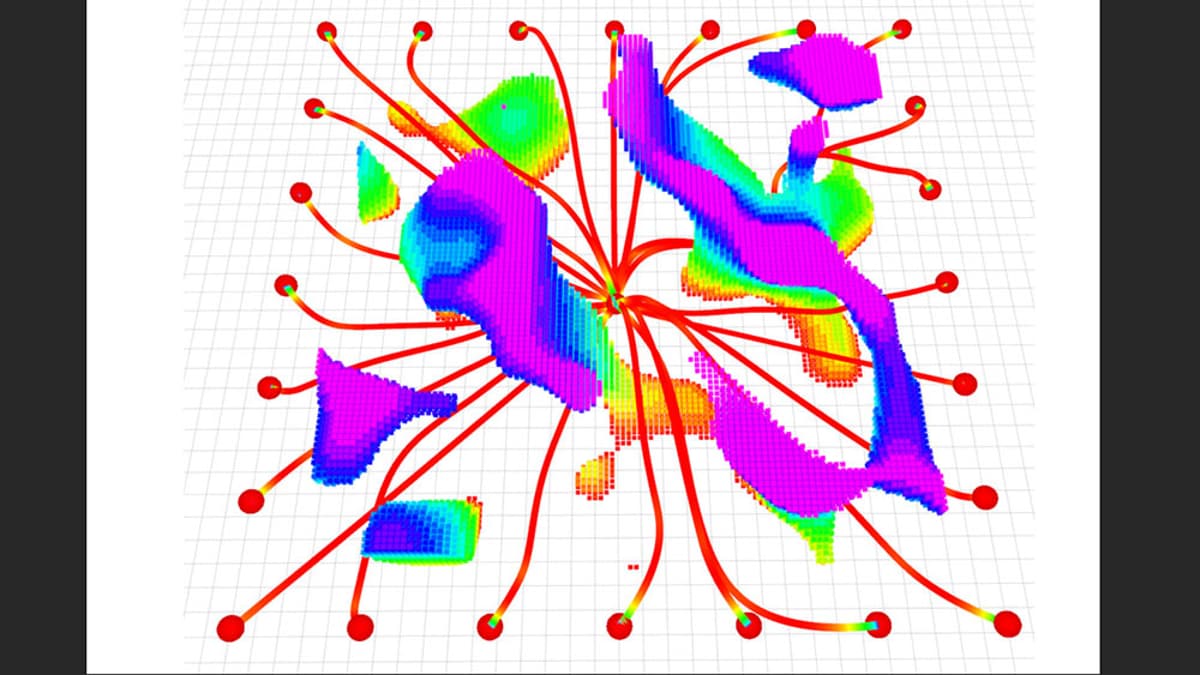
At the heart of MIGHTY is a novel application of Hermite splines, which simultaneously optimizes a robot’s path geometry and travel time. By starting with an educated guess and iteratively refining the trajectory using lidar‑derived maps, the system sidesteps the computational explosion that typically hampers joint spatial‑temporal optimization. In benchmark simulations, MIGHTY required only 90% of the processing time of state‑of‑the‑art planners while reaching destinations about 15% faster. Real‑world flight tests confirmed these gains, achieving a steady 6.7 m/s speed and flawless obstacle avoidance, proving the approach is both theoretically sound and practically robust.
Beyond emergency response, MIGHTY’s capabilities have clear commercial implications. Urban last‑mile delivery drones must weave through buildings, power lines, and pedestrians, a task that demands both agility and reliability. Similarly, industrial inspections of wind turbines or bridges benefit from precise, time‑optimal flight paths that minimize downtime. By lowering the entry cost and simplifying integration, MIGHTY can accelerate the rollout of autonomous UAV services across logistics, infrastructure monitoring, and defense sectors. Future work targeting multi‑robot coordination could further amplify its impact, positioning MIGHTY as a foundational tool in the next generation of autonomous aerial systems.
New Research Enables a Robot to Chart a Better Course
Comments
Want to join the conversation?
Loading comments...