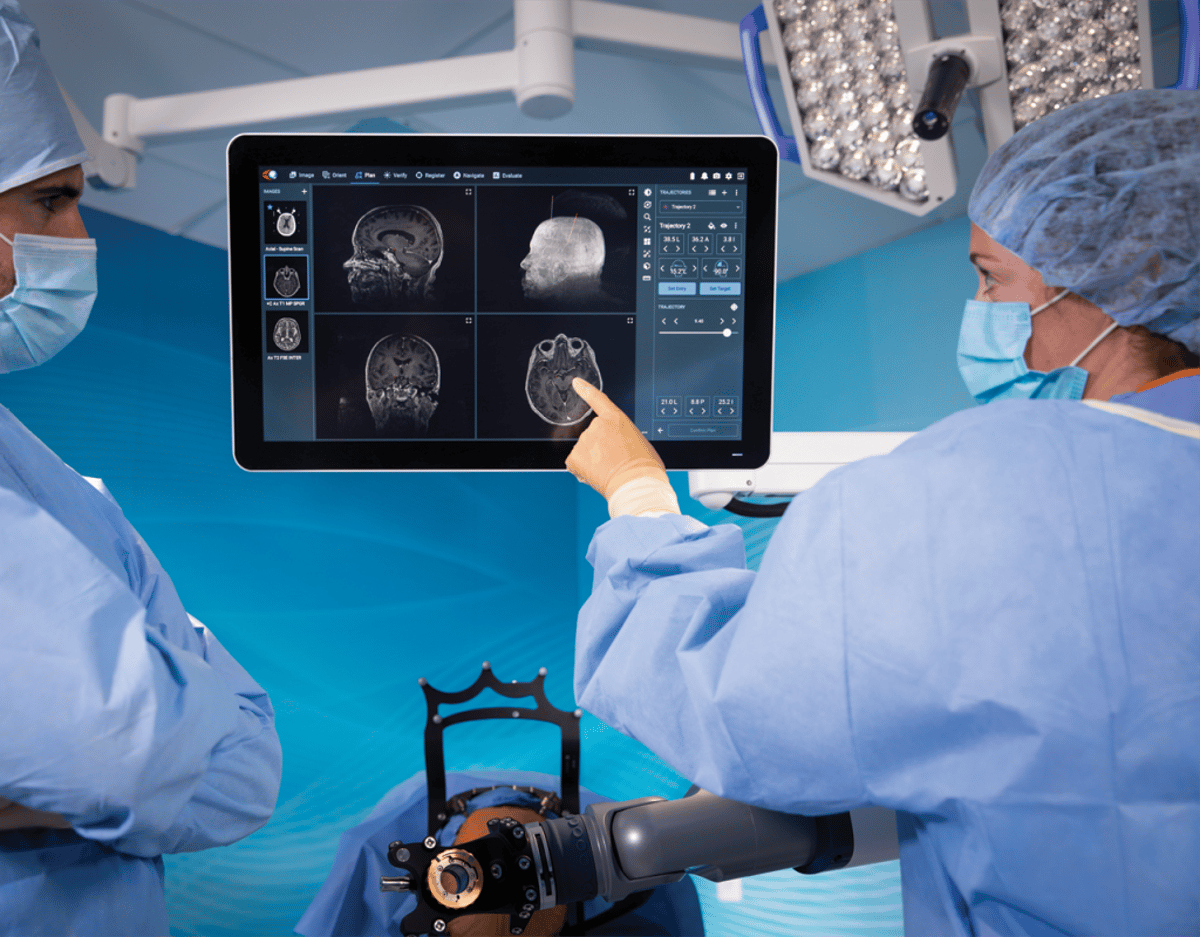
New Surgical Robot Introduced in Newcastle to Advance Precision Neurosurgery
Why It Matters
Robotic assistance promises safer, more precise neurosurgical interventions, potentially improving outcomes for patients with debilitating brain disorders. Its adoption signals a broader shift toward high‑tech solutions in the NHS and could accelerate market demand for similar systems globally.
Key Takeaways
- •Newcastle becomes UK's first neurosurgery robot user
- •ExcelsiusGPS offers sub‑millimetre accuracy for deep‑brain procedures
- •Robot assistance may improve outcomes for Parkinson’s and epilepsy surgeries
- •Integration with 3D imaging and VR enhances surgical planning
- •Trust designated NHS National Centre for Neurotechnology
Pulse Analysis
The rollout of the ExcelsiusGPS robot at Newcastle’s Royal Victoria Infirmary marks a watershed moment for British neurosurgery. As the nation’s inaugural deployment of this specialist platform, the Trust now offers surgeons a tool that can execute movements measured in fractions of a millimetre—far beyond human steadiness. By marrying a high‑precision robotic arm with real‑time 3D imaging, the system streamlines the planning and execution of deep‑brain procedures, positioning Newcastle at the forefront of surgical innovation.
Technical sophistication drives clinical promise. The robot’s sub‑millimetre targeting is especially valuable for interventions such as deep‑brain stimulation, where millimetre‑scale accuracy can dictate therapeutic success for Parkinson’s disease or refractory epilepsy. Coupled with virtual‑reality planning modules, surgeons can rehearse complex trajectories before entering the operating theatre, reducing intra‑operative risk. Early performance data suggest tighter lesion placement and potentially shorter operative times, factors that translate into better patient recovery and lower complication rates.
Beyond the operating room, the adoption reflects the NHS’s strategic push toward neurotechnology. As Newcastle assumes its role as a National Centre for Neurotechnology and Neurorestoration, the robot serves as both a clinical asset and a research platform, attracting trials and industry partnerships. Market analysts anticipate that successful outcomes will spur wider procurement across UK hospitals and stimulate competition among manufacturers, accelerating cost reductions and spurring further advances in robotic neurosurgery worldwide.
New surgical robot introduced in Newcastle to advance precision neurosurgery
Comments
Want to join the conversation?
Loading comments...