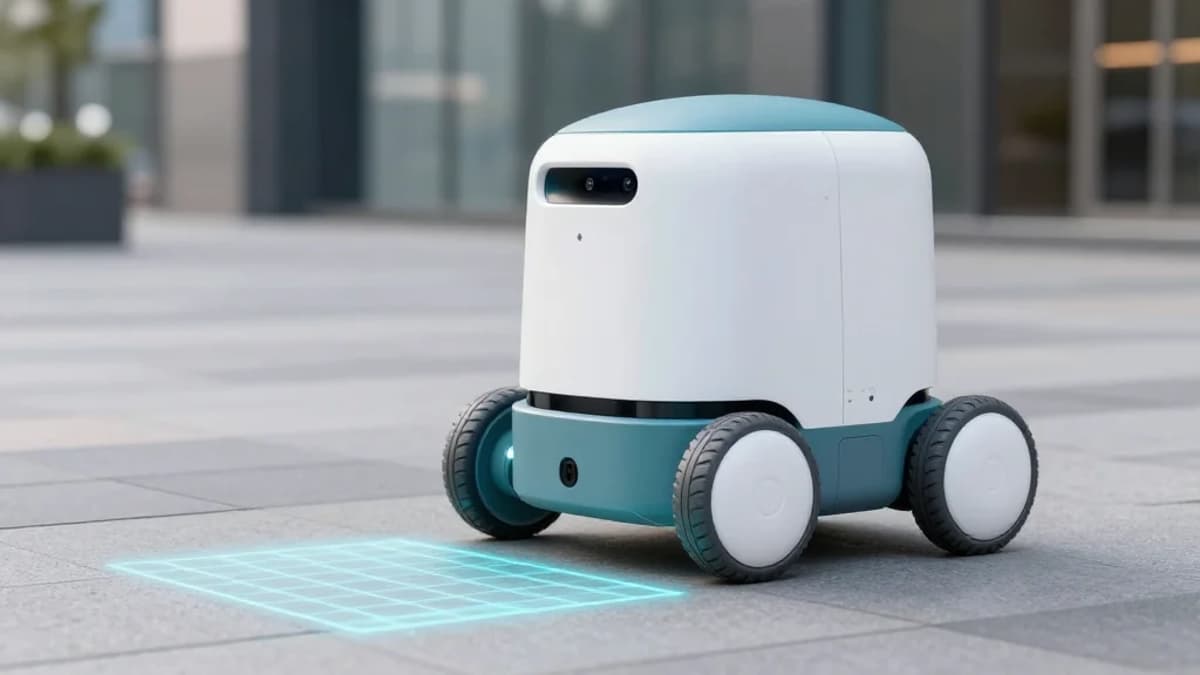
Niantic Spatial Partners with Coco Robotics to Accelerate the Future of Autonomous Delivery
•March 10, 2026
0
Why It Matters
Accurate urban localization unlocks reliable, high‑volume autonomous delivery, reshaping last‑mile logistics and creating a new market for geospatial AI services.
Key Takeaways
- •Niantic Spatial provides VPS for Coco’s delivery robots
- •Partnership targets GPS‑dead zones in dense urban areas
- •Visual Positioning System offers global coverage without pre‑scanning
- •Enhanced localization improves safety and last‑mile efficiency
- •Collaboration may set new standard for urban robot navigation
Pulse Analysis
The last‑mile delivery segment is rapidly evolving as retailers and logistics firms chase faster, contact‑less fulfillment. While autonomous robots promise cost savings and scalability, navigating congested city streets remains a technical bottleneck. Traditional GPS signals degrade in urban canyons, under bridges, and inside complex curb‑cut environments, leading to positioning errors that can stall a robot’s route. Companies that can reliably localize in these “GPS‑dead zones” gain a decisive edge, unlocking higher throughput and safer operations for consumers and businesses alike.
Niantic Spatial’s Visual Positioning System (VPS) tackles this problem by fusing 2D and 3D visual data with its Large Geospatial Model to create a cloud‑based, globally consistent map. Unlike legacy solutions that require pre‑scanned corridors, VPS delivers on‑demand localization using existing street‑level imagery, delivering centimeter‑level accuracy even when satellite signals disappear. The system’s flexible data inputs allow Coco Robotics to integrate diverse sensor streams, improving obstacle avoidance and route optimization. By providing continuous, high‑precision pose estimates, VPS reduces the computational load on the robot’s onboard processors, extending battery life and operational range.
The Niantic‑Coco partnership signals a broader shift toward geospatial AI as core infrastructure for urban robotics. As more firms adopt VPS‑style services, the competitive landscape for autonomous delivery will likely consolidate around providers that can guarantee reliability at scale. For investors, the collaboration highlights a viable pathway to monetize spatial intelligence beyond gaming, Niantic’s original domain. Looking ahead, joint R&D could produce adaptive learning models that anticipate dynamic obstacles, further narrowing the gap between pilot projects and city‑wide deployments. Ultimately, the alliance may accelerate the timeline for fully autonomous, city‑wide delivery networks.
Niantic Spatial Partners with Coco Robotics to Accelerate the Future of Autonomous Delivery
0
Comments
Want to join the conversation?
Loading comments...