NVIDIA Research Advances Robotics From Simulation to the Real World
Companies Mentioned
Why It Matters
These advances lower the barrier for deploying adaptable robots in manufacturing, logistics and field operations, accelerating the shift from lab prototypes to commercial automation.
Key Takeaways
- •ScheduleStream speeds multi‑arm planning 3× using GPU acceleration.
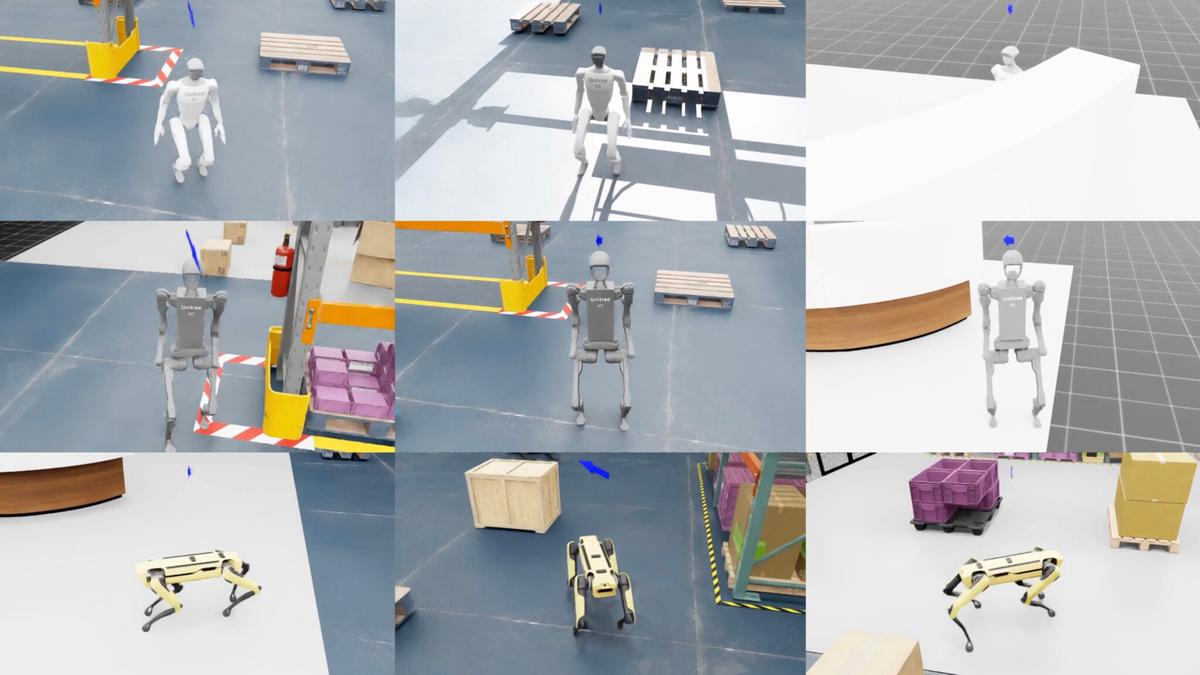
- •COMPASS boosts navigation success 4.5×, 80% real‑world rate.
- •Grasp‑MPC raises real‑robot grasp success to 75% from 41%.
- •SPARR improves assembly success 38% and cuts cycle time 30%
Pulse Analysis
Simulation‑to‑real transfer has moved from a research curiosity to a practical foundation for modern robotics, and NVIDIA is at the forefront of that shift. By leveraging the massive parallelism of GPUs within the Isaac Lab environment, researchers can generate billions of training scenarios in hours, dramatically shortening the development cycle. This capability not only improves algorithmic robustness but also democratizes access to high‑fidelity data, allowing startups and established manufacturers alike to prototype complex behaviors without costly physical trials.
The ICRA papers showcase concrete performance jumps that matter to industry. ScheduleStream’s three‑fold speedup in multi‑arm planning translates to higher throughput in pharmaceutical or electronics assembly lines. COMPASS delivers a 4.5× lift in navigation success, enabling mobile robots to operate reliably across diverse chassis—a boon for warehousing and autonomous delivery. Grasp‑MPC’s 75% success rate on novel objects and SPARR’s 38% assembly boost demonstrate that robots can now handle the variability of real‑world parts, reducing downtime and manual intervention.
Beyond individual algorithms, NVIDIA’s open‑source datasets—such as the Physical AI Dataset with over 15 million downloads—create a shared foundation for the robotics community. By providing standardized simulation assets and digital twins, NVIDIA accelerates collaborative research across universities and enterprises, fostering a virtuous cycle of innovation. As physical AI matures, the convergence of GPU‑driven simulation, open data, and robust transfer methods will likely reshape supply‑chain automation, field service robotics, and even consumer‑level assistants, positioning NVIDIA as a pivotal infrastructure provider.
NVIDIA Research Advances Robotics From Simulation to the Real World
Comments
Want to join the conversation?
Loading comments...