NVIDIA Research Unlocks Advanced Grasping, Smarter Autonomous Driving and Agent Training at Scale
Companies Mentioned

Why It Matters
These models dramatically lower data‑collection costs and enable rapid deployment of adaptable AI across hardware‑constrained domains, giving developers a scalable path to smarter robots, safer autonomous vehicles, and more versatile virtual agents.
Key Takeaways
- •GraspGen‑X trained on 2 billion simulated grasps for any robot gripper
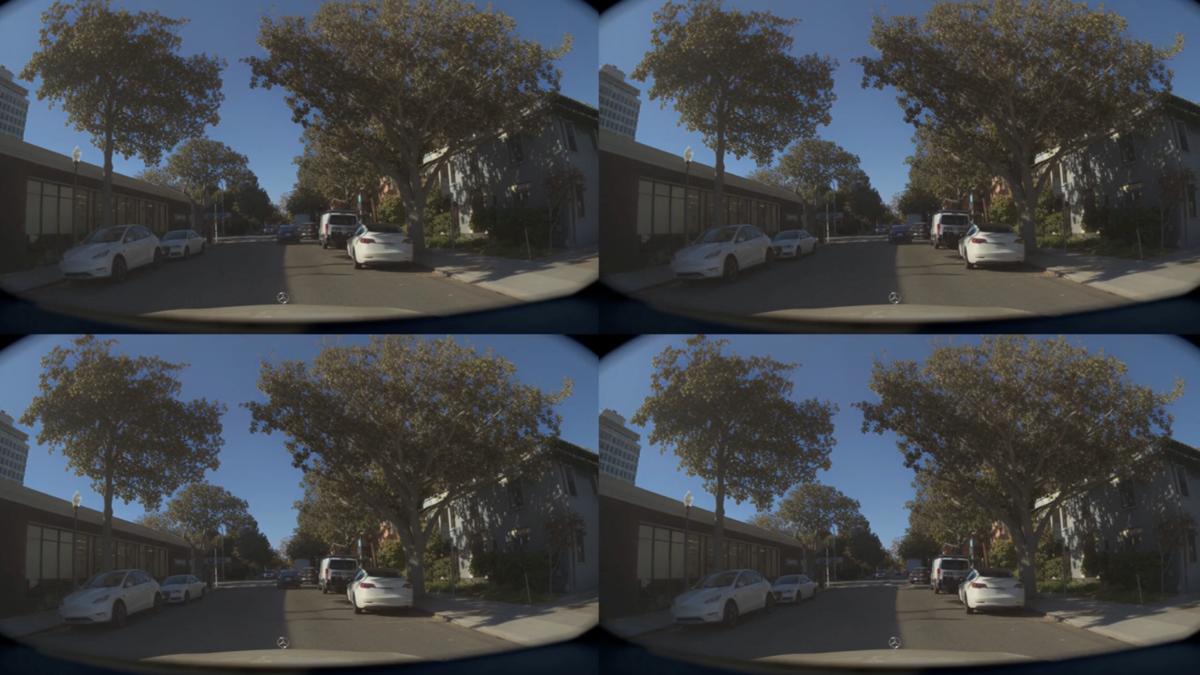
- •LCDrive cuts reasoning tokens by ~50% while keeping trajectory quality
- •NitroGen trained on 1,000 games, 40k hours, lifts low‑data performance 52%
- •Foundation models enable zero‑shot adaptation across robotics, driving, and gaming AI
- •Open‑source NitroGen available on GitHub and Hugging Face for developers
Pulse Analysis
NVIDIA’s GraspGen‑X marks a paradigm shift for robotic manipulation by leveraging billions of simulated interactions to create a truly universal grasping model. Traditional pipelines require bespoke data collection for each gripper, a costly bottleneck that slows product cycles. By encoding geometric and contact knowledge into a foundation model, developers can now plug in new end‑effectors and obtain high‑confidence grasp proposals out of the box, accelerating deployment in warehouses, manufacturing, and service robots.
In the autonomous‑vehicle arena, LCDrive tackles a critical latency challenge: on‑board processors cannot afford the token‑by‑token overhead of text‑based reasoning. The model’s latent‑space reasoning compresses spatial information, allowing rapid prediction‑action loops while preserving the nuanced decision‑making benefits of chain‑of‑thought approaches. This efficiency translates to faster reaction times on embedded hardware, a decisive advantage for safety‑critical driving systems and a step toward broader adoption of AI‑driven perception stacks.
NitroGen extends the concept of foundation models to the gaming domain, treating thousands of diverse virtual worlds as a massive, low‑cost training laboratory. By ingesting 40,000 hours of gameplay across genres, the model learns transferable skills that generalize to unseen environments, delivering up to a 52 % performance lift in low‑data scenarios. Its open‑source release on GitHub and Hugging Face invites the research community to build richer non‑player characters, adaptive AI companions, and robust simulation testbeds, bridging the gap between virtual training and real‑world embodied agents.
NVIDIA Research Unlocks Advanced Grasping, Smarter Autonomous Driving and Agent Training at Scale
Comments
Want to join the conversation?
Loading comments...