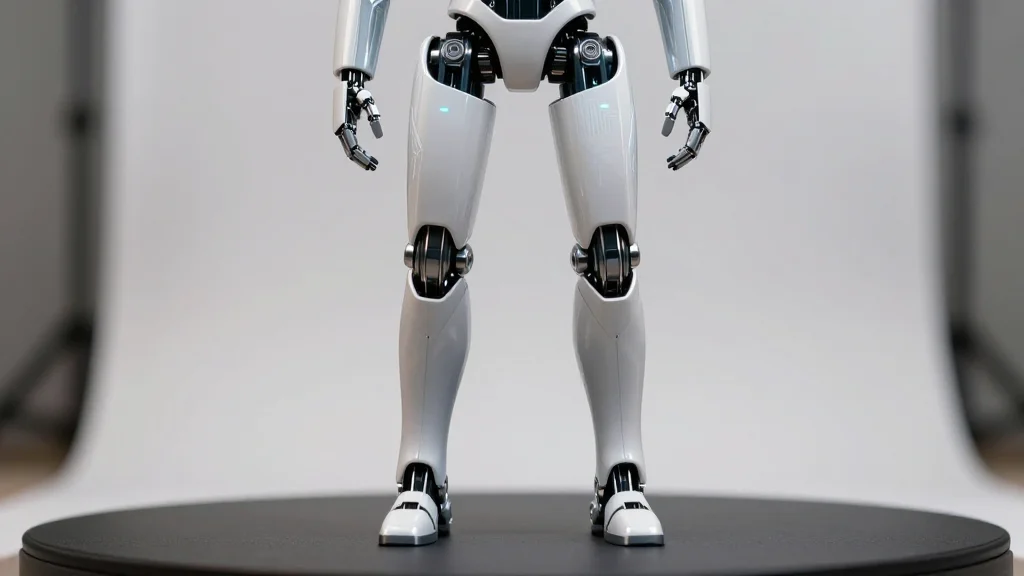
Nvidia Unveils 6‑foot Humanoid Robot Blueprint with Unitree H2 Plus and Thor T5000

Companies Mentioned
Why It Matters
The Nvidia‑Unitree blueprint illustrates how cross‑border technology integration can accelerate progress in a field traditionally hampered by fragmented supply chains. By offering a cost‑effective, high‑performance humanoid platform, the collaboration could democratize access to advanced robotics, spurring innovation in manufacturing, logistics, and research. At the same time, the partnership highlights the strategic stakes of robotics in US‑China relations. As both nations vie for leadership in AI‑enabled machines, the ability to combine hardware and software strengths may become a decisive factor in shaping future economic and security outcomes.
Key Takeaways
- •Nvidia unveiled a humanoid robot blueprint pairing Unitree H2 Plus with the Thor T5000 AI chip
- •The robot stands 6 feet tall and weighs about 150 lb, targeting research labs and advanced applications
- •Spencer Huang said Unitree is "the first, but they're not going to be the last by a long shot"
- •Scott Singer noted the collaboration shows both sides could weaponize supply‑chain assets yet are working together
- •Gavin Kenneally warned the US could lose the commercial robotics market without a national strategy
Pulse Analysis
Nvidia’s entry into humanoid robotics marks a strategic pivot from pure AI compute to embodied intelligence. The company has long leveraged its GPU leadership to dominate model training, but the robotics market demands low‑latency inference and tight integration with sensors and actuators—areas where Nvidia’s recent hardware, like the Thor T5000, is purpose‑built. By aligning with Unitree, Nvidia sidesteps the costly and time‑intensive process of building a mechanical platform from scratch, allowing it to focus on the differentiating silicon and software stack.
Historically, robotics has suffered from a “hardware bottleneck,” where sophisticated AI algorithms outpace the capabilities of existing robot bodies. The H2 Plus chassis, already proven in parkour and research demos, offers a low‑cost, high‑performance foundation that can be mass‑produced. When paired with Nvidia’s Isaac SDK and the Thor chip’s on‑device AI, the combined system could dramatically reduce development cycles for universities and startups, potentially leading to a surge in novel applications—from warehouse automation to assistive care.
Geopolitically, the collaboration is a double‑edged sword. While it showcases the pragmatic benefits of US‑China tech cooperation, it also raises alarms about data sovereignty and supply‑chain security. The U.S. has recently relaxed export controls on advanced chips, a move that enables deals like this but also risks exposing critical AI hardware to adversarial actors. Policymakers will need to balance the economic upside of accelerated robotics innovation against the strategic imperative to safeguard AI models and sensor data. The next few months—when Nvidia releases development kits and the first research papers emerge—will reveal whether this hybrid approach can set a new industry benchmark or become a flashpoint in the broader tech rivalry.
Nvidia unveils 6‑foot humanoid robot blueprint with Unitree H2 Plus and Thor T5000
Comments
Want to join the conversation?
Loading comments...