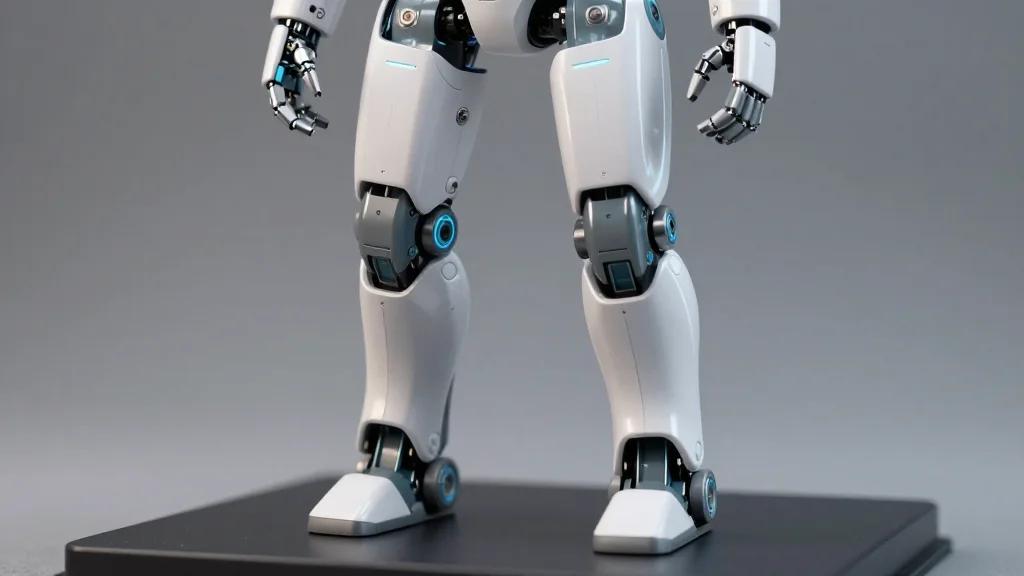
Nvidia Unveils Six‑foot, 150‑lb Chinese‑built Isaac GR00T Humanoid at GTC Taipei

Companies Mentioned

Why It Matters
The debut of a fully integrated, open‑source humanoid robot bridges a critical gap between AI research and physical embodiment. By lowering the barrier to entry, the Isaac GR00T platform could democratize access to advanced robotics, speeding up breakthroughs in manipulation, locomotion, and human‑robot interaction. Moreover, the collaboration highlights a growing convergence of Chinese hardware expertise with American AI software, reshaping supply chains and competitive dynamics in the global robotics arena. For investors, the simultaneous launch and Unitree IPO filing create a clear narrative: a hardware partner validated by a market leader, poised to capture a share of the projected multitrillion‑dollar physical AI market. Success could spur further cross‑border partnerships and accelerate the commercialization of research‑grade robots, influencing everything from manufacturing to healthcare.
Key Takeaways
- •Nvidia introduced the Isaac GR00T humanoid, a six‑foot, 150‑lb robot built on Unitree’s H2 Plus chassis
- •The robot features 31 body degrees of freedom and 25‑degree‑of‑freedom tactile hands from Sharpa
- •Onboard compute: Nvidia Jetson AGX Thor with Blackwell GPU delivering 2,070 FP4 teraflops
- •Unitree Robotics is filing for a STAR Market IPO, targeting $610‑$620 million in proceeds
- •Early adopters include Stanford, ETH Zurich, AI2, and UC San Diego’s Advanced Robotics Lab
Pulse Analysis
Nvidia’s strategy mirrors its earlier CUDA playbook: provide a free, high‑performance software stack that compels developers to adopt its hardware. By releasing an open reference humanoid, Nvidia is planting a seed that could grow into a de‑facto standard for physical AI research. The move also addresses a long‑standing bottleneck—access to affordable, capable robot bodies—by leveraging Unitree’s cost‑effective manufacturing.
Historically, humanoid platforms have been dominated by a handful of expensive Western players, limiting experimentation to well‑funded labs. Unitree’s price advantage, combined with Nvidia’s brand and ecosystem, could democratize the field, leading to a surge in open‑source contributions and faster iteration cycles. This could compress the timeline for breakthroughs in dexterous manipulation and whole‑body control, areas that have lagged behind perception‑only AI.
From a market perspective, the partnership signals a shift in the competitive landscape. Chinese robotics firms are no longer just OEMs; they are becoming co‑developers of cutting‑edge AI hardware. As the robot ecosystem matures, we may see a bifurcation: a research tier powered by open platforms like Isaac GR00T, and a commercial tier that builds on the same stack but adds proprietary safety and reliability layers. Investors should watch Unitree’s IPO performance and Nvidia’s subsequent software releases, as they will indicate how quickly the industry adopts this new model and whether the collaboration can sustain a virtuous cycle of hardware‑software co‑development.
In the longer term, the success of Isaac GR00T could catalyze similar collaborations across other domains—autonomous vehicles, drones, and industrial automation—where the combination of low‑cost hardware and powerful AI frameworks is essential. The platform’s open nature may also spur regulatory dialogue, as standardized hardware and software could simplify safety certification processes worldwide.
Nvidia unveils six‑foot, 150‑lb Chinese‑built Isaac GR00T humanoid at GTC Taipei
Comments
Want to join the conversation?
Loading comments...