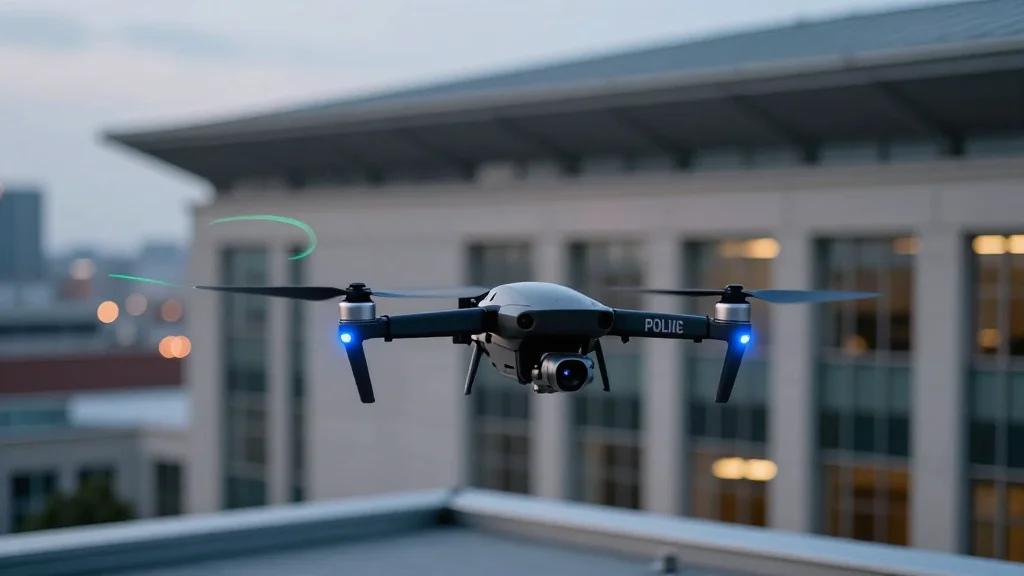
Oakland County, Mich., Weighs Flock Drones Amid Privacy Concern
Why It Matters
The decision will set a precedent for how local law‑enforcement agencies adopt commercial surveillance tools while navigating privacy concerns and fiscal commitments.
Key Takeaways
- •County faces $2.5 M contract if pilot not opted out.
- •Pilot provides seven Flock drones, data publicly visible per flight.
- •Privacy advocates cite ICE data‑sharing concerns, 2,500+ petition signatures.
- •Contract gives Flock ownership of data, limits county’s control.
- •State lawmakers propose S.H.I.E.L.D. bills to regulate drone use.
Pulse Analysis
Oakland County’s board is weighing a nine‑month pilot with Flock, a private drone‑as‑a‑service platform that would place seven aerial units across the jurisdiction. The program is offered at no cost to the county, but if officials do not terminate it by Dec. 15, 2026, a two‑year contract worth roughly $2.5 million automatically kicks in. Sheriff’s deputies, not patrol cars, would operate the drones, and each flight’s path, altitude and duration would be posted publicly, a feature the agency touts as a transparency safeguard.
The proposal has ignited privacy backlash. Critics point to past reports that Flock’s technology has been accessed by U.S. Immigration and Customs Enforcement, prompting a Change.org petition that has gathered more than 2,500 signatures. While Flock’s website denies direct ICE integration, the contract grants the company ownership of all data collected and the right to create public analytics, limiting the county’s ability to restrict third‑party use. Residents like Rochester Hills’ Holli Munro fear data breaches and the erosion of Fourth Amendment protections.
Oakland County’s dilemma mirrors a national debate. Neighboring Macomb County recently deployed a sheriff‑run drone to apprehend a teen on an e‑bike, citing public‑safety benefits, while several municipalities have already terminated Flock agreements after community pressure. In Lansing, a bipartisan group introduced the S.H.I.E.L.D. legislative package to impose uniform standards on drone operations, data retention and facial‑recognition use. The outcome of Oakland’s vote will signal how local governments balance emerging surveillance tools with civil‑rights safeguards, and could influence future state‑level drone regulations.
Oakland County, Mich., Weighs Flock Drones Amid Privacy Concern
Comments
Want to join the conversation?
Loading comments...