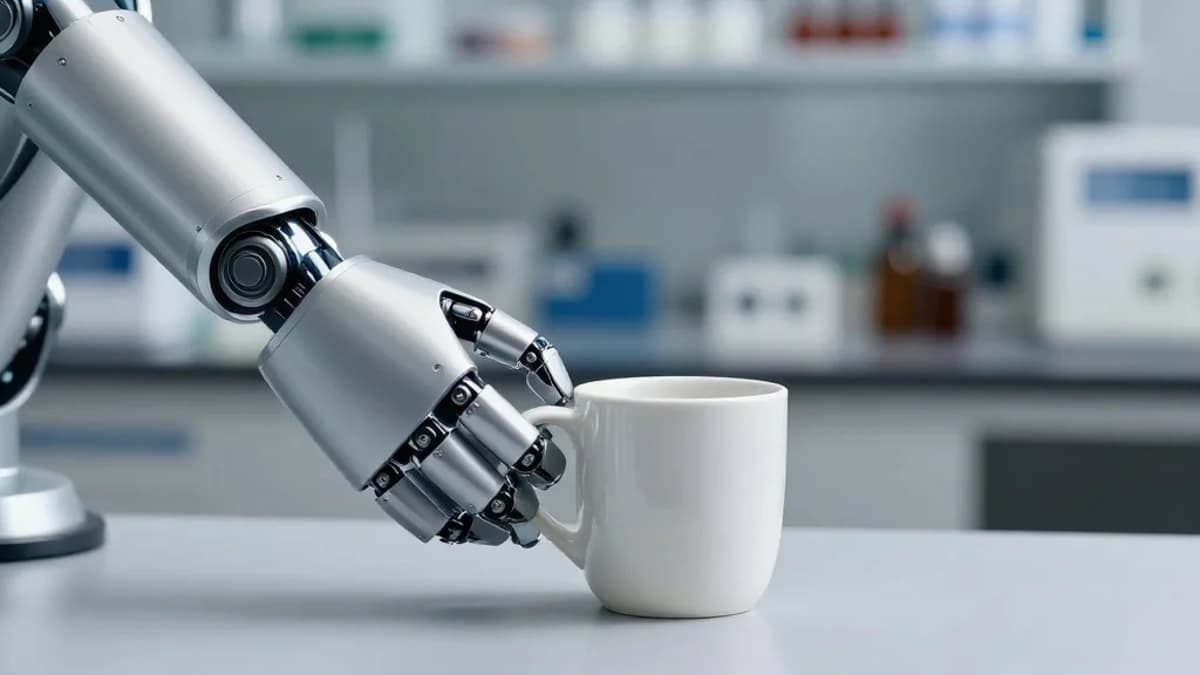
OpenAI Builds Secret Robotics Lab to Train Household Agents
•January 22, 2026
0

Why It Matters
The move positions OpenAI to monetize its models through physical products, accelerating competition in the home‑automation market and reshaping the embodied AI landscape.
Key Takeaways
- •OpenAI reopens hardware division with secret robotics lab
- •100 contractors train Franka arms on household tasks
- •24‑hour data collection shifts accelerate robot learning
- •Second facility planned in Richmond, expanding capacity
- •Return to hardware signals broader AI‑robotics strategy
Pulse Analysis
OpenAI’s decision to resurrect a hardware‑focused unit marks a notable shift from its recent software‑only narrative. After shuttering a similar robotics effort in 2020, the company quietly opened a dedicated lab in San Francisco, insulated from public view. The timing aligns with a broader industry push toward embodied AI, where physical interaction complements large‑language models. By situating the facility in the Bay Area, OpenAI taps into a dense talent pool and proximity to its core research teams, accelerating integration between virtual intelligence and tangible devices.
The lab employs roughly one hundred contract engineers who program Franka Emika robotic arms to mimic everyday chores such as loading dishwashers, sorting laundry, and arranging kitchenware. Shifts run around the clock, generating terabytes of sensor data that feed back into OpenAI’s reinforcement‑learning pipelines. This high‑volume, human‑in‑the‑loop approach shortens the gap between simulation and real‑world performance, a persistent bottleneck for most AI‑robotics startups. By amassing a proprietary dataset of household interactions, OpenAI positions itself to train agents that can understand context, safety constraints, and user preferences with unprecedented fidelity.
Industry analysts see the move as a signal that OpenAI intends to monetize its models beyond cloud APIs, potentially delivering consumer‑grade robot assistants within the next few years. Competitors such as Boston Dynamics and Amazon’s Astro project will now face a rival that couples advanced language understanding with hands‑on manipulation skills. However, the secrecy surrounding the lab raises questions about data privacy, liability, and the regulatory landscape for autonomous home devices. If OpenAI can translate its research into reliable products, it could reshape household automation and set new standards for embodied AI.
OpenAI builds secret robotics lab to train household agents
0
Comments
Want to join the conversation?
Loading comments...