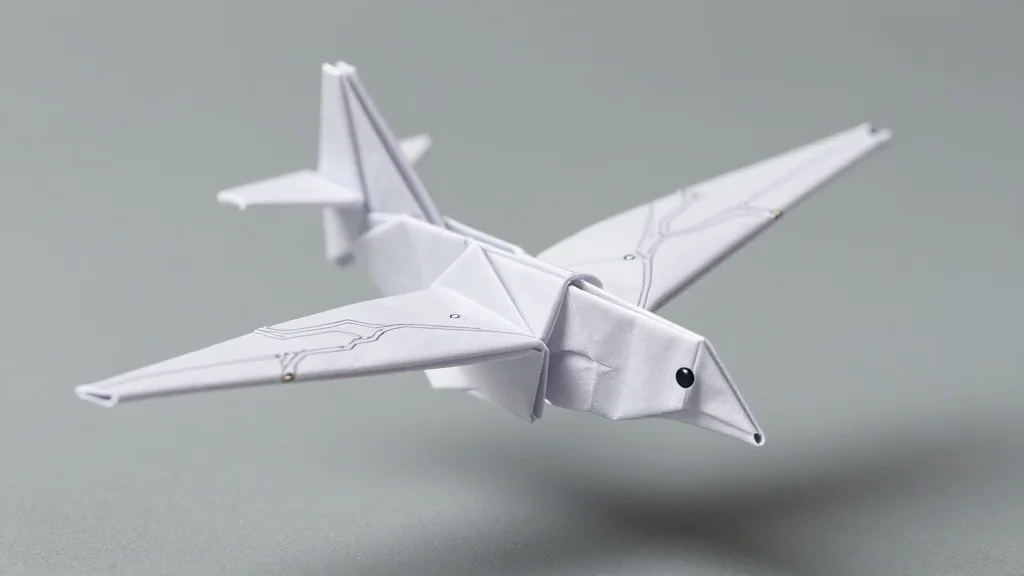
Origami-Inspired Robot Built From Printable Polymers Uses Electric Current to Move
Why It Matters
Motor‑free actuation simplifies soft‑robot manufacturing and enhances durability, opening pathways for medical implants, drug‑delivery devices, and exploration in hazardous environments.
Key Takeaways
- •3D‑printed LCE hinges contract when heated
- •Flexible printed circuits embed heating and sensors
- •Origami mathematics enables precise folding control
- •Robot operates without motors, reducing complexity
- •Open‑source tool lets users design custom soft robots
Pulse Analysis
Soft robotics has long been hampered by reliance on bulky motors or external pneumatic rigs, which add weight, complexity, and points of failure. Princeton’s breakthrough replaces these traditional actuators with a liquid crystal elastomer that contracts on demand when electrically heated. By integrating flexible printed circuit boards directly into the printed polymer, the team achieves localized temperature control and real‑time feedback, delivering repeatable motion without mechanical wear. This approach not only streamlines the fabrication process but also aligns with the broader industry push toward additive manufacturing for advanced devices.
The technical novelty lies in co‑designing the polymer’s molecular orientation and the embedded circuitry. During 3D printing, the LCE’s internal alignment is programmed to create hinge zones that fold predictably when heated. Flexible circuit boards, printed alongside the polymer, supply precise heat and house temperature sensors that close the control loop. Leveraging origami mathematics, the researchers map folding patterns to motion sequences, enabling error correction and high‑resolution actuation. The result is a motor‑free robot that can repeatedly flap, bend, or reshape while maintaining structural integrity.
Commercially, this motor‑free, printable soft robot could accelerate adoption in sectors where size, sterility, and reliability are paramount. Medical implants that need to change shape inside the body, targeted drug‑delivery capsules, and inspection robots for confined or hazardous spaces stand to benefit. The open‑source design tool released on GitHub lowers the barrier for engineers and startups to prototype bespoke soft‑robotic solutions, potentially spurring a new wave of customizable, low‑cost devices in the burgeoning soft‑robot market.
Origami-inspired robot built from printable polymers uses electric current to move
Comments
Want to join the conversation?
Loading comments...