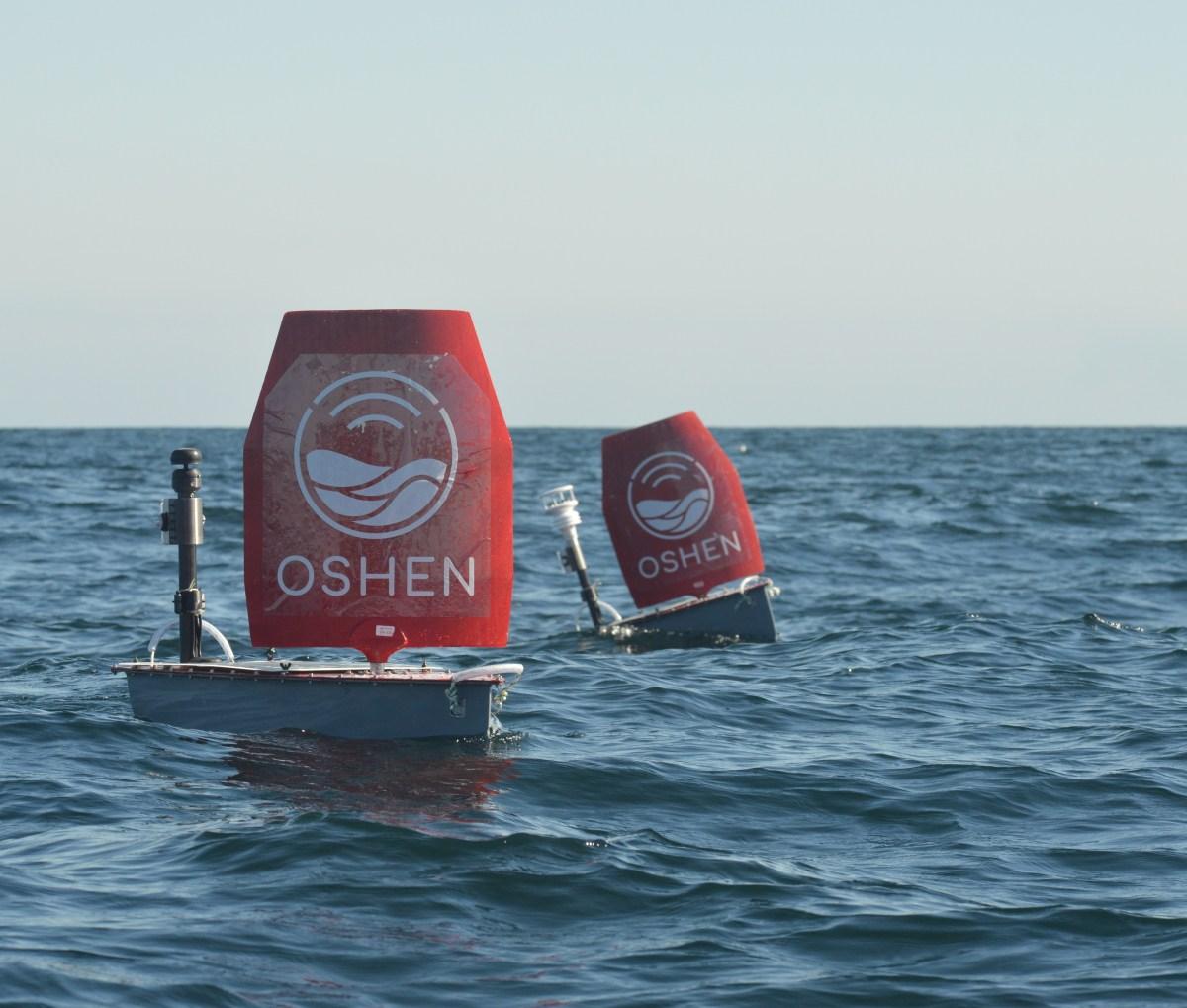
Oshen Built the First Ocean Robot to Collect Data in a Category 5 Hurricane
•January 17, 2026
0
Why It Matters
Real‑time data from extreme storms fills a critical gap in climate modeling and maritime security, giving governments and researchers unprecedented insight into hurricane dynamics.
Key Takeaways
- •First robot recorded data inside Category 5 hurricane
- •C‑Stars survive 100 days autonomously in harsh seas
- •NOAA and UK government secured contracts for storm monitoring
- •Swarm deployment enables low‑cost, mass‑collected ocean data
- •Oshen plans VC round to scale production
Pulse Analysis
The ocean’s surface remains one of the planet’s most data‑starved environments, especially during extreme weather events. Traditional buoys and aircraft struggle to survive the high winds and waves of a Category 5 hurricane, leaving scientists with fragmented observations. Oshen’s founder, Anahita Laverack, leveraged her sailing background and a series of iterative prototypes to create a fleet of micro‑robots—C‑Stars—that can endure 100‑day missions without human intervention. By deploying these swarms from a modest 25‑foot sailboat, the startup proved that low‑cost, mass‑produced platforms can gather high‑resolution, continuous oceanographic data where conventional assets fail.
When five C‑Stars were released near the U.S. Virgin Islands ahead of Hurricane Humberto, three rode out the full Category 5 onslaught, transmitting temperature, pressure, and wave metrics throughout the storm’s lifecycle. This breakthrough offers NOAA and defense agencies a new sensor layer that can improve hurricane intensity forecasts, enhance early‑warning systems, and support naval operations in hostile seas. The ability to capture in‑storm data also refines climate models by providing empirical inputs for extreme‑event simulations, a long‑standing challenge for researchers seeking to predict future storm behavior under warming oceans.
Oshen’s achievement arrives at a time when the marine‑tech market is attracting significant private and public investment. Competitors focus on larger, more expensive autonomous surface vessels, but Oshen’s emphasis on cheap, disposable swarms creates a scalable business model for both commercial and governmental customers. The upcoming venture‑capital round is expected to fund larger production runs, expand the sensor suite, and accelerate deployments in other high‑risk regions. As climate change drives more frequent and intense storms, the demand for resilient, real‑time ocean data will only intensify, positioning Oshen as a pivotal player in the next wave of maritime intelligence.
Oshen built the first ocean robot to collect data in a Category 5 hurricane
0
Comments
Want to join the conversation?
Loading comments...