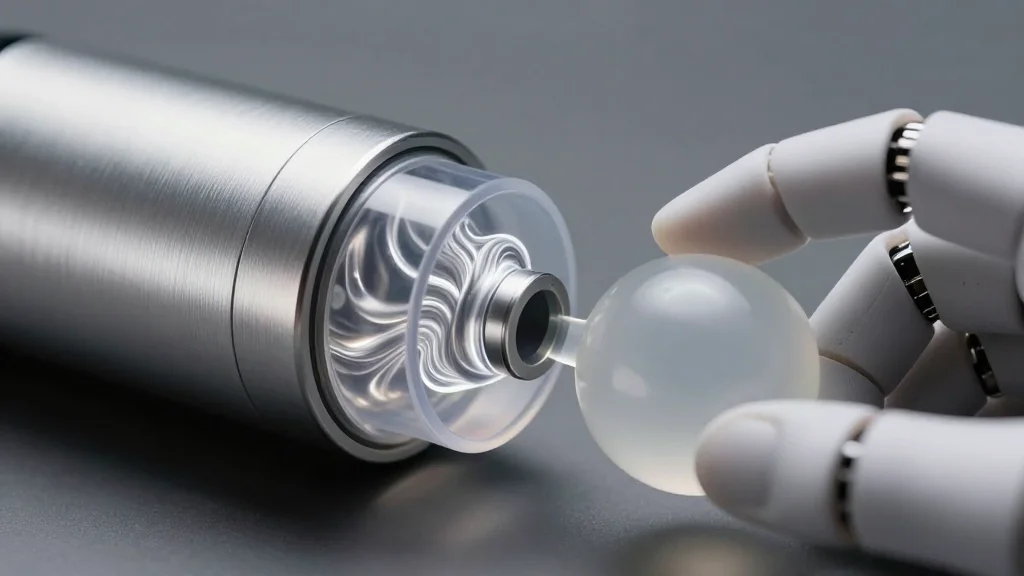
Pea-Size Liquid-Metal Pump Runs Robot Butterfly on Under 0.1 V
Why It Matters
By delivering millivolt‑level power in a sub‑gram package, the LIMA pump removes a major size and energy barrier, enabling truly portable soft‑robotic systems for healthcare, VR, and field‑deployed sensors. Its integrated pumping, signaling, and energy transfer functions could accelerate the commercialization of autonomous soft devices.
Key Takeaways
- •LIMA pump weighs 0.2 g, operates under 0.1 V.
- •Enables millivolt-powered actuation for soft‑robotic wings, bracelets, haptic devices.
- •Replaces bulky compressors, offering portable fluidic power for wearables.
- •Generates pressure via Lorentz force in liquid‑metal droplet.
- •Acts as combined pump, signal, and energy hub for autonomous robots.
Pulse Analysis
Soft robotics has long been hampered by the need for rigid, high‑voltage pumps that add weight and limit flexibility. The newly reported liquid‑metal magnetohydrodynamic (LIMA) pump sidesteps these constraints by exploiting the Lorentz force: an electric current through a liquid‑metal droplet in a magnetic field creates a directional push on surrounding fluid. This principle yields a pump that can function at sub‑volt levels while delivering sufficient pressure for actuation, effectively serving as a miniature "heart" for soft systems.
The immediate impact of the LIMA pump is evident in emerging wearable and medical technologies. Prototype applications—such as a butterfly‑wing robot, a colour‑changing bracelet, and a haptic fingertip pouch—demonstrate how millivolt power can drive tactile feedback, dynamic displays, and micro‑locomotion without cumbersome compressors. For virtual‑reality gloves or smart bandages, the reduced power envelope translates to longer battery life and lighter form factors, making continuous, on‑body operation feasible. Moreover, the pump’s ability to convey chemical energy and information through fluidic networks opens pathways for integrated sensing and actuation in lab‑on‑a‑chip diagnostics.
Looking ahead, researchers aim to scale the LIMA design for higher flow rates while preserving its low‑voltage advantage. Commercialization will hinge on material durability, especially the long‑term stability of liquid‑metal alloys under repeated magnetic cycling. If these hurdles are cleared, the technology could reshape markets ranging from soft prosthetics to autonomous environmental samplers, positioning the LIMA pump as a cornerstone of next‑generation, self‑contained soft robots.
Pea-size liquid-metal pump runs robot butterfly on under 0.1 V
Comments
Want to join the conversation?
Loading comments...