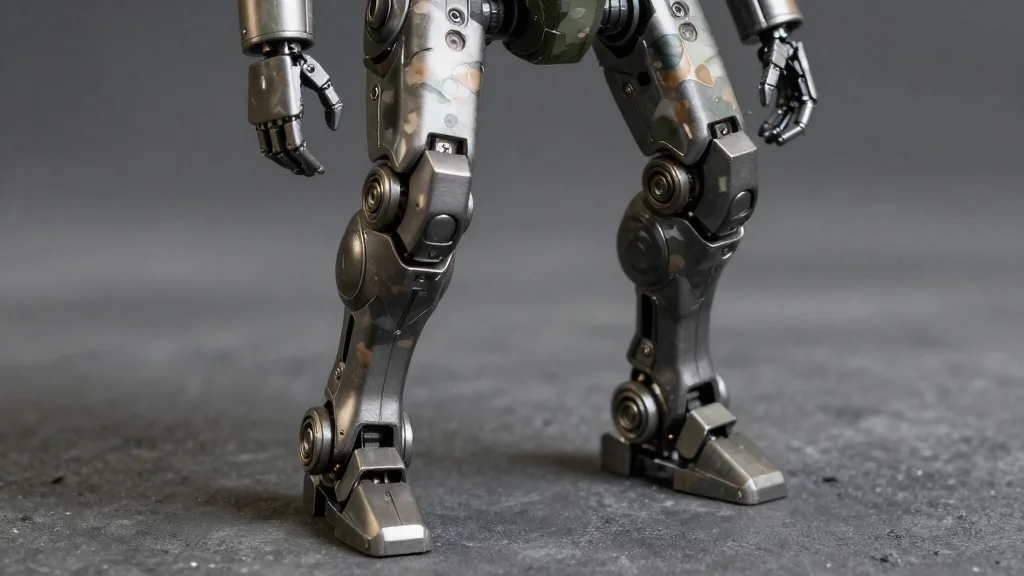
Pentagon Grants $24 Million to Foundation Future Industries for Heavy‑Duty Humanoid ‘Phantom’ Robots

Why It Matters
The award marks one of the first sizable U.S. defense contracts focused exclusively on heavy‑duty humanoid robots, a class of systems that could redefine infantry support and urban combat. By investing in a platform that blends strength, mobility, and AI‑driven autonomy, the Pentagon signals a strategic shift toward ground‑based robotics as a force multiplier. Beyond the battlefield, the contract could catalyze a broader commercial market for large‑scale humanoids. If Foundation Future Industries can demonstrate reliable operation in austere environments, civilian sectors such as construction, disaster response, and logistics may adopt similar platforms, accelerating the diffusion of advanced robotics across the economy.
Key Takeaways
- •Pentagon awarded $24 million to Foundation Future Industries for Phantom humanoid robot testing.
- •CEO Sankaet Pathak claims the robot will be the strongest humanoid system globally, including against Chinese rivals.
- •Eric Trump, serving as chief strategy advisor, promoted the deal as essential to U.S. competitiveness in robotics.
- •Critics raise concerns about political influence and potential conflicts of interest surrounding the contract.
- •Prototype weighs 176 lb, moves at 1.7 m/s, and is slated for field trials with a production decision expected in 2027.
Pulse Analysis
The Pentagon’s modest but symbolic investment reflects a broader trend of integrating autonomous systems into ground combat roles. Historically, the U.S. has prioritized air and naval dominance; however, the emergence of capable humanoid platforms in China forces a recalibration. By funding a private startup rather than a traditional defense contractor, the Department of Defense is testing a more agile development model that could shorten the innovation cycle.
If the Phantom program meets its performance goals, it could trigger a cascade of follow‑on contracts, encouraging other firms to enter the heavy‑duty humanoid space. This would diversify the supply chain and potentially lower costs through competition. Conversely, the political controversy surrounding Eric Trump’s involvement may prompt tighter oversight on future contracts, especially those with high‑visibility political figures. The outcome of the upcoming field trials will likely set the tone for how aggressively the U.S. pursues humanoid robotics as a core combat capability.
In the longer term, successful deployment could reshape doctrine, with infantry units integrating robot squads for tasks ranging from breaching to casualty evacuation. Such a shift would have profound implications for training, logistics, and the ethical framework governing autonomous weapons. The Pentagon’s gamble on the Phantom platform thus sits at the intersection of technology, geopolitics, and policy, making the next few years critical for the future of American robotics.
Pentagon Grants $24 Million to Foundation Future Industries for Heavy‑Duty Humanoid ‘Phantom’ Robots
Comments
Want to join the conversation?
Loading comments...