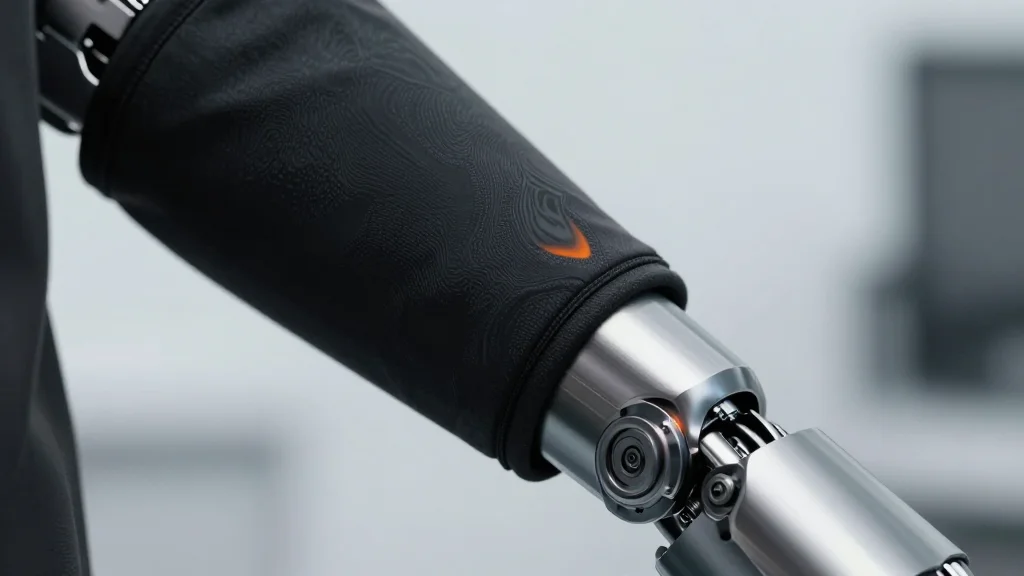
Persona AI & Under Armour Researching Performance Materials for Humanoid Robotics

Companies Mentioned
Why It Matters
The work could extend robot service life and lower maintenance costs, while opening a new market for performance‑material manufacturers in industrial automation.
Key Takeaways
- •Persona AI teams Under Armour to test fabrics on robots
- •Research targets heat dissipation, abrasion resistance, and flexible motion
- •Goal: improve robot durability for welding and hazardous tasks
- •Collaboration opens industrial market for performance‑material manufacturers
Pulse Analysis
The rise of humanoid robots in factories, welding cells, and hazardous‑material handling introduces a set of mechanical stresses that traditional industrial designs were not built to endure. Unlike static robotic arms, mobile humanoids experience continuous friction, heat spikes from processes like arc welding, and repetitive joint movement that can degrade surface coatings and internal components. Engineers have therefore begun looking beyond conventional metal alloys and polymers, seeking lightweight, breathable, and thermally conductive fabrics that can act as a second skin for these machines. This shift reflects a broader trend of borrowing solutions from human‑centric industries to solve robotic durability challenges.
Under Armour brings a decade of research into moisture‑wicking, abrasion‑resistant, and temperature‑regulating textiles originally intended for athletes. By applying those technologies to robot exteriors, the partnership hopes to create a protective layer that dissipates heat, reduces wear on joint bearings, and maintains flexibility during complex motions. Early laboratory tests suggest that engineered knit structures can lower surface temperature by up to 15 °F during continuous welding, while still allowing the robot’s servos to move unhindered. Such performance gains could shorten maintenance cycles and extend the operational lifespan of costly humanoid platforms.
From a business perspective, the collaboration signals a new revenue stream for performance‑apparel firms and a competitive edge for robotics developers. As manufacturers push humanoids into environments previously dominated by human labor, the demand for durable yet lightweight protective skins is likely to accelerate. Companies that can certify material safety and compliance for industrial standards will capture early market share, while robot makers benefit from reduced downtime and lower total‑ownership costs. If the research moves beyond the lab, we may see a new class of “smart apparel” for machines, reshaping both the sports‑tech and robotics landscapes.
Persona AI & Under Armour Researching Performance Materials for Humanoid Robotics
Comments
Want to join the conversation?
Loading comments...