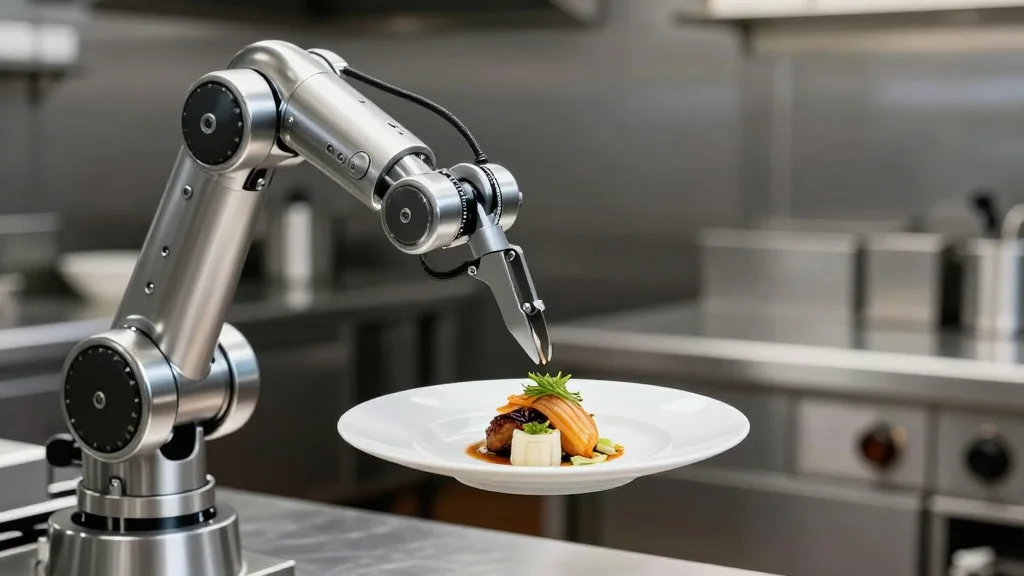
Physical AI Company Chef Robotics Completes 100 Million Servings in Production
Companies Mentioned

Why It Matters
The achievement validates Chef’s data‑centric physical AI model and positions it as the dominant player in a multi‑trillion‑dollar food‑manufacturing market facing chronic labor shortages. Its real‑world data moat creates a sustainable competitive advantage that could reshape automation adoption across the sector.
Key Takeaways
- •Chef Robotics hit 100 million servings across global facilities
- •Real‑world food data fuels a self‑reinforcing AI performance flywheel
- •Deployments span US, Canada, and Europe, improving yield and labor productivity
- •ChefOS offers Robotics‑as‑a‑Service, targeting high‑volume, low‑complexity tasks
- •Company grew from 1M to 100M servings in under three years
Pulse Analysis
The food‑manufacturing industry, worth several trillion dollars, has long wrestled with a persistent labor crunch and the need for consistent, high‑volume output. Physical AI—robots that learn from real‑world interactions—offers a pathway to automate repetitive tasks such as portioning and assembly. Chef Robotics entered this space with a clear focus on high‑throughput, low‑complexity operations, allowing it to scale quickly while competitors remain tied to slower, simulation‑heavy development cycles.
What sets Chef apart is its reliance on production‑grade data rather than synthetic simulations. Food ingredients are inherently deformable and variable, making virtual training ineffective. Each new deployment feeds fresh, diverse data back into ChefOS, sharpening model accuracy and expanding the range of ingredients the robots can handle. This data flywheel creates a self‑reinforcing loop: more sites generate richer datasets, which improve performance, attracting additional customers and further data. The result is a defensible moat that rivals in warehouse automation or autonomous vehicles cannot easily replicate.
The broader implications are significant. As manufacturers adopt Chef’s Robotics‑as‑a‑Service solution, they can reduce labor costs, increase yield, and meet rising consumer demand without sacrificing quality. Investors see a clear growth narrative: a company that has already demonstrated a 100‑fold increase in servings within three years is poised for rapid expansion into new geographies and product categories. If the data advantage continues to compound, Chef Robotics could become the de‑facto platform for physical AI across other deformable‑material industries, from pharmaceuticals to cosmetics, accelerating the overall automation wave in manufacturing.
Physical AI Company Chef Robotics Completes 100 Million Servings in Production
Comments
Want to join the conversation?
Loading comments...