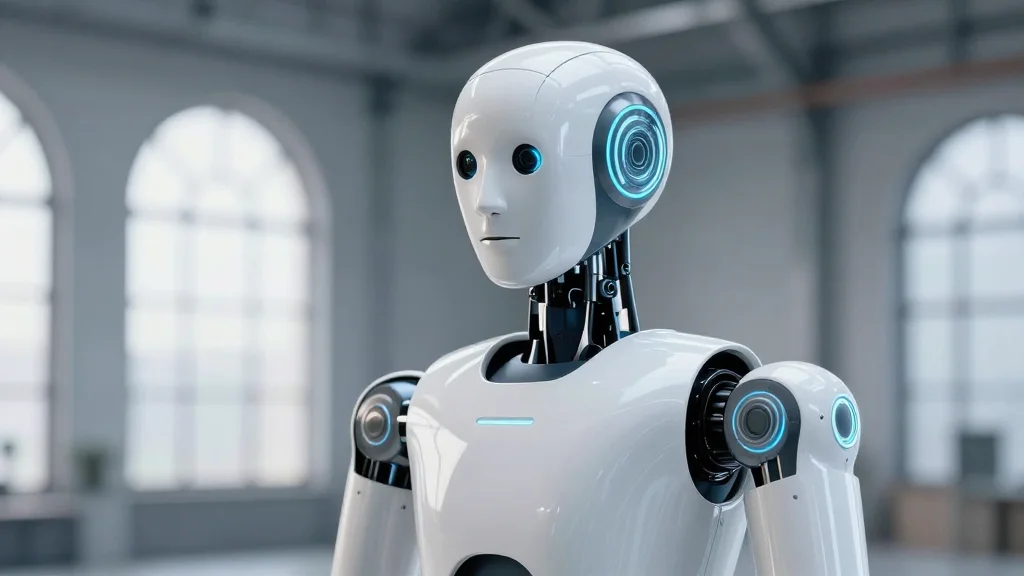
PIA Automation Launches Humanoid Robotics Business Segment, Partners with AGIBOT

Companies Mentioned

Why It Matters
The entry of PIA Automation into humanoid robotics adds a fresh competitor to a market historically dominated by a handful of specialist firms. By coupling embodied AI with localized European production, PIA could lower adoption barriers for manufacturers hesitant to invest in unproven technology. The move also underscores a broader industry shift toward collaborative robots that can handle unstructured tasks, expanding the scope of automation beyond repetitive, fixed‑path operations. If PIA’s European factories achieve the promised speed‑to‑market, the company may set a new benchmark for regionalized robot manufacturing, prompting rivals to reconsider their supply‑chain strategies. The partnership with AGIBOT further highlights the growing importance of AI integration as a differentiator in robot capability, potentially accelerating the overall pace of innovation in the sector.
Key Takeaways
- •PIA Automation announced a dedicated humanoid robotics business segment on April 14, 2026.
- •Joint venture Joybot Manufacture formed with AGIBOT to cover full humanoid robot value chain.
- •Thomas Ernst, PIA’s chief sales officer and CTO, highlighted embodied AI as a new production possibility.
- •PIA plans to open manufacturing facilities in Europe to localize production and speed delivery.
- •The initiative targets flexible assembly assistance and adaptive logistics, areas where traditional robots struggle.
Pulse Analysis
PIA Automation’s foray into humanoid robotics reflects a strategic pivot from pure system integration toward product ownership. Historically, the company has built a reputation on modular automation platforms, but the decision to create a hardware‑centric business unit suggests confidence that the market will soon demand more adaptable, AI‑driven machines. The partnership with AGIBOT is particularly telling; it supplies the perception and decision‑making stack that most traditional robot manufacturers lack, allowing PIA to focus on mechanical design and production scaling.
From a competitive standpoint, the European manufacturing angle could be a decisive advantage. Many existing humanoid players rely on Asian supply chains, which can introduce lead‑time volatility and higher logistics costs for European OEMs. By establishing local factories, PIA not only shortens delivery windows but also positions itself to comply more easily with EU safety standards and data‑privacy regulations, a growing concern as robots become more sensor‑rich.
Looking ahead, the success of PIA’s humanoid segment will likely hinge on three factors: the ability to certify safety for collaborative work, the demonstration of clear cost savings versus conventional automation, and the speed at which the company can iterate hardware based on field feedback. If these hurdles are cleared, PIA could catalyze a wave of mid‑size manufacturers adopting humanoid robots for tasks previously considered too variable for automation, reshaping labor dynamics and productivity metrics across the continent.
PIA Automation Launches Humanoid Robotics Business Segment, Partners with AGIBOT
Comments
Want to join the conversation?
Loading comments...