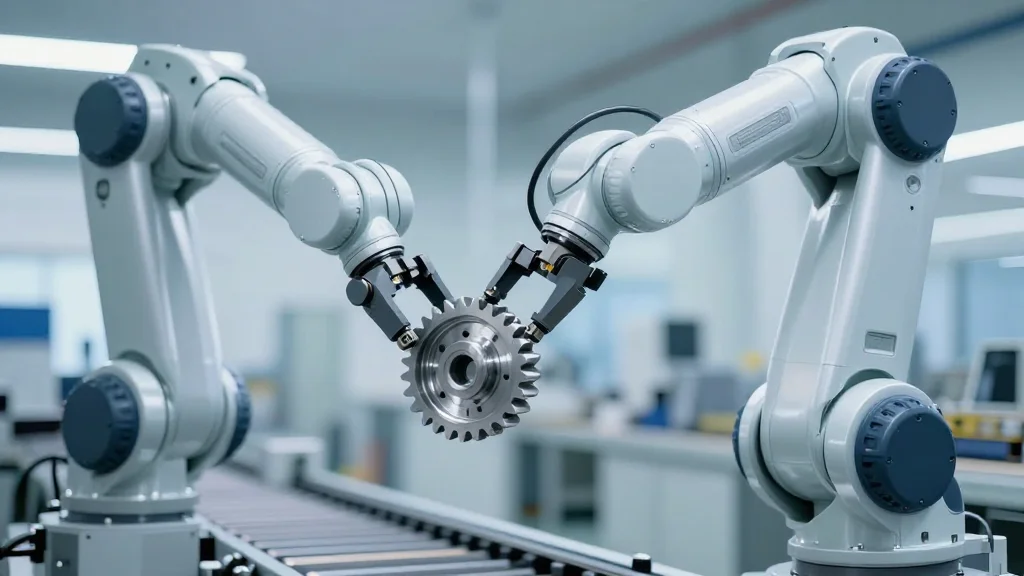
Policy Paper Calls for U.S. Manufacturing Revamp with Advanced Robotics and Automation

Why It Matters
Integrating advanced robotics into U.S. manufacturing is more than an efficiency upgrade; it is a national security imperative. By reducing reliance on foreign‑made components, the United States can safeguard critical supply chains for defense, energy and health sectors. Moreover, the productivity gains from automation could reverse the long‑term decline in manufacturing employment, supporting higher‑wage jobs and regional economic revitalization. The policy paper also signals to global competitors that the United States is prepared to invest heavily in next‑generation manufacturing. If successful, the move could reshape global trade flows, compelling allies to adopt similar automation strategies and creating a new coalition of high‑tech manufacturing economies.
Key Takeaways
- •China’s share of global manufacturing exports rose to 20% in 2023, while U.S. share fell to 8%
- •U.S. manufacturing output generates $2.69 of total economic activity per dollar produced
- •Office of Strategic Capital granted $200 bn authority to fund advanced robotics initiatives
- •Policy paper calls for a national robotics workforce development agenda and a Midwest Innovation Hub
- •Projected 15% productivity boost could add $1.2 trillion to U.S. GDP over the next decade
Pulse Analysis
The paper’s call for a $200 bn strategic capital fund marks a watershed in U.S. industrial policy, moving beyond ad‑hoc tax credits toward a coordinated, technology‑focused investment strategy. Historically, American manufacturing has lagged in robot density—about 150 industrial robots per 10,000 workers versus China’s 300—so a targeted infusion of capital could close that gap quickly. However, the success of such a program hinges on aligning incentives across federal agencies, state governments and private firms. Without clear metrics for robot adoption and a robust reskilling pipeline, the funding could be swallowed by legacy projects that deliver little automation.
From a market perspective, a decisive push for robotics could accelerate demand for domestic robot manufacturers like Boston Dynamics, FANUC’s U.S. arm, and emerging AI‑driven automation startups. Venture capital is likely to follow, as investors chase the next wave of “lights‑out” factories. At the same time, labor unions will scrutinize the impact on job security, pushing for joint‑venture models that embed human workers alongside cobots. The policy paper’s emphasis on the “missing middle” is a pragmatic acknowledgment that the bulk of U.S. manufacturing lies outside the Fortune‑500 sphere, and that scaling robotics to these firms will require modular, cost‑effective solutions rather than bespoke, high‑end systems.
If Congress embraces the paper’s recommendations, the United States could reclaim a competitive edge in high‑value manufacturing, reduce strategic vulnerabilities, and generate a new wave of well‑paid technical jobs. The timing is critical: with the 2026 midterms looming, bipartisan support may be the only path to securing the political capital needed for such an ambitious overhaul.
Policy Paper Calls for U.S. Manufacturing Revamp with Advanced Robotics and Automation
Comments
Want to join the conversation?
Loading comments...