
Companies Mentioned

Why It Matters
The demonstrator proves autonomous rotary‑wing capability, giving the Royal Navy persistent, low‑risk maritime coverage and strengthening the UK’s strategic deterrence in the North Atlantic.
Key Takeaways
- •First autonomous full‑size UK helicopter completed maiden flight
- •Demonstrator supports Royal Navy hybrid air wing concept
- •£60 m program sustains 100 skilled British jobs
- •Payload exceeds one tonne for sensors, equipment
- •Enhances anti‑submarine warfare without risking crew
Pulse Analysis
The successful flight of Proteus marks a watershed moment for British aerospace, showcasing how autonomous technology is moving from experimental drones to full‑scale rotorcraft. While the defence sector has long fielded small unmanned systems, the shift to a one‑tonne‑class helicopter signals a maturation of AI‑driven flight control, sensor integration, and real‑time decision making. Industry observers note that this leap aligns with global trends where navies seek to extend reach without adding crew risk, positioning the UK as a leader in autonomous maritime aviation.
Technically, Proteus combines a conventional turbine powerplant with a suite of lidar, radar and electro‑optical sensors linked to a high‑performance computing core. The aircraft can autonomously navigate complex coastal environments, maintain station in high sea states, and execute pre‑programmed mission profiles such as anti‑submarine warfare, surface patrol, and payload delivery. Its one‑tonne payload capacity allows operators to mount sonobuoys, magnetic anomaly detectors, or communications relays, turning the platform into a versatile “flying laboratory.” By offloading routine or hazardous tasks, the system frees manned helicopters for high‑value strike or transport roles, improving overall fleet efficiency.
Strategically, Proteus underpins the UK’s Atlantic Bastion initiative, a NATO‑aligned effort to secure the North Atlantic against evolving submarine threats. The £60 million investment not only preserves 100 highly‑skilled jobs at Leonardo’s Yeovil hub but also demonstrates a commitment to a “New Hybrid Navy” where autonomous and crewed assets operate side‑by‑side. As geopolitical tensions rise, the ability to project persistent, low‑cost surveillance and rapid response across vast ocean areas could become a decisive advantage, prompting other allied forces to explore similar autonomous rotorcraft programmes.
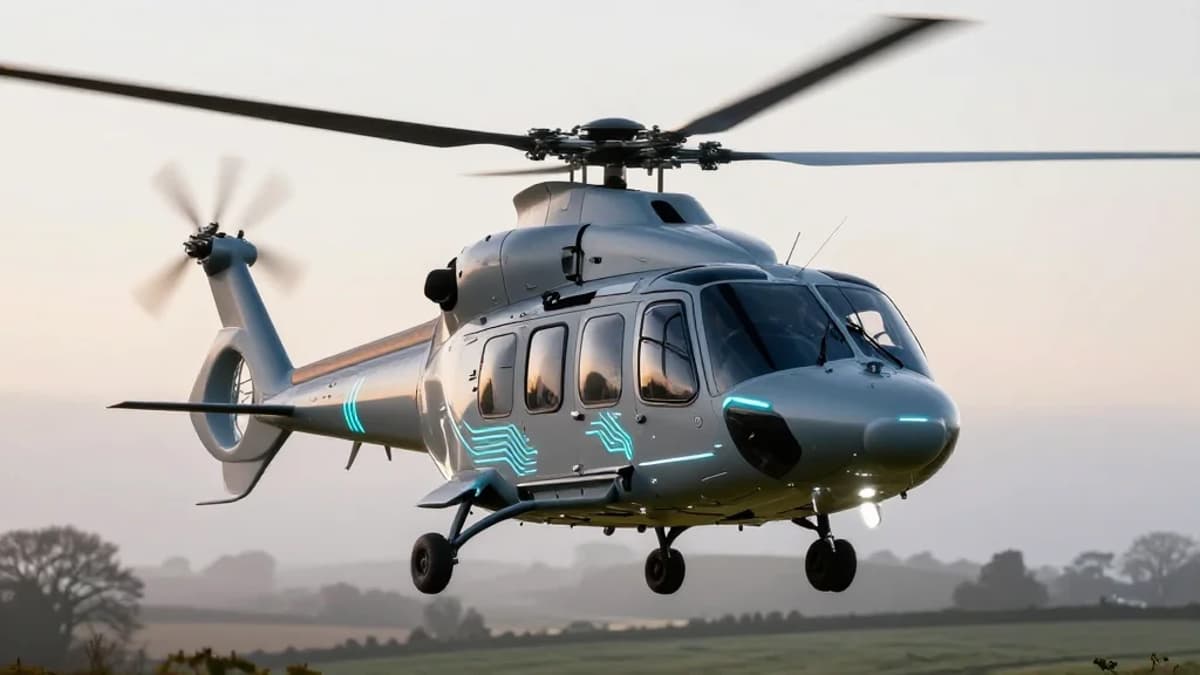
Proteus completes maiden flight
0
Comments
Want to join the conversation?
Loading comments...