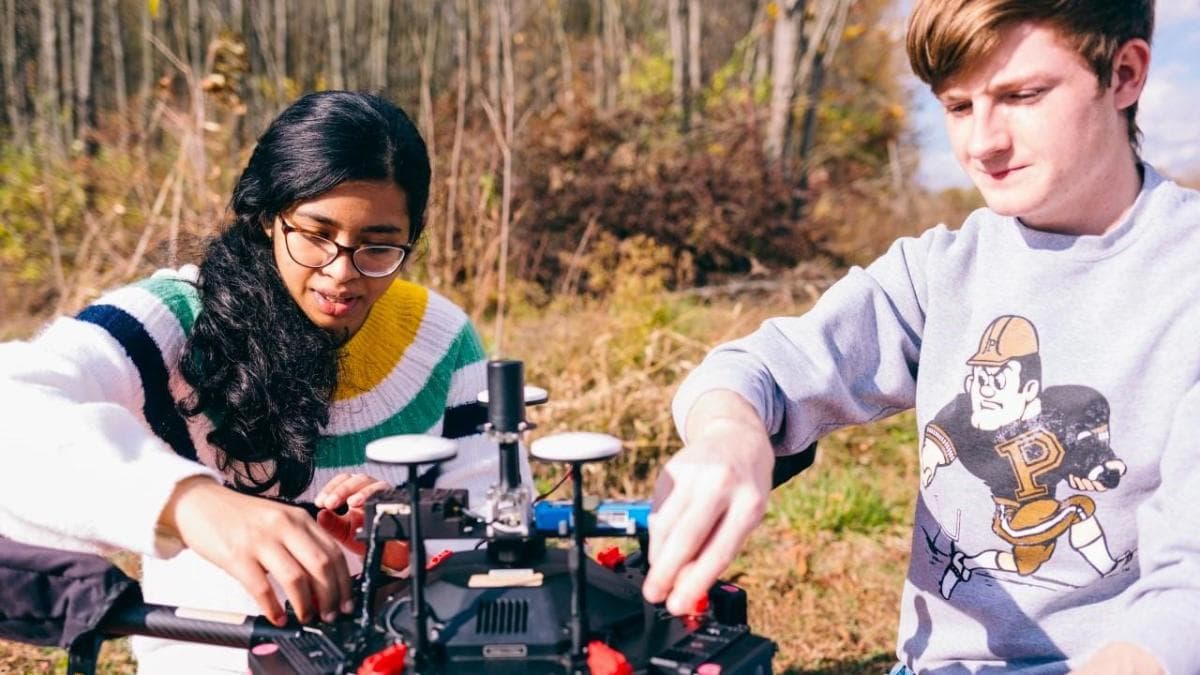
Purdue Polytechnic Selected for FAA’s Unmanned Aircraft Systems Collegiate Training Initiative
•March 2, 2026
0

Why It Matters
FAA endorsement signals industry confidence, accelerating the pipeline of qualified UAS professionals and strengthening Purdue’s competitive edge in drone education.
Key Takeaways
- •FAA selects Purdue for UAS Collegiate Training Initiative
- •Program offers bachelor's degree with hands‑on flight training
- •Curriculum includes safety, privacy, policy, AI, GIS
- •Access to advanced labs like AIDA³ and PURT
- •Graduates positioned for commercial, public safety, research roles
Pulse Analysis
The Federal Aviation Administration’s Unmanned Aircraft Systems‑Collegiate Training Initiative (UAS‑CTI) is designed to standardize drone education across the United States, ensuring that graduates meet the rigorous safety and regulatory standards required for commercial operations. By selecting Purdue Polytechnic, the FAA highlights a curriculum that not only covers the fundamentals of flight and maintenance but also integrates emerging topics such as privacy law, airspace policy, and AI‑driven data analytics. This endorsement provides a benchmark for other institutions seeking to align their programs with federal expectations.
Purdue’s UAS degree distinguishes itself through a blend of theoretical instruction and immersive laboratory experience. Students work in the Center on AI for Digital, Autonomous, and Augmented Aviation (AIDA³), the Purdue Augmented Aviation Lab, and the Purdue Unmanned Aircraft Systems Research and Test Facility (PURT), gaining exposure to autonomous mission planning, Unmanned Traffic Management (UTM) systems, and advanced sensor suites. The curriculum’s emphasis on GIS, AI, and real‑world flight operations prepares graduates for roles in commercial delivery, public‑safety response, and cutting‑edge research, directly supporting the nation’s push toward Advanced Air Mobility (AAM).
The broader impact of Purdue’s inclusion in UAS‑CTI extends to the industry’s talent pipeline and regulatory ecosystem. Companies seeking skilled drone operators and engineers can now tap a vetted pool of graduates who are already versed in FAA‑mandated safety protocols and emerging regulatory frameworks. Moreover, the collaboration creates a feedback loop where academic research informs policy development, accelerating the safe integration of unmanned aircraft into the national airspace. As the commercial drone market expands, Purdue’s recognized program will likely become a key driver of innovation and workforce readiness.
Purdue Polytechnic selected for FAA’s Unmanned Aircraft Systems Collegiate Training Initiative
0
Comments
Want to join the conversation?
Loading comments...