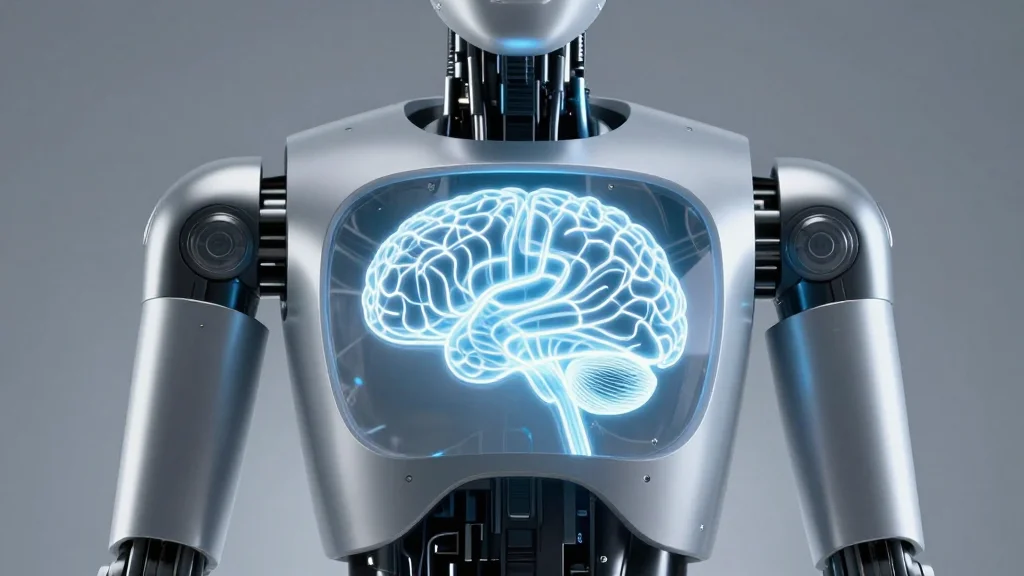
RAI to Demonstrate a Brain with Identity for Humanoid Robots at World Robot Conference 2026
Why It Matters
Embedding continuity and self‑identity into humanoid AI could shift the robotics market from short‑term task performance to long‑term cognitive growth, opening new value streams for developers and investors.
Key Takeaways
- •RAI Brain introduces autobiographical memory for continuous learning
- •Demonstration at WRC 2026 will allow open‑ended conversations
- •Persistent Self architecture organizes memory, beliefs, goals, and values
- •Industry shift from physical capability to long‑term intellectual development
Pulse Analysis
Humanoid robots have rapidly closed the gap in locomotion, perception, and manipulation, yet their software remains largely episodic. Most large‑language models and control systems treat each interaction as a discrete event, discarding the history that shapes human expertise. At the World Robot Conference in Beijing, RAI Robotics Advanced Intelligence will showcase a prototype that flips this paradigm by embedding a continuous autobiographical memory into a humanoid platform. The move signals a broader industry recognition that true machine intelligence may require a sense of self that evolves over time.
The core of the RAI Brain is a ‘persistent Self’ that aggregates autobiographical records, belief updates, long‑term goals, and self‑reflection modules. Unlike conventional AI that generates answers in isolation, this architecture preserves context across months, allowing the robot to reference prior investigations, explain why its hypotheses shifted, and articulate ongoing research agendas. By exposing these internal structures during live conversations—answering questions such as “What are you studying?” or “What changed your mind recently?”—RAI demonstrates that machines can maintain a coherent intellectual trajectory, a prerequisite for genuine scientific reasoning.
If successful, RAI’s approach could reshape investment priorities, steering capital toward cognitive architectures that support lifelong learning rather than one‑off performance metrics. Researchers may adopt the persistent Self model to explore ethical accountability, as a robot that can trace the evolution of its beliefs offers clearer audit trails. However, scaling autobiographical memory to decades of operation poses storage, privacy, and alignment challenges that the industry must address. The Beijing demo will therefore serve as both a technical showcase and a litmus test for the feasibility of identity‑driven AI in commercial robotics.
RAI to Demonstrate a Brain with Identity for Humanoid Robots at World Robot Conference 2026
Comments
Want to join the conversation?
Loading comments...