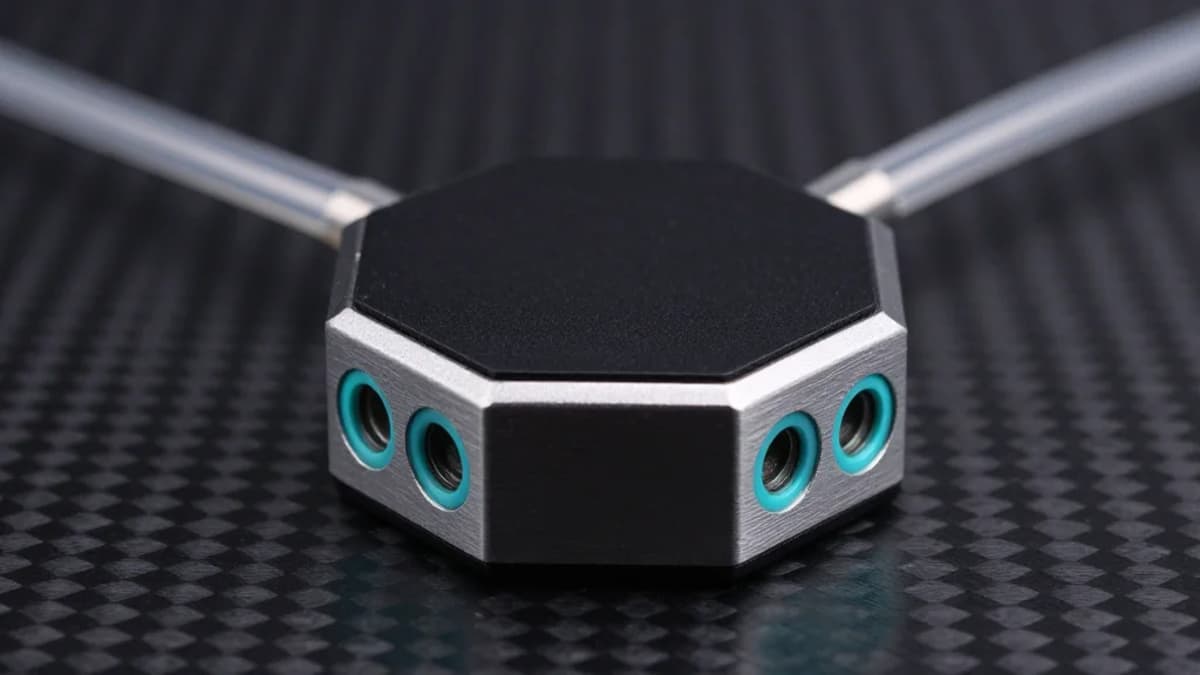
RealMan Robotics Launches Next-Generation High-Power-Density Joint Modules for High-Performance Robotics
•January 13, 2026
0
Why It Matters
The launch gives robot builders a modular, high‑torque solution that cuts size, weight and energy loss, accelerating the rollout of more capable and cost‑effective automation. It also strengthens RealMan’s role as a core component supplier in the fast‑growing robotics ecosystem.
Key Takeaways
- •WHR03 cuts joint size by half, boosts torque 55%.
- •WHJ120 provides 120 Nm torque with 16 mm hollow core.
- •WHJ48V handles up to 60 V, improves efficiency and heat.
- •Unified modules simplify drivetrain integration across robot classes.
- •RealMan positions itself as core component supplier in robotics market.
Pulse Analysis
Robotics manufacturers are increasingly demanding joint actuators that combine compact footprints with higher torque output, a trend driven by the rise of collaborative and consumer‑grade robots. RealMan Robotics’ WHJ03 answers that call by shrinking the typical joint envelope to 33 × 48 mm while delivering 35‑55 % more torque than competing units. The reduction in size—more than 50 % compared with legacy designs—enables tighter kinematic layouts for desktop arms, humanoid necks, and delicate manipulation tasks. By minimizing backlash and jitter, the module also raises positional accuracy, a critical factor for liquid‑handling and precision assembly.
The WHJ120 pushes the performance envelope further with a 120 Nm rating housed in a 16 mm hollow‑core architecture. This design not only supplies the torque needed for shoulder, elbow, and waist joints in collaborative robots but also creates a built‑in conduit for cables and cooling lines, reducing overall mechanical complexity. Engineers can therefore integrate heavier payload capabilities without enlarging the robot’s silhouette, a key advantage for humanoid platforms that must balance strength and agility. The hollow‑core concept is also expected to accelerate modular upgrades across the industry.
Energy efficiency and thermal management become paramount as robots operate at higher speeds and longer duty cycles. The WHJ48V series expands the permissible input voltage to 60 V while remaining compatible with existing 24 V ecosystems, cutting current draw and heat generation. This wide‑voltage flexibility supports high‑end humanoids, mobile quadrupeds, and exoskeletons that demand rapid dynamic response without sacrificing battery life. By offering a unified power base across three distinct torque classes, RealMan positions itself as a strategic component supplier, potentially shaping the next generation of standardized robotic drivetrain architectures.
RealMan Robotics Launches Next-Generation High-Power-Density Joint Modules for High-Performance Robotics
0
Comments
Want to join the conversation?
Loading comments...