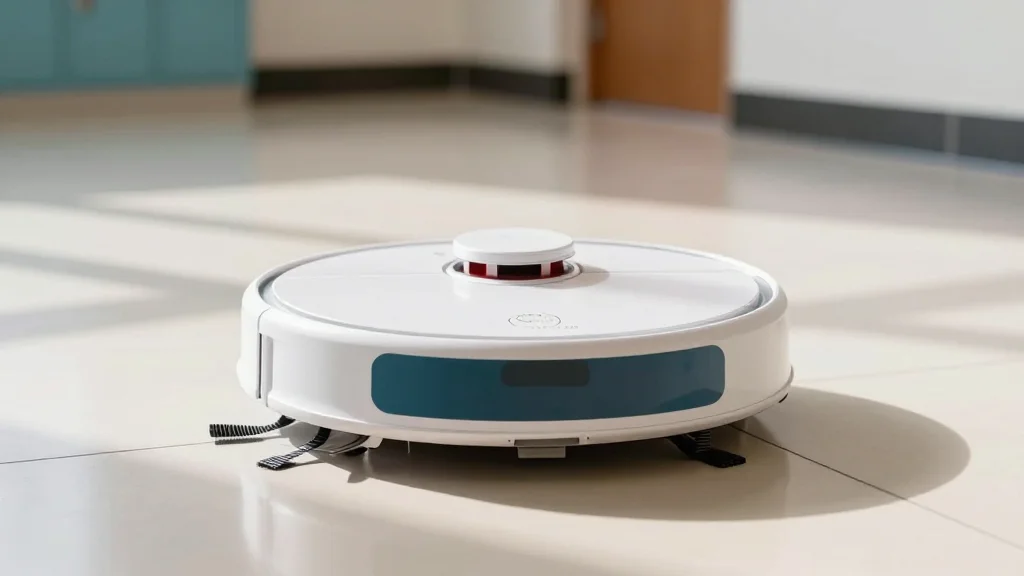
Reedy Laurel Elementary Deploys $82,000 Robot Janitors Rosie and HAL

Why It Matters
Deploying autonomous cleaning robots in an elementary school signals a shift in how educational institutions manage facilities. With rising labor costs and a nationwide teacher shortage, districts are exploring technology to maintain safe, clean environments without adding staff. The Reedy Laurel pilot demonstrates that high‑cost, high‑capability robots can be integrated into daily school operations, potentially redefining maintenance budgets and staffing models. If the pilot proves cost‑effective, it could accelerate adoption across K‑12 districts, prompting manufacturers to tailor robot designs for educational settings—adding features like child‑safe speed limits, interactive alerts, and curriculum‑friendly interfaces. This could also spur competition among vendors, driving down prices and fostering innovation in sensor technology and autonomous navigation for indoor environments.
Key Takeaways
- •Reedy Laurel Elementary began daily cleaning with two Cenobot robots named Rosie and HAL.
- •Each robot costs $82,000 at full retail; the district hopes for bulk discounts.
- •Robots travel up to 4 mph, weigh 800 pounds, and use sensors to detect obstacles up to 200 feet away.
- •District coordinator Bain Stewart highlighted self‑servicing capabilities that reduce manual labor.
- •Pilot spans eight schools; performance review scheduled for early summer.
Pulse Analysis
The introduction of $82,000 autonomous cleaners into a public school marks a noteworthy inflection point for the robotics market. Historically, service robots have been confined to commercial spaces—airports, hospitals, and large office complexes—where the ROI is justified by high foot traffic and premium budgets. Schools, by contrast, operate under tighter fiscal constraints and heightened safety scrutiny. By adopting Cenobot’s self‑servicing platform, Reedy Laurel is testing whether the technology can meet the dual demands of cost containment and child safety.
From a market perspective, this pilot could catalyze a new segment: education‑focused service robotics. Vendors will likely respond by developing lighter, slower, and more interactive units that speak the language of students and staff. The $82,000 price tag, while steep, may become palatable if districts can demonstrate labor savings that offset the capital expense over a 3‑5 year horizon. Moreover, the data collected from these deployments—cleaning efficiency, downtime, and incident reports—will provide valuable benchmarks for scaling the technology.
Strategically, the move also reflects a broader trend of public institutions leveraging automation to address workforce shortages. As teacher and support staff recruitment becomes increasingly competitive, schools may turn to robots not just for cleaning but for ancillary tasks like inventory management and security patrols. The success or failure of Reedy Laurel’s pilot will likely influence procurement decisions in districts nationwide, shaping the next wave of robotics investment in the education sector.
Reedy Laurel Elementary Deploys $82,000 Robot Janitors Rosie and HAL
Comments
Want to join the conversation?
Loading comments...