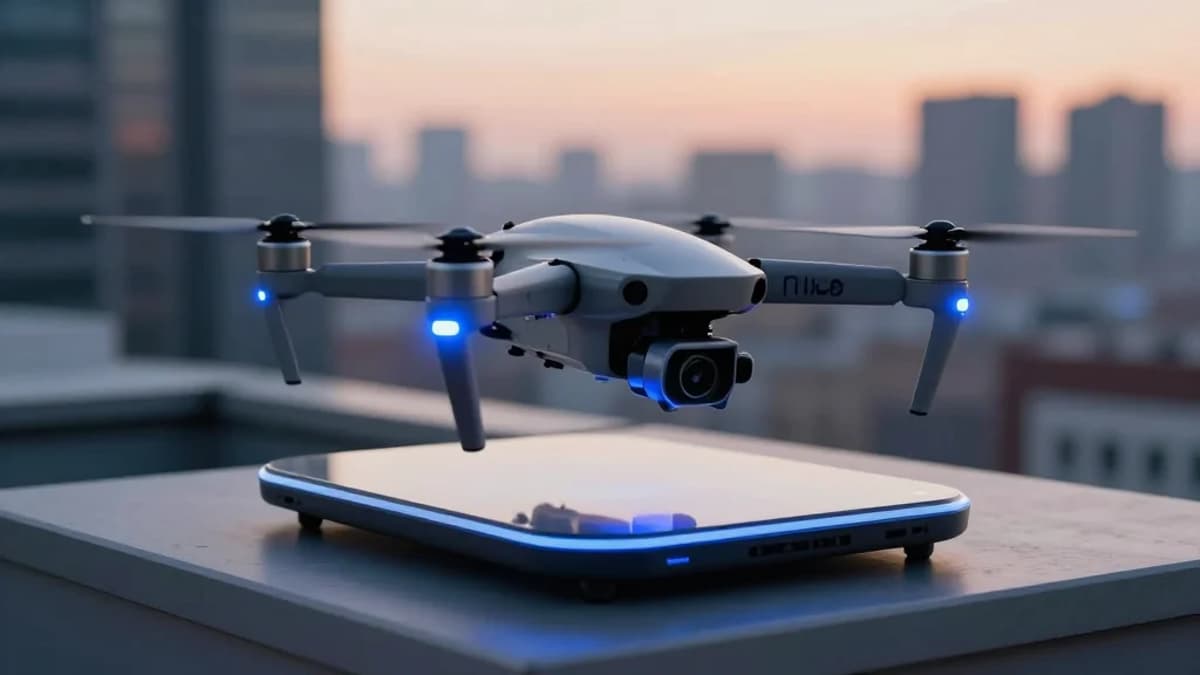
Remote Controlled Police Drones Keeping Coventry Safe
•January 27, 2026
0

Why It Matters
Remote‑piloted drones cut response times and resource strain, giving police actionable intelligence faster and enhancing public safety across congested urban environments.
Key Takeaways
- •Drones operate 21 miles from Birmingham control centre.
- •2‑km radius covers 20 km² of Coventry.
- •Saves officer time, improves safety, informs resource decisions.
- •Thermal imaging enables night operations and suspect tracking.
- •Project funded by Home Office via NPCC.
Pulse Analysis
The "Drone as First Responder" program marks a pivotal shift in UK policing, leveraging beyond‑visual‑line‑of‑sight (BVLOS) capabilities to overcome traffic‑induced delays that traditionally hamper emergency response. By stationing weather‑proof charging pods on rooftops and linking them to a Birmingham command hub, West Midlands Police can dispatch aerial assets within minutes, delivering high‑resolution video and thermal imagery directly to officers on the ground. This real‑time situational awareness not only accelerates suspect apprehension but also reduces the need for costly road closures and manpower-intensive searches.
Operational data from the first twelve months shows measurable efficiency gains: drones have pinpointed hazardous debris on motorways, verified trespasser locations, and confirmed the absence of missing persons in large fields, thereby redirecting resources to higher‑priority tasks. The technology’s ability to hover at up to 120 metres and maintain a 500‑metre line‑of‑sight radius ensures rapid coverage of dense urban zones while adhering to civil aviation regulations. Thermal imaging further extends utility into night operations, enabling law‑enforcement to track armed individuals and locate vulnerable subjects with heat signatures.
Beyond immediate tactical benefits, the Coventry deployment serves as a testbed for broader integration of unmanned aerial systems into city infrastructure. Partnerships with local councils, universities and private firms are laying groundwork for future eVTOL and drone‑taxi services, positioning the region as a "drone‑ready" hub. As more forces join the national BVLOS pathway, the data and lessons learned will inform policy, funding models, and training standards, cementing drones as a core component of modern public‑safety strategy.
Remote controlled police drones keeping Coventry safe
0
Comments
Want to join the conversation?
Loading comments...