RLWRLD Unveils RLDX-1, a Dexterity-First Foundation Model for Humanoid Robots

Companies Mentioned
Why It Matters
RLDX-1 demonstrates that foundation models can handle contact‑rich tasks, unlocking new automation possibilities in factories, kitchens and warehouses. Its cross‑embodiment capability lowers hardware lock‑in, accelerating broader adoption of humanoid robots.
Key Takeaways
- •RLDX-1 beats Isaac GR00T N1.6 by 10.7 percentage points
- •First VLA model to exceed 70 points on RoboCasa Kitchen
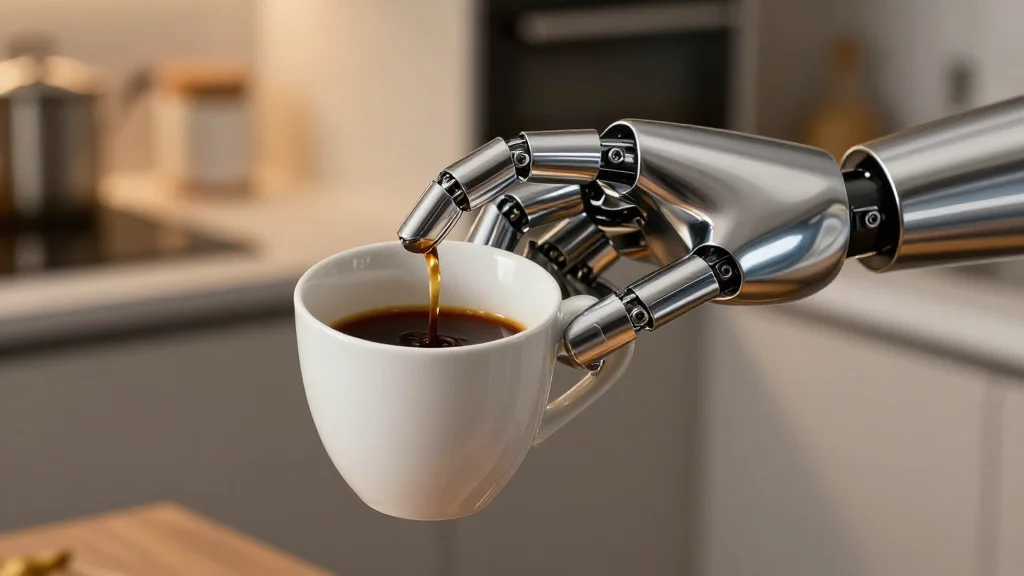
- •Achieves 70.8% success in real‑world coffee‑pouring demo
- •Multi‑Stream Action Transformer fuses vision, language, tactile, memory
- •Runs on ALLEX, Franka Research 3, OpenArm from one backbone
Pulse Analysis
The debut of RLWRLD’s RLDX-1 marks a pivotal moment for physical AI, shifting the focus from perception‑only models to true dexterity. By leveraging NVIDIA’s Isaac ecosystem—Isaac GR00T, Lab, Sim, and Hopper GPUs—the model learns to coordinate vision, language, tactile feedback, and memory in a unified transformer architecture. This multi‑modal fusion enables robots to adapt to dynamic weight shifts, a capability that has long eluded traditional robotic controllers and opens the door to reliable manipulation in unstructured environments.
Beyond raw performance, RLDX-1’s cross‑embodiment design addresses a critical bottleneck: hardware lock‑in. The same backbone powers WIRobotics’ ALLEX humanoid, the Franka Research 3 collaborative arm, and the open‑source OpenArm platform, allowing manufacturers and integrators to deploy a single AI stack across diverse robot families. This flexibility reduces development costs and accelerates time‑to‑market for industries ranging from logistics to food service, where contact‑rich tasks such as grasping, pouring, and tool use are essential.
The broader ecosystem implications are equally significant. RLWRLD’s partnership network—spanning SK Telecom, LG Electronics, CJ Logistics, and Japanese conglomerates—creates a data moat that fuels continual model improvement. As the company eyes a 4D+ world model that predicts torque and robot state over time, the industry can anticipate a new generation of robots that not only see and speak but also feel and anticipate physical interactions. This evolution positions dexterous humanoids as a viable workforce supplement, reshaping automation strategies across global supply chains.
RLWRLD Unveils RLDX-1, a Dexterity-First Foundation Model for Humanoid Robots
Comments
Want to join the conversation?
Loading comments...