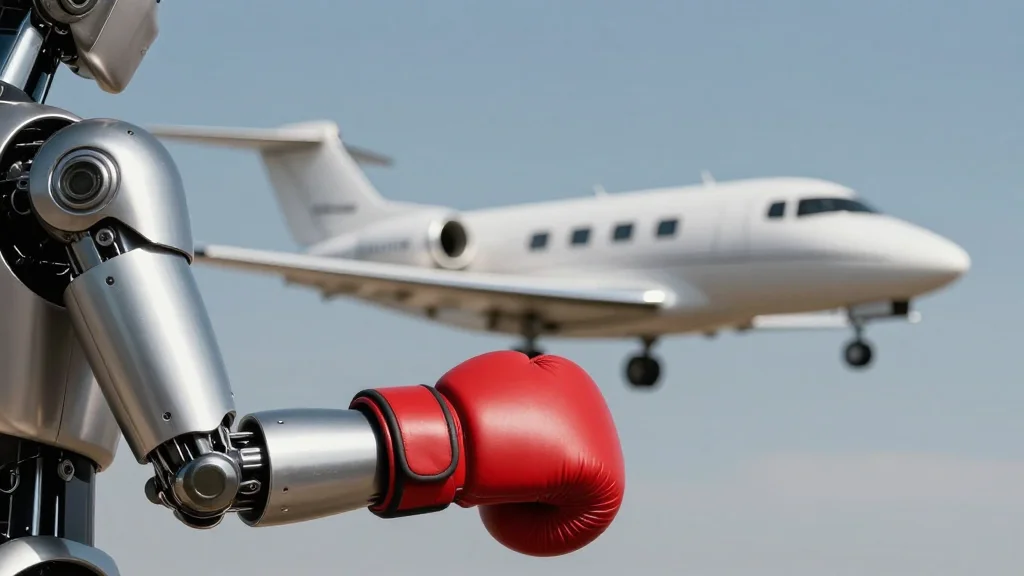
Robot Combat and Flying‑Taxi Demos Energize San Francisco’s “America Innovates” Expo

Companies Mentioned
Why It Matters
The America Innovates showcase signals that robotics is transitioning from niche engineering projects to mainstream consumer experiences. Robot combat draws crowds comparable to traditional sports, proving that there is a market for entertainment‑driven robotics. Simultaneously, flying‑taxi prototypes illustrate how urban air mobility could reshape city logistics, commuting patterns, and real‑estate development. Together, these trends point to a future where robotics influences both leisure and essential infrastructure, prompting investors, regulators, and labor groups to reassess risk, reward, and societal impact. Moreover, the parallel stories of Figure AI’s human‑vs‑humanoid contest and San Jose’s delivery‑robot debate highlight the tension between automation’s efficiency gains and the human workforce’s concerns. As robots become more visible and capable, policymakers will need to balance innovation incentives with safeguards for safety, employment, and data privacy.
Key Takeaways
- •Ultimate Fighting Bots staged hourly robot boxing matches at the America Innovates expo in San Francisco.
- •Elon Musk and Sam Altman participated in a symbolic robotic duel, referencing their ongoing legal dispute.
- •Figure AI’s $39 billion‑valued humanoid robot lost a 10‑hour package‑sorting race to human intern Aimé Gérard by 192 packages.
- •San Jose officials discussed permitting DoorDash’s autonomous delivery bots to operate in bike lanes, citing safety and regulatory gaps.
- •Multiple passenger‑grade flying‑taxi prototypes were demonstrated, signaling accelerated investor interest in urban air mobility.
Pulse Analysis
The convergence of combat robotics, autonomous logistics, and urban air mobility at a single public exhibition is more than a spectacle; it is a barometer of where capital is flowing in the robotics ecosystem. Historically, robot combat has been a fringe hobby, but the involvement of venture‑backed firms like Ultimate Fighting Bots and the presence of high‑profile tech leaders suggest a shift toward commercializable entertainment. This mirrors the early days of esports, where niche tournaments grew into multi‑billion‑dollar leagues. If robot boxing can attract sponsorships and broadcast deals, it could open a new revenue stream that fuels further R&D.
Figure AI’s livestreamed contest underscores another dynamic: the narrative of human versus machine is now a marketing tool as much as a technical benchmark. While the robot’s performance was only marginally slower than a human, the public’s fascination with the race generated millions of views, turning a technical demonstration into brand equity. However, the company’s claim that “this is the last time a human will ever win” may provoke backlash from labor advocates, especially as delivery‑robot debates heat up in San Jose. The city’s lack of regulatory authority over sidewalk and bike‑lane bots highlights a policy vacuum that could either accelerate deployment or trigger restrictive legislation.
Finally, the flying‑taxi demos point to a maturing UAM market that is finally moving beyond prototype flights to public validation. Investors are betting on a future where vertical‑takeoff aircraft alleviate urban congestion, but the technology still faces hurdles: air‑traffic integration, noise, and community acceptance. By showcasing these aircraft alongside robot combat, the America Innovates event effectively bundles disparate robotics sub‑sectors into a single narrative of futuristic mobility. The next few years will test whether this hype translates into scalable business models, regulatory frameworks, and, ultimately, everyday adoption.
Robot Combat and Flying‑Taxi Demos Energize San Francisco’s “America Innovates” Expo
Comments
Want to join the conversation?
Loading comments...