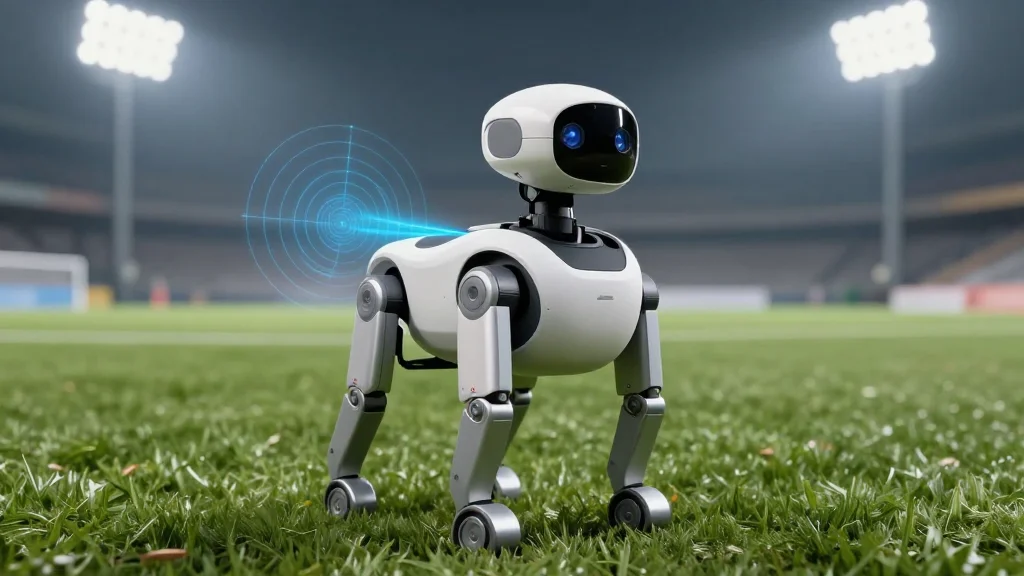
Robot Dogs and AI Cameras Deploy for 2026 World Cup Security Across North America

Companies Mentioned

Why It Matters
Deploying autonomous robots and AI surveillance at the World Cup signals a turning point for public‑safety technology, proving that large‑scale, real‑time threat detection can be operationalized in high‑density environments. The $875 million investment demonstrates governmental confidence in robotics to augment human officers, likely accelerating procurement cycles for municipalities and stadium operators. If the system proves effective, it could catalyze broader adoption of Spot‑type robots in airports, transit hubs and other mass‑gathering venues, reshaping the security industry’s reliance on static cameras and manual patrols. Conversely, any misstep—privacy breaches or false alarms—could fuel regulatory pushback, influencing how AI‑driven surveillance is legislated in the United States and beyond.
Key Takeaways
- •Boston Dynamics Spot robots deployed at 16 World Cup venues across the U.S., Canada and Mexico
- •FEMA allocated $625 million for security; $250 million earmarked for drone detection and mitigation
- •AI‑powered cameras will provide real‑time facial recognition and multilingual translation for body‑camera feeds
- •Fortem’s drone‑interception quadcopters will deploy nets to capture unauthorized drones over stadiums
- •More than 400 law‑enforcement agencies and private security firms are coordinated under a federal task force
Pulse Analysis
The World Cup’s security blueprint showcases how robotics can transition from experimental pilots to mission‑critical assets. Spot’s proven reliability in industrial inspections now translates to a public‑safety context, where its mobility and sensor suite enable rapid assessment of suspicious objects without exposing officers to danger. This operational validation could unlock new revenue streams for Boston Dynamics and its parent Hyundai, prompting competitors like Agility Robotics and Ghost Robotics to accelerate their own law‑enforcement offerings.
AI‑driven visual analytics further amplify the value proposition. By coupling high‑resolution feeds with edge‑computing inference, the system reduces the latency between detection and response—a crucial factor in preventing incidents in crowded venues. However, the deployment also raises the specter of mission creep; once the technology proves its worth at a marquee event, municipalities may feel pressure to replicate it, potentially straining budgets and sparking debates over surveillance overreach.
Strategically, the U.S. government’s willingness to allocate $875 million underscores a broader policy shift toward integrating autonomous systems into national security frameworks. This infusion of capital not only accelerates hardware procurement but also funds the development of standards and training programs essential for safe integration. As other nations observe the outcomes, we may see a cascade of similar investments ahead of events like the 2028 Los Angeles Olympics, cementing autonomous robotics as a staple of modern security architecture.
Robot Dogs and AI Cameras Deploy for 2026 World Cup Security Across North America
Comments
Want to join the conversation?
Loading comments...