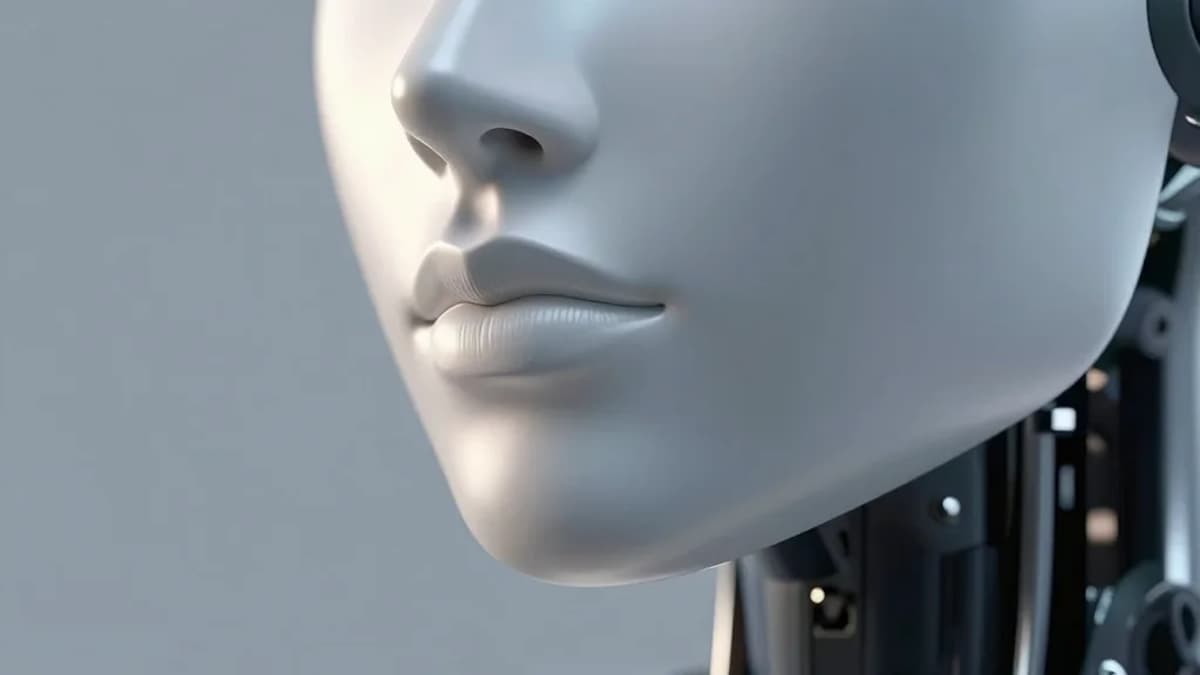
Robot Learns to Lip Sync by Watching YouTube
•January 14, 2026
0
Companies Mentioned

Why It Matters
Natural lip‑sync gives robots a credible human‑like presence, essential for effective communication in service, education, and care settings. It transforms static avatars into empathetic partners, expanding market opportunities while prompting ethical oversight.
Key Takeaways
- •Robot learns lip sync by watching YouTube videos
- •Uses 26 facial motors and vision‑to‑action model
- •Achieves multilingual speech and singing, minor phoneme errors
- •Enables more natural human‑robot interaction across industries
- •Raises ethical concerns about trust and manipulation
Pulse Analysis
The difficulty of realistic facial expression has long limited humanoid robots to stiff, uncanny gestures. Columbia Engineering’s Creative Machines Lab tackled this by building a flexible face with 26 micro‑actuators and training it through a two‑stage observational process. First, the robot stared at its own mirror reflections to map motor commands to visible shapes, a self‑calibration akin to a child’s mirror play. Then it consumed hours of YouTube speech and song videos, allowing a vision‑to‑action language model to translate audio directly into coordinated lip movements.
By moving from rule‑based animation to data‑driven learning, the robot achieves multilingual lip sync and can even sing, albeit with minor errors on bilabial sounds like ‘B’ and puckered phonemes such as ‘W’. When paired with conversational AI platforms such as ChatGPT or Gemini, this capability promises richer, more empathetic human‑robot dialogues. Sectors ranging from elder‑care companionship to retail kiosks and entertainment avatars stand to benefit from robots that can convey tone, intent, and emotion through synchronized facial cues.
Industry analysts project a surge in humanoid deployments, estimating over a billion units in the next decade, and realistic facial articulation is poised to become a differentiator. However, the technology also raises ethical questions about manipulation and trust, urging developers to adopt gradual rollouts and transparent safeguards. As the research team refines motor precision and expands training datasets, the gap across the uncanny valley narrows, heralding a new era where robots can genuinely ‘talk’ with a human‑like face. This progress also invites new standards for robot expressiveness.
Robot learns to lip sync by watching YouTube
0
Comments
Want to join the conversation?
Loading comments...