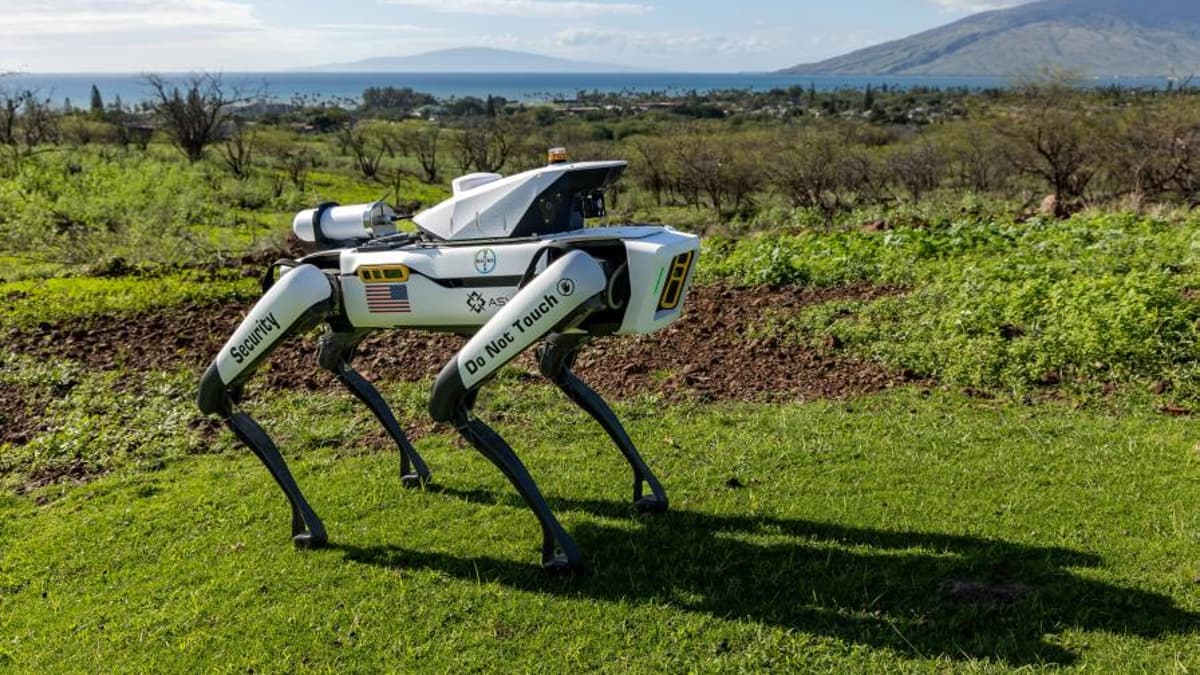
Robotic Security Dogs Now on the Job to Protect Crops
Companies Mentioned
Why It Matters
The deployment demonstrates how autonomous robotics can address labor shortages while cutting security expenses and emissions in large‑scale agriculture, setting a precedent for broader industry adoption.
Key Takeaways
- •Bayer deployed Asylon’s DroneDog across 8,000 acres in Hawaii
- •DroneDog offers 20× zoom thermal imaging and AI threat classification
- •Robots cut vehicle patrols, lowering emissions and security costs
- •Real-time video feeds enable rapid response and post‑incident analysis
Pulse Analysis
Robotic security dogs are emerging as a practical solution for the agricultural sector’s growing need for perimeter protection. Bayer’s farms in Hawaii, which produce 90 % of the company’s internationally sold feed corn seed, faced chronic staffing gaps and high costs associated with traditional vehicle patrols. By integrating Asylon’s DroneDog—an all‑terrain, AI‑enabled platform equipped with thermal imaging and 20× optical zoom—Bayer can maintain continuous surveillance across sprawling fields without the expense of round‑the‑clock human crews.
The technology’s cloud connectivity allows live video streams to be accessed by Bayer’s on‑site security team, a dedicated Hawaii Security Operations Center, and Asylon’s 24/7/365 Robotic Security Operations Center. This layered monitoring architecture enables rapid threat classification, from vandals to wildfires, and supports immediate dispatch of human responders when needed. The DogHouse charging station ensures the robots are ready for successive missions, while the collected footage creates a searchable archive for post‑event audits and compliance reporting.
Beyond Bayer, the successful pilot signals a shift toward autonomous security in agribusiness and other high‑value, low‑density environments. Companies can expect reduced fuel consumption, lower labor overhead, and enhanced safety for employees who no longer need to patrol hazardous terrain at night. As AI and sensor capabilities continue to improve, robotic sentries are poised to become a standard component of integrated farm management systems, delivering both operational efficiency and a greener footprint.
Robotic Security Dogs Now on the Job to Protect Crops
Comments
Want to join the conversation?
Loading comments...