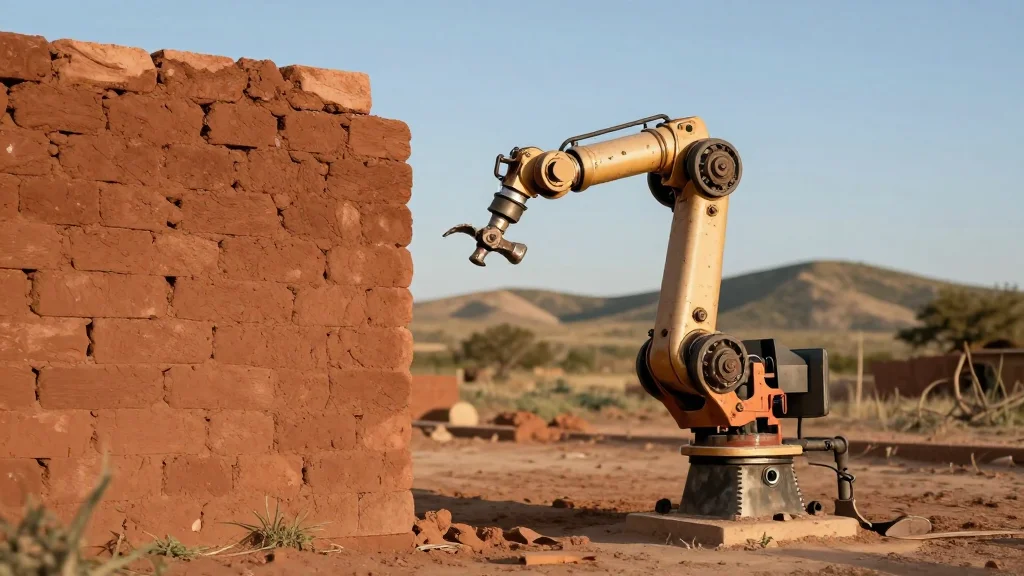
Robots Are Building Clay Homes In Texas Using Dirt From the Ground

Why It Matters
Automating adobe construction could lower building costs, reduce material transport, and revive sustainable housing in the U.S., offering a scalable alternative to conventional methods.
Key Takeaways
- •Robots shape on‑site clay into residential walls
- •Machine learning ensures flat, solid adobe surfaces
- •Prototype site located at Proto‑Town, Texas
- •Goal: 20+ homes built within a year
- •Potential to cut construction waste and carbon footprint
Pulse Analysis
The United States faces a chronic housing shortage, prompting innovators to explore low‑cost, environmentally friendly building methods. Adobe, a centuries‑old material made from earth, offers thermal efficiency and minimal embodied carbon, yet its labor‑intensive construction has limited modern adoption. In Texas, a startup south of Austin is marrying this ancient technique with cutting‑edge robotics, creating a hybrid that could reshape affordable housing. By sourcing clay directly from the building site, the process eliminates transportation costs and leverages local resources, aligning with the growing demand for sustainable, resilient homes.
The core of the system is a six‑axis robot equipped with a claw for depositing wet adobe and a hammer attachment for compacting the material. Integrated machine‑learning algorithms continuously scan each layer, adjusting deposition pressure and moisture to achieve a uniformly flat surface. This feedback loop mimics the intuition of an experienced mason, but with far greater precision and repeatability. Because the robot operates from a fixed build plate, construction speed scales with software updates rather than manual labor, potentially reducing build times from weeks to days for modest‑size dwellings.
If the pilot at Proto‑Town proves successful, the technology could attract developers seeking rapid, low‑budget construction in regions with abundant soil. The company’s target of more than 20 homes in the next year signals confidence in scaling the workflow. Investors are watching for cost‑per‑square‑foot metrics that compare favorably against conventional wood framing and steel. Challenges remain, including regulatory approval for non‑traditional materials and ensuring structural compliance in seismic zones. Nonetheless, robotic adobe construction represents a compelling convergence of sustainability, automation, and affordable housing policy.
Robots Are Building Clay Homes In Texas Using Dirt From the Ground
Comments
Want to join the conversation?
Loading comments...