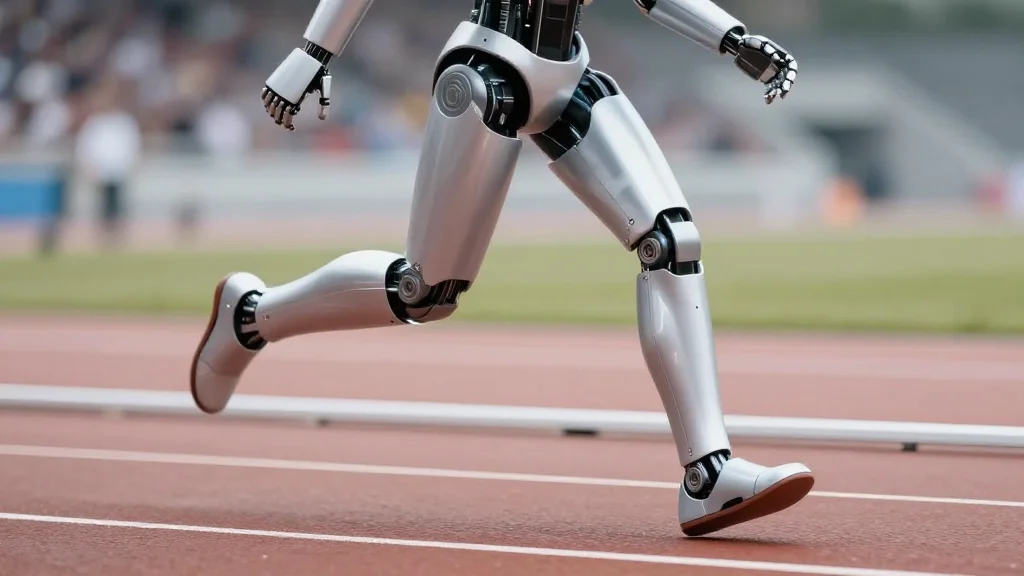
Robots Can Run a Marathon and Play Ping Pong. But Will They Ever Achieve True Sporting Greatness?
Why It Matters
Robotic athletes provide a new, data‑rich training tool that can accelerate skill acquisition and performance analysis for elite sports, reshaping coaching methodologies and fan experiences.
Key Takeaways
- •Humanoid robot broke half‑marathon record, running faster than humans
- •AI table‑tennis robot outperformed elite players using millisecond reaction
- •Sim‑to‑real training lets robots master skills before physical testing
- •Robotic partners offer repeatable, variable drills for elite athlete development
- •Robots enhance data‑driven coaching but lack human creativity and emotion
Pulse Analysis
The recent headlines of a humanoid robot eclipsing the half‑marathon world record and an AI‑driven table‑tennis machine beating top human players underscore a rapid shift in sports robotics. These milestones are not merely novelty acts; they demonstrate that machines can now process visual data, predict trajectories, and execute movements within fractions of a second—abilities that were once exclusive to elite athletes. By leveraging high‑speed cameras, low‑latency processors, and sophisticated control algorithms, robots are beginning to operate in the same perceptual‑action loop that defines human sport.
Behind the scenes, the real engine of progress is simulation‑to‑real training. Engineers create virtual arenas where robots rehearse millions of scenarios, refining motion models and decision‑making policies without wear and tear. When transferred to physical platforms, these learned behaviors manifest as precise ball strikes, consistent serves, or steady marathon pacing. This approach compresses development cycles, reduces hardware costs, and opens pathways for robots to tackle increasingly complex tasks such as team coordination in soccer or adaptive play in basketball, expanding the frontier of what machines can achieve in dynamic environments.
Looking forward, the most transformative impact will likely be indirect. Robotic training partners can deliver perfectly calibrated repetitions while introducing controlled variability, enabling athletes to train under conditions that mimic real competition without the logistical constraints of human sparring partners. The data harvested—from force vectors to reaction times—feeds into sports‑science analytics, sharpening injury‑prevention strategies and performance optimization. While robots may never capture the creative spontaneity and emotional drive that define human greatness, they are poised to become indispensable tools in the athletic ecosystem, enhancing coaching, enriching fan engagement, and redefining the limits of human potential.
Robots can run a marathon and play ping pong. But will they ever achieve true sporting greatness?
Comments
Want to join the conversation?
Loading comments...