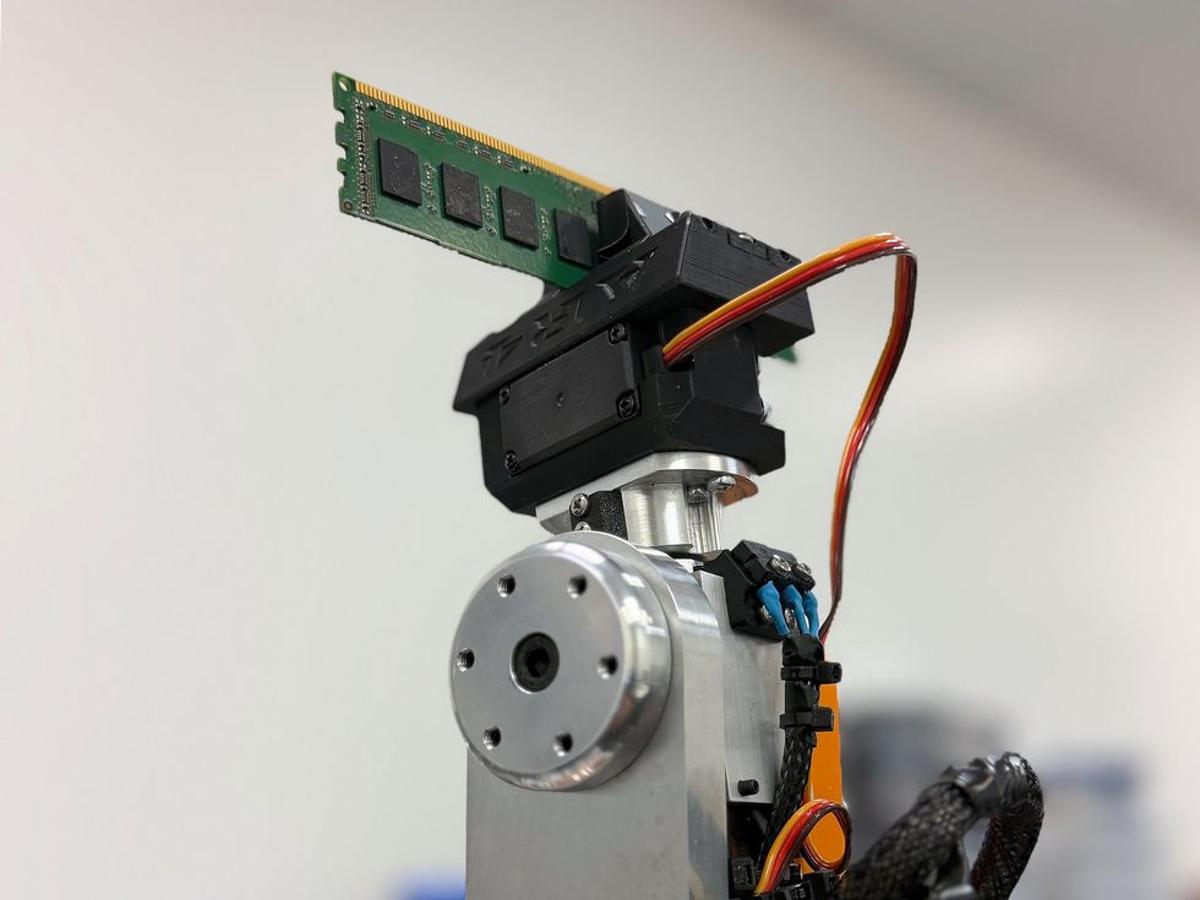
Robots Could Turn E-Waste Into a Source of Legacy Chips
Why It Matters
Recovering functional chips reduces e‑waste volume and supplies scarce legacy parts for telecom, aerospace and defense, while unlocking metal value for refiners.
Key Takeaways
- •Tuurny’s Nantul robot extracts 300 RAM chips per hour
- •First deployment slated for 2027 with UK recycler Areera
- •System uses AI vision, heat, suction to preserve chip integrity
- •Targeting legacy RAM to address scarce replacement parts in critical industries
- •Modular design aims for lower cost than traditional industrial recyclers
Pulse Analysis
Regulators in Europe, California and Malaysia are tightening e‑waste rules, forcing the industry to capture more value before devices are shredded. The United Nations estimates current recycling recovers less than a third of the metals embedded in discarded electronics, leaving a massive untapped resource. As manufacturers face pressure to on‑shore critical minerals, innovators are looking beyond bulk shredding to extract high‑value components that can be reused or refined.
Tuurny’s Nantul system flips the traditional recycling model on its head. Using off‑the‑shelf Nvidia Jetson Nano hardware, a neural network scans each board, matches components to manufacturer thermal profiles, and then applies localized heat, suction and precise robotic manipulation to lift RAM chips intact. The robot can process 300 chips per hour, sorting them by model and material for downstream testing or smelting. By focusing on legacy RAM—parts that are hard to replace in long‑life systems—the startup addresses a niche yet critical market while preserving copper, aluminum and precious metals for refiners.
If the technology scales, it could reshape the e‑waste value chain. A modular, lower‑cost robot makes on‑site recovery feasible for mid‑size recyclers, reducing transport and processing expenses. Reliable chip recovery would supply aerospace, defense and telecom firms that depend on obsolete components, mitigating supply‑chain risks. However, the approach must prove adaptable to the vast variability of real‑world boards and remain economically viable against traditional shredding. Success would signal a shift toward circular electronics, where high‑grade materials and functional chips re‑enter the market rather than ending up in landfill.
Robots Could Turn E-Waste Into a Source of Legacy Chips
Comments
Want to join the conversation?
Loading comments...