Robots Move in as Waste Firms Struggle to Find Staff
Companies Mentioned
Why It Matters
Automation cuts reliance on a high‑turnover workforce, boosts safety, and raises sorting throughput, helping recyclers meet tighter circular‑economy goals.
Key Takeaways
- •Sharp Group processes 280,000 tonnes of mixed recycling annually
- •Staff turnover at the plant hits 40% due to harsh conditions
- •Humanoid robot Alpha aims to work 24/7, reducing labor gaps
- •AI‑driven sorting systems improve efficiency up to tenfold
Pulse Analysis
The waste‑sorting industry has long grappled with a talent crunch. Facilities like Sharp Group’s Rainham plant face a volatile labor market, where the combination of dust, constant noise, and a heightened risk of injury drives a 40% annual turnover. This churn not only inflates hiring costs but also hampers consistent material recovery, a critical metric as governments tighten recycling mandates and consumers demand greener practices.
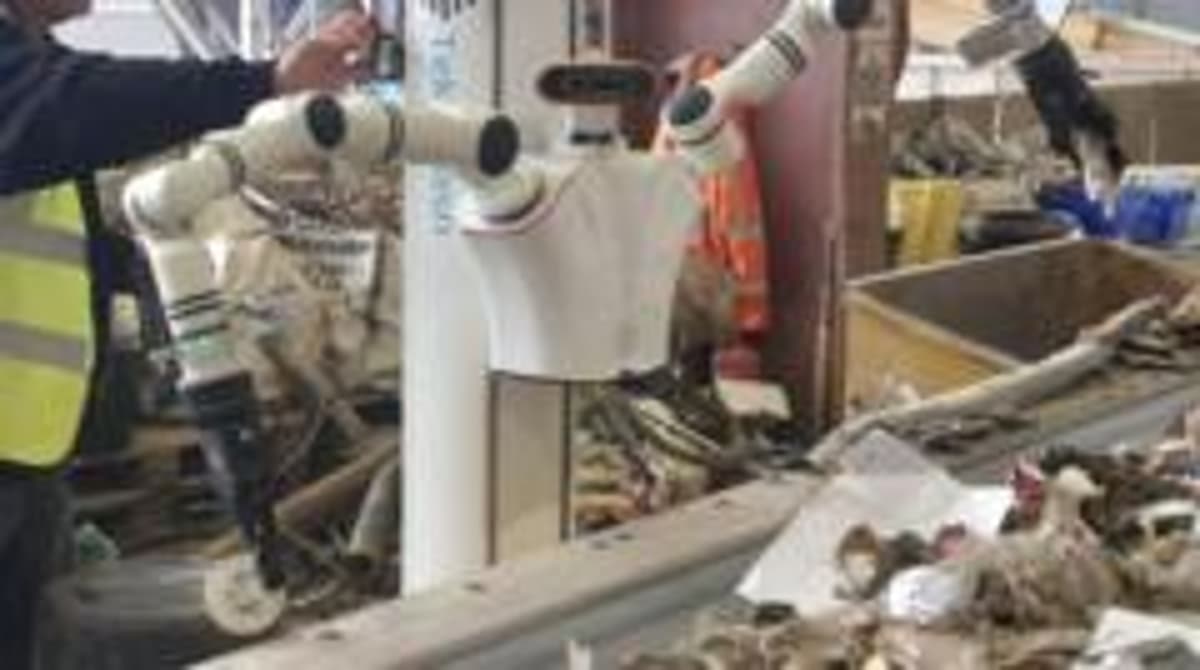
Enter Alpha, the humanoid robot from RealMan Robotics, now being fine‑tuned by UK‑based TeknTrash Robotics. By mimicking human arm movements, Alpha can be slotted into existing conveyor lines without costly plant redesigns. Its training regimen leverages VR‑captured operator motions and a multi‑camera HoloLab system that generates millions of data points daily, teaching the robot to identify and lift diverse items. While still in its learning phase, Alpha promises uninterrupted 24/7 operation, eliminating sick days, holidays, and the physical toll on workers—a stark contrast to traditional human pickers.
Across the sector, AI‑enhanced sorting solutions are gaining traction. Companies like AMP and Glacier deploy robotic arms, air‑jet sorting and deep‑learning vision models that can process items up to ten times faster than humans. As these systems ingest billions of items, their algorithms continuously improve, delivering higher purity rates and lower contamination. The shift toward automation not only raises operational efficiency but also creates new roles in robot maintenance and data analysis, offering a pathway to upskill displaced workers. Ultimately, the convergence of robotics and AI is reshaping recycling into a safer, more productive, and economically viable pillar of the circular economy.
Robots move in as waste firms struggle to find staff
Comments
Want to join the conversation?
Loading comments...