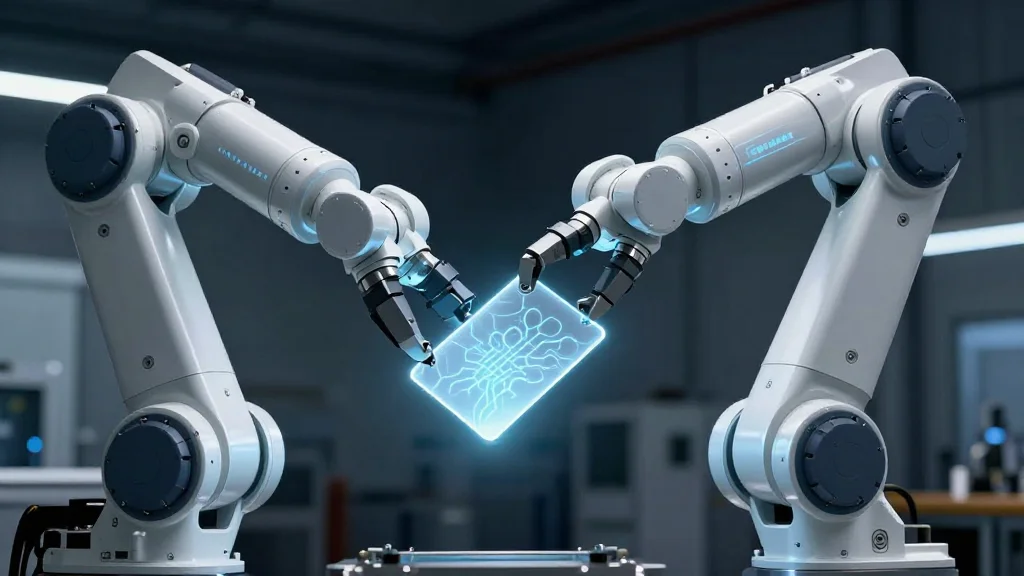
Robots: Why AI Alone Will Not Deliver the Next Leap in Automation
Companies Mentioned
Why It Matters
Without addressing mechanical determinism, AI‑enhanced robots will continue to suffer costly downtime, limiting ROI and slowing mass adoption of automation in manufacturing.
Key Takeaways
- •Mechanical failures cause most downtime in high‑cycle robots
- •Deterministic mechanisms reduce AI complexity and improve reliability
- •Investment in hardware must match AI spending for true gains
- •Successful robots blend robust mechanics with intelligent control
Pulse Analysis
The robotics sector has spent the last decade perfecting the "brain" of machines—larger neural networks, sophisticated reinforcement learning, and ever‑more accurate perception. Yet plant floors tell a different story: robots at high duty cycles spend more time offline due to wear, thermal drift, and misalignment than because of software glitches. This reliability gap erodes the economic case for automation, as unplanned downtime translates directly into lost production and higher maintenance costs. Companies like Amazon Robotics are already quantifying these losses, prompting a reassessment of where research dollars should flow.
Deterministic mechatronics offers a pragmatic remedy. By engineering linkages that maintain sub‑millimeter accuracy under load, using transmissions that resist hysteresis, and designing end effectors that grip predictably, manufacturers can dramatically shrink the solution space that AI must navigate. The apparel‑handling case study illustrates this: patented compliant grippers turn the physics of fabric into an advantage, allowing simple vision models to guide the process instead of relying on heavyweight deep‑learning pipelines. When the mechanism behaves predictably, software becomes leaner, more robust, and easier to certify for industrial use.
Strategically, the industry must rebalance its R&D portfolio. For every dollar poured into perception, an equivalent amount should fund advanced kinematics, finite‑element analysis, and high‑precision actuation. This shift also reshapes talent pipelines; future roboticists need fluency in both PyTorch and finite‑element modeling. Embracing a reliability‑first philosophy will enable robots to sustain millions of cycles without failure, unlocking the scale and cost efficiencies that have so far remained elusive. The next decade of automation will be defined not by bigger AI models, but by the seamless integration of a deterministic mechanical body with intelligent control software.
Robots: Why AI alone will not deliver the next leap in automation
Comments
Want to join the conversation?
Loading comments...