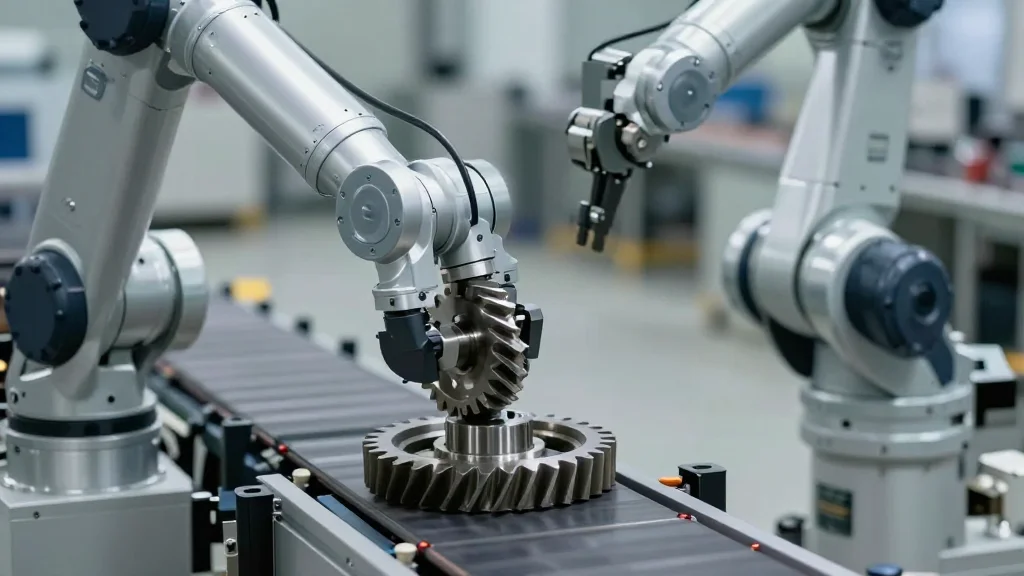
SAIL Tech Lets Robots Perform Human-Scale Tasks Far More Quickly
Why It Matters
By dramatically cutting cycle time for low‑skill service tasks, SAIL lowers automation costs and speeds adoption, reshaping labor demand across multiple sectors. The technology aligns with forecasts that a sizable share of work hours will be automated by 2030.
Key Takeaways
- •SAIL enables robots to run up to 3.2× faster in real tasks.
- •System adjusts speed dynamically based on motion complexity and environment.
- •Demonstrated speed gains across 12 simulated and two physical tasks.
- •Faster robots could automate low‑skill service work in hospitals and restaurants.
- •Automation may affect up to 30% of U.S. work hours by 2030.
Pulse Analysis
Georgia Tech’s Speed Adaptation of Imitation Learning (SAIL) marks a turning point in robot dexterity. By integrating a smooth‑motion algorithm with high‑fidelity tracking, the system can accelerate actions while preserving precision. Its adaptive‑speed module reads the complexity of each movement and scales velocity in real time, while an action‑scheduling layer compensates for hardware latency. In controlled experiments, SAIL‑enabled arms completed tasks such as cup stacking and whiteboard erasing up to 3.2 times faster than traditional imitation‑learning robots, demonstrating that speed need not sacrifice reliability.
The immediate business value lies in automating repetitive, low‑skill tasks that dominate hospitality, healthcare, and retail environments. Faster robots can process orders, fold linens, or sort produce at a pace that outstrips human workers, reducing labor costs and increasing throughput. For operators, the technology shortens the gap between prototype and production deployment because speed adjustments happen on‑the‑fly, eliminating the need for painstakingly retuned demonstrations. Early adopters could see ROI within months, especially in high‑volume settings where every second of labor translates into measurable profit.
Beyond the shop floor, SAIL accelerates the broader automation trajectory highlighted by the McKinsey Global Institute, which projects that 30 % of U.S. work hours may be automated by 2030. As robots become capable of both speed and adaptability, the displacement risk spreads from manufacturing to service sectors, amplifying indirect job losses through reduced consumer spending. Policymakers and corporate leaders must therefore balance efficiency gains with workforce reskilling programs and safety nets. Continued advances like SAIL suggest a future where general‑purpose robots are not sci‑fi fantasy but a mainstream productivity tool.
SAIL tech lets robots perform human-scale tasks far more quickly
Comments
Want to join the conversation?
Loading comments...