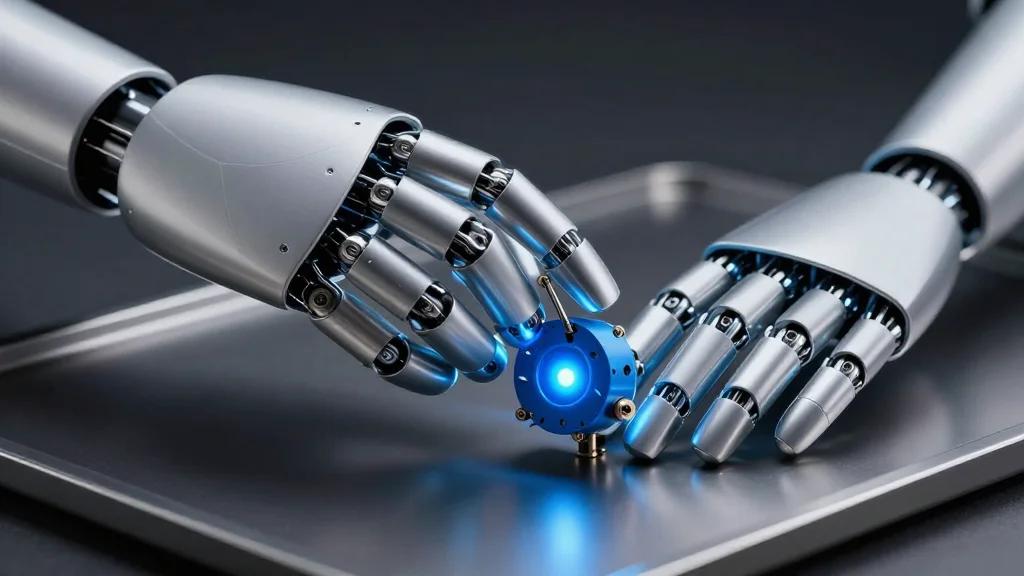
Samsung Electronics Launches Future Robotics Task Force to Speed Humanoid Production

Companies Mentioned

Why It Matters
Samsung’s mobilization of internal talent underscores a broader industry trend where traditional electronics manufacturers are betting on robotics to diversify revenue streams and enhance factory efficiency. By bringing robot component design in‑house, Samsung aims to reduce reliance on third‑party suppliers, potentially lowering costs and shortening product cycles for industrial customers. If Samsung’s humanoid platform proves successful, it could catalyze a wave of adoption across sectors that have been hesitant due to high upfront costs and integration complexity. The move also raises the stakes for competitors, who must now contend with a player that can leverage deep expertise in AI chips, sensors, and mass production to deliver more affordable, scalable robot solutions.
Key Takeaways
- •Samsung launches internal recruitment for Future Robotics Task Force
- •Task force created after Samsung became largest shareholder in Rainbow Robotics
- •CFO Park Soon‑cheol cites progress under Oh Jun‑ho’s leadership
- •Company aims to internalize robot component design and production
- •Potential for external tech collaborations and M&A in robotics
Pulse Analysis
Samsung’s decision to staff a dedicated robotics unit reflects a strategic pivot from peripheral experimentation to core business integration. The company’s massive supply‑chain capabilities give it a unique advantage: it can source displays, sensors, and AI processors at scale, which are critical cost drivers for humanoid robots. By aligning these capabilities under a single task force, Samsung reduces coordination friction that typically slows multi‑vendor projects.
Historically, industrial robot adoption has been dominated by firms with deep mechanical engineering roots. Samsung’s entry leverages its AI and semiconductor expertise, potentially shifting the competitive balance toward firms that can bundle advanced perception and edge‑computing with robust hardware. This could force incumbents to accelerate their own AI integration or seek joint ventures to stay relevant. Moreover, Samsung’s willingness to consider M&A suggests it may target niche startups that own proprietary actuation or battery technologies, further consolidating the supply chain.
Looking ahead, the success of Samsung’s humanoid rollout will hinge on three factors: the speed of talent acquisition, the ability to translate AI research into reliable hardware, and the establishment of a clear value proposition for manufacturers. If Samsung can demonstrate a cost‑effective, easy‑to‑integrate humanoid, it may unlock a new tier of automation for mid‑size factories that previously could not justify the expense of traditional industrial robots. The industry will be watching closely as Samsung moves from recruitment to prototype, with the potential to reshape the economics of factory automation.
Samsung Electronics Launches Future Robotics Task Force to Speed Humanoid Production
Comments
Want to join the conversation?
Loading comments...