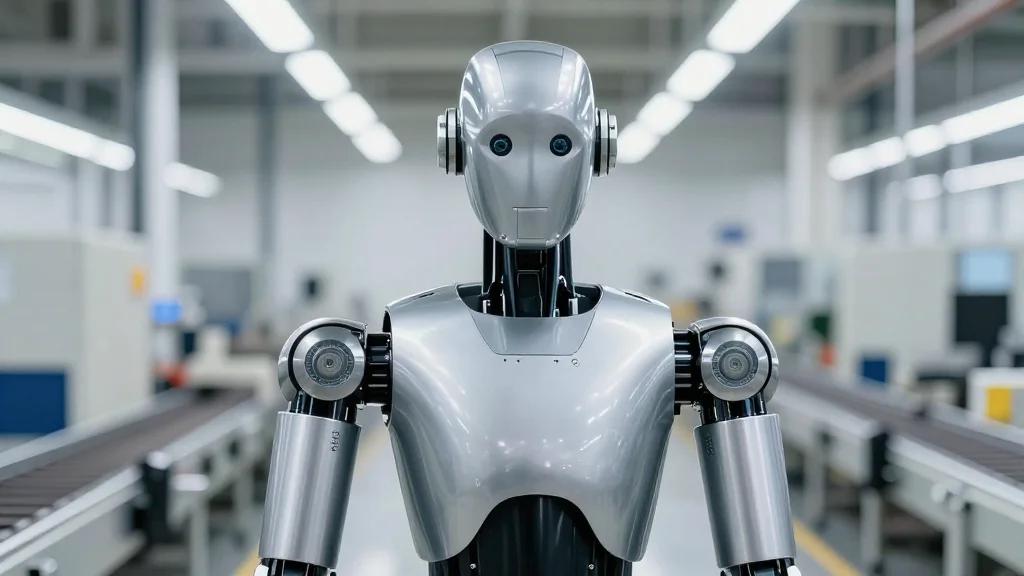
Schaeffler Forecasts €100‑999 Million Humanoid Robot Order Book by 2030

Companies Mentioned

Why It Matters
Schaeffler’s ambitious order‑book projection signals that industrial humanoid robots are moving from prototype labs into mainstream production. If the forecast holds, manufacturers will gain access to machines that can work side‑by‑side with humans, handling tasks that traditional robotic arms cannot. This could reshape labor dynamics in high‑skill manufacturing, reduce reliance on scarce skilled workers, and accelerate the adoption of flexible automation across Europe and beyond. The forecast also highlights the strategic importance of component suppliers in the robotics value chain. By leveraging its expertise in precision bearings, gear drives, and sensor integration, Schaeffler can differentiate its humanoid platforms on reliability and cost—key factors for enterprises weighing large‑scale deployments. The company’s move may prompt other Tier‑1 suppliers to accelerate their own robotics initiatives, intensifying competition and potentially driving down prices for end users.
Key Takeaways
- •Schaeffler projects a €100‑999 million (≈$108 M‑$1.08 B) order book for industrial humanoid robots by 2030.
- •Forecast reflects rising demand for collaborative automation in automotive, aerospace, and logistics.
- •Company plans first commercial humanoid series launch in 2025, with pilots in Germany and France.
- •Humanoid‑robot market could exceed €5 billion ($5.4 billion) globally by 2035, according to research firms.
- •Schaeffler’s expertise in bearings and drive systems gives it a competitive edge over pure‑play robot makers.
Pulse Analysis
Schaeffler’s projection is a bellwether for the broader shift toward humanoid automation. Historically, the robotics sector has been dominated by fixed‑base arms that excel at repetitive tasks but struggle with variability. Humanoid platforms promise a middle ground—flexibility akin to human workers combined with the precision of machines. Schaeffler’s deep roots in the automotive supply chain mean it can embed its core competencies—high‑precision bearings, gear drives, and sensor integration—directly into robot joints, delivering reliability that pure‑software firms often lack.
From a market‑structure perspective, the forecast could catalyze a wave of consolidation. Tier‑1 suppliers like Schaeffler, Bosch, and Continental are now positioning themselves as end‑to‑end robotics providers, blurring the line between component manufacturing and finished‑robot sales. This vertical integration may pressure pure‑play robot firms to seek strategic partnerships or acquisition targets to secure component supply and scale production.
Looking ahead, the key risk lies in execution. The three‑digit‑million‑euro range is broad, and actual order intake will depend on Schaeffler’s ability to convert pilot projects into long‑term contracts, navigate EU safety certifications, and compete on price against established robot makers. If the company can deliver on its 2025 rollout and demonstrate tangible ROI for early adopters, it could lock in a sizable share of a market that is still in its infancy. Conversely, failure to meet expectations could dampen investor enthusiasm for the broader humanoid segment, slowing the pace of adoption across Europe.
Schaeffler forecasts €100‑999 million humanoid robot order book by 2030
Comments
Want to join the conversation?
Loading comments...