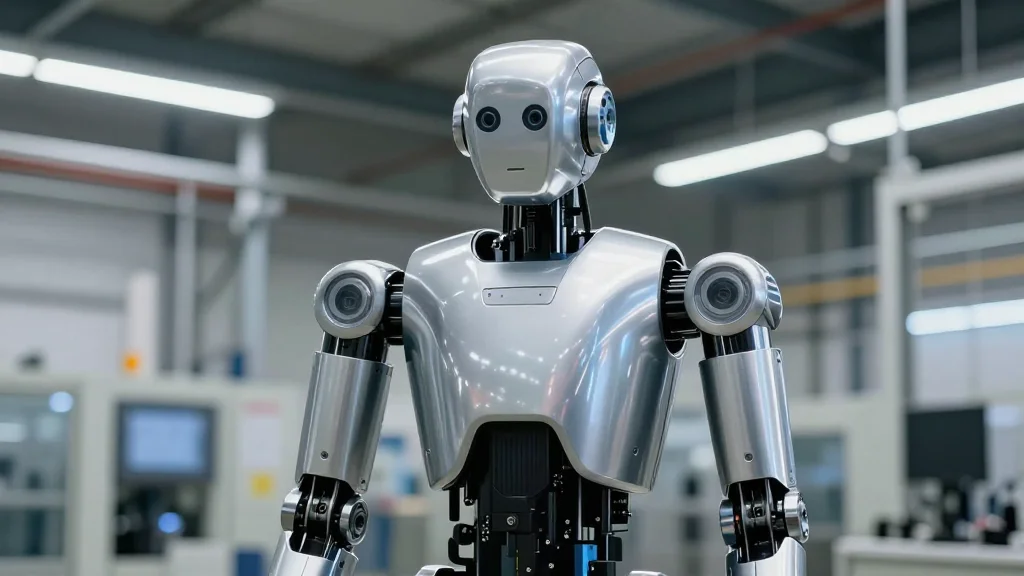
Schaeffler to Deploy Over 1,000 Humanoid Robots in Factories Worldwide by 2032

Companies Mentioned
Why It Matters
Schaeffler’s commitment to deploy more than 1,000 humanoid robots marks the first large‑scale, cross‑geography rollout of human‑like automation in heavy industry. The initiative tests whether humanoid platforms can meet the durability, safety, and productivity standards demanded by continuous manufacturing, a question that has limited their commercial uptake so far. A successful deployment could validate a new class of robotics that bridges the gap between traditional fixed‑axis automation and flexible, collaborative machines, reshaping supply‑chain resilience and labor strategies across sectors. Beyond Schaeffler, the deal serves as a litmus test for the broader ecosystem of robot manufacturers, software integrators, and component suppliers. Positive results could unlock new financing models, accelerate standards development for safety and human‑robot interaction, and trigger a wave of investment in humanoid R&D. Conversely, any setbacks may reinforce skepticism about the economic case for humanoids, steering capital back toward more conventional robotic solutions.
Key Takeaways
- •Schaeffler signs phased deployment with Humanoid to install >1,000 robots by 2032
- •First live‑production units to start at Herzogenaurach and Schweinfurt plants before end‑2026
- •Pilot phase runs Dec 2026–Jun 2027, focusing on box‑handling tasks
- •Deal expands humanoid robotics from pilot labs to full‑scale industrial use
- •Successful rollout could catalyze a multi‑billion‑dollar market for humanoid automation
Pulse Analysis
Schaeffler’s aggressive timeline reflects a strategic bet that humanoid robots can solve a persistent bottleneck: the need for flexible, high‑precision automation in environments where traditional fixed‑axis robots struggle. Historically, humanoid platforms have excelled in research demos but have faltered in the cost‑per‑hour metrics that drive factory decisions. By committing to a phased, data‑driven rollout, Schaeffler is essentially creating a living laboratory that will generate the performance benchmarks the industry has lacked.
The partnership also highlights a shift in the value chain. Humanoid, a relatively small startup, gains a marquee customer that can provide real‑world feedback, accelerate software refinement, and validate hardware durability. In return, Schaeffler accesses cutting‑edge dexterity without the heavy R&D spend required to develop its own humanoid platform. This symbiosis mirrors the broader trend of OEMs partnering with specialist AI and robotics firms to fast‑track innovation.
Looking ahead, the key risk lies in integration complexity. Humanoid robots must communicate seamlessly with Schaeffler’s existing MES, PLC, and safety systems—a non‑trivial engineering challenge. If the pilot demonstrates reliable uptime and a clear ROI, we can expect other manufacturers to follow suit, potentially turning humanoids from a niche curiosity into a mainstream asset for high‑mix, low‑volume production lines. The next 12 months will be decisive: performance data from the German sites will either cement the business case for large‑scale humanoid deployment or reinforce the status quo of conventional automation.
Schaeffler to Deploy Over 1,000 Humanoid Robots in Factories Worldwide by 2032
Comments
Want to join the conversation?
Loading comments...